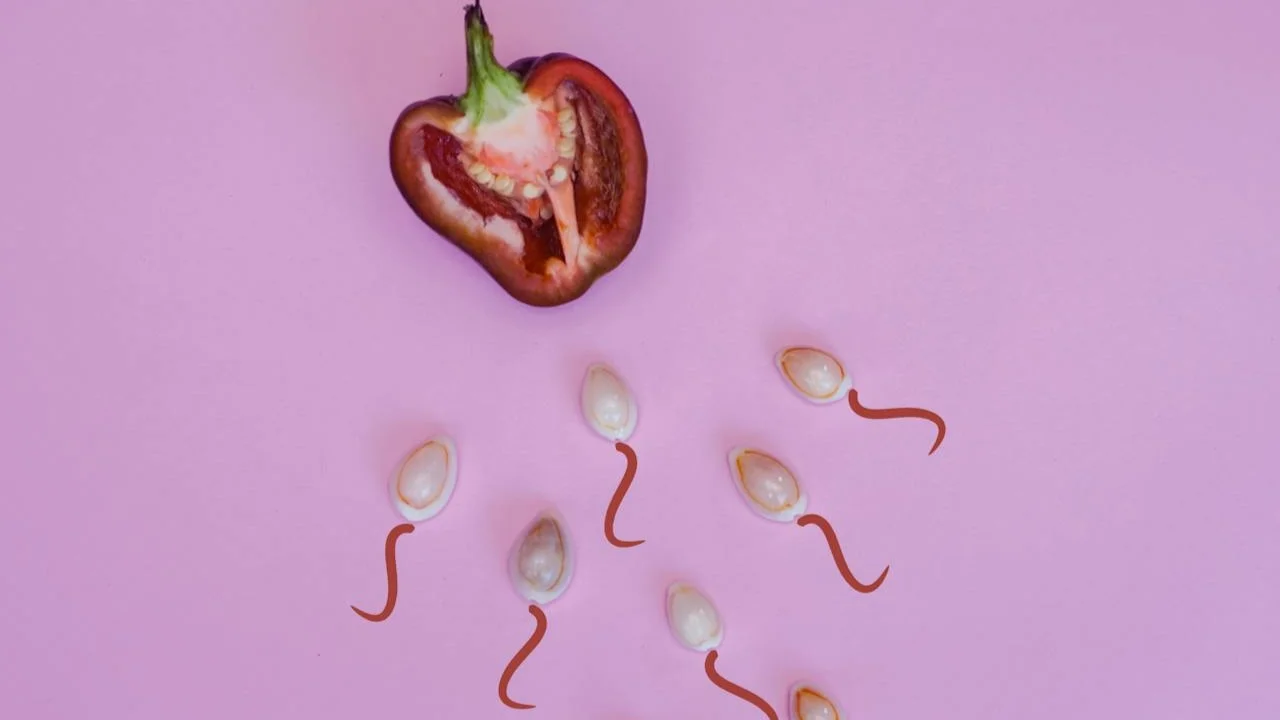
Does a Large Penis Make Pregnancy Happen Faster? Size, Sex, and Fertility
Does a larger penis make pregnancy happen faster by placing semen closer to the cervix? No. After ejaculation, sperm move onward under their own power, and normal differences in length or girth do not determine fertility. Size or shape matters only indirectly when penetration, erection, or ejaculation does not work or when an underlying developmental condition is present.


The direct answer
A longer or thicker penis does not make pregnancy more likely. For fertilization, semen must enter the vagina, motile sperm must pass through the cervix, and an egg capable of being fertilized must be present at the right time. Normal differences in length or girth do not automatically improve any of those steps.
The idea that a large penis places semen meaningfully closer to the egg is biologically wrong too. The penis does not enter the uterus. After ejaculation, cervical mucus, uterine contractions, and especially sperm's own movement carry them farther.
What actually happens after ejaculation
Semen is normally deposited in the vagina. Sperm then separate from the rest of the ejaculate and move through the cervix. The American Society for Reproductive Medicine notes that sperm can be detected in the cervical canal within seconds regardless of intercourse position and may reach the fallopian tubes within minutes. ASRM: Optimizing natural fertility
This does not mean every sperm completes the journey. Most do not. The important point is that transport continues actively and biologically after ejaculation. A few extra centimetres of penis length cannot replace sperm motility or favourable cervical mucus.
Does semen need to land as close to the cervix as possible?
During ordinary vaginal intercourse, ejaculation into the vagina is sufficient. The cervix also changes position with the cycle, arousal, and body position. There is no evidence that deeper deposition from a penis within the normal size range increases the natural pregnancy rate.
Some seminal fluid commonly leaks out after sex. It can look as if everything has been lost. Motile sperm have already begun moving, however, and the fluid leaving the vagina is not the entire chance of pregnancy. Raising the legs, placing a pillow under the pelvis, or remaining still for a long time has no proven benefit after natural intercourse.
What position and penetration depth mean
No intercourse position has been proven best for conception. Positions may matter for comfort, erection, or ejaculation, but not because one magically puts sperm closer to the egg. The ASRM explicitly states that coital positions and routines after sex have no known effect on fertility.
The practical choice is a position that allows sex without pain and reliable ejaculation. With greater length, shallower and more controllable penetration may be more helpful than maximum depth. Ignoring pain does not improve the chance of pregnancy; it makes sex and timing harder.
How much semen is needed?
Semen volume and sperm count are not the same. A larger volume does not automatically contain more motile sperm, and a smaller volume does not automatically mean infertility. A semen analysis therefore examines several measurements together: volume, concentration, total count, motility, and morphology, alongside the clinical context.
Very little or absent ejaculate may be medically relevant in an ejaculation disorder, obstruction, or retrograde ejaculation. For ordinary conception, however, no simple minimum number of milliliters guarantees pregnancy.

Timing matters more than depth
The fertile window includes several days before ovulation and the day of ovulation. Sperm can survive for several days in the female reproductive tract, while the egg remains capable of fertilization for a relatively short period after ovulation. Intercourse every one to two days during the fertile window usually covers the favourable period without scheduling every hour.
Ovulation tests, cervical mucus, and cycle tracking can help when cycles are irregular. They matter far more to the chance of pregnancy than whether the penis is 12 or 16 centimetres long. Understanding ovulation and the fertile window provides practical guidance.

What biologically determines male fertility
Male fertility evaluation centres on medical history, physical examination, and at least one properly assessed semen analysis. Depending on the findings, hormone tests, ultrasound, genetic evaluation, or other tests may follow. Relevant factors can include testicular function, varicocele, undescended testicles, infections, medications, surgery, heat, age, and lifestyle.
The AUA/ASRM guideline recommends evaluating both partners in parallel because fertility is always a shared probability. A ruler is not part of standard male infertility testing unless a developmental or functional difference is present. AUA/ASRM guideline on male infertility
For a broader discussion of causes and testing, see male infertility.
When penis size can matter indirectly
Size can matter indirectly when anatomy makes penetration nearly impossible or an underlying developmental condition affects both genital development and testicular or hormonal function. That is different from normal variation in a healthy adult.
With a true micropenis, clinicians therefore evaluate more than length. They examine the testicles, pubertal development, hormonal axis, and possible syndromes. Fertility depends mainly on the underlying cause and testicular function, not on the penis producing sperm.
Marked hypospadias, severe curvature, or pain can also interfere with intercourse or where semen is deposited. Those situations require individual urological assessment, not a general size rule.
The study of stretched length and infertility
An often-cited retrospective study examined 664 men at a men's health clinic. Of those, 161 attended because of infertility and 503 for other urological concerns. Average stretched penile length was shorter in the infertility group: 12.3 versus 13.4 cm before adjustment and 12.4 versus 13.3 cm after statistical adjustment. Both averages were within the normal range. Eisenberg et al. 2021
The difference is an interesting signal, not proof that a shorter penis causes infertility. Participants were patients at a specialty clinic rather than a random population sample. The comparison group also sought care for health concerns. Such data can generate a hypothesis but cannot turn centimetres into a personal diagnosis.
Penile and testicular development are partly influenced by shared hormonal processes early in life. A developmental condition might therefore affect both genital growth and later reproductive function. In that model, length may be a clue, but it is not evidence that length itself causes infertility.
Nothing in the study can replace a semen analysis for an individual man. Normal or shorter length confirms neither good nor poor semen quality.
Erection firmness matters more functionally than length
Intercourse with ejaculation into the vagina requires an erection firm and stable enough for penetration. The Erection Hardness Score captures this function more directly than a length measurement. Studies show a clear association between greater erection hardness and successful intercourse. Mulhall et al. 2007
Timed intercourse while trying to conceive can create performance pressure. One weaker erection does not establish a disorder. If the problem recurs, physical factors, medications, stress, and the couple's dynamics all deserve attention. See erection problems while trying to conceive.

Ejaculation is a separate function
An erection may be present even when ejaculation does not occur. Conversely, ejaculation may be possible with an incomplete erection. Delayed, absent, or retrograde ejaculation can be influenced by medications, neurologic or metabolic disease, surgery, and psychological pressure.
When trying to conceive, the important question is whether sperm capable of fertilization can be obtained and used at the right time. If intercourse is not reliable, options may range from home insemination to IUI, IVF, or ICSI, depending on the cause. Penis length does not determine which method is medically appropriate.
Why taking testosterone on your own can cause harm
Testosterone is marketed online as a treatment for size, erections, and fertility at the same time. In adults, it cannot simply lengthen a normally developed penis. More importantly, testosterone supplied from outside the body can suppress the hormonal signals to the testicles and reduce sperm production.
When pregnancy is a goal, hormone treatment should therefore follow proper testing and take reproductive plans into account. A confirmed hormone deficiency needs individualised care; self-medication is not a shortcut.
When intercourse is not possible or creates too much pressure
Pregnancy does not have to be prevented by difficulty with penetration or ejaculation during sex. When circumstances are suitable, semen may be collected and introduced promptly through vaginal home insemination. Hygiene, infection prevention, clear consent, and accurate timing remain important. See the cup method for home insemination for practical guidance.
A fertility clinic is appropriate when a semen analysis is abnormal, pregnancy has not occurred for a prolonged period, or other medical factors are present. Intracervical or intrauterine insemination and other treatments each have their own indications. They should not be chosen by intuition from the internet alone.
Vaginal insemination and IUI are not the same
Natural intercourse and vaginal home insemination both place semen in the vagina. Intracervical insemination places it closer to the cervix. Intrauterine insemination uses a catheter to place processed sperm in the uterus and belongs in medical care.
The fact that IUI uses a catheter does not mean a long penis offers the same advantage during sex. IUI bypasses the cervix with processed sperm and is performed for medical reasons. A penis does not enter the uterus or replace laboratory preparation.
The appropriate method depends on semen parameters, the cycle, fallopian tubes, age, diagnosis, and the legal and medical setting. Greater technical depth does not automatically mean greater success.
Both partners matter when trying to conceive
Even an excellent semen analysis cannot guarantee pregnancy in one cycle. Age and egg quality, ovulation, fallopian tubes, the uterus, endometriosis, and other factors shape the shared chance. Conversely, one mildly abnormal semen result does not automatically mean permanent infertility.
Both partners should therefore be assessed in parallel. Focusing entirely on penis size or semen volume can miss cycle problems or female risk factors. Good evaluation looks for steps where support may help, not someone to blame.
Too often or too rarely: What abstinence changes
Longer abstinence can increase semen volume and the number of sperm in one ejaculate, while other parameters do not automatically improve. For natural conception, the ASRM recommends regular intercourse during the fertile window rather than saving up for one supposedly perfect attempt.
If daily sex feels comfortable and does not create pressure, it is not inherently harmful during the fertile period. Every one to two days is enough for many couples. The best frequency covers the fertile window without overwhelming erections, desire, or the relationship with a rigid schedule.
When a fertility evaluation makes sense
Evaluation usually begins after 12 months of regular unprotected intercourse without pregnancy, or earlier when the female partner is 35 or older, cycles are very irregular, or known risk factors are present. Undescended testicles, testicular surgery, chemotherapy, severe infections, major ejaculation problems, or a developmental condition also support earlier advice.
The first question is not how long the penis is. A reproductive history, semen analysis, evaluation of the cycle and ovulation, and parallel assessment of both partners are more useful.
Myths and facts about penis size and pregnancy
- Myth: A large penis places semen closer to the egg.
- Fact: The penis does not enter the uterus. After ejaculation, sperm travel through the cervix and uterus.
- Myth: Certain sexual positions are more fertile.
- Fact: No intercourse position has a proven advantage for natural fertility.
- Myth: You need to raise your legs after sex.
- Fact: Sperm can reach the cervical canal quickly, and routines after sex have no proven benefit.
- Myth: More ejaculate means more healthy sperm.
- Fact: Volume, concentration, motility, and total count are different parameters.
- Myth: A small penis means infertility.
- Fact: Normal size variation does not determine testicular function. Developmental disorders are a separate clinical situation.
- Myth: The SPL study proves that length causes fertility.
- Fact: It found a small association in a clinic sample, not a causal mechanism.
- Myth: Testosterone automatically improves size and sperm when trying to conceive.
- Fact: Exogenous testosterone can suppress sperm production and does not lengthen a normally developed adult penis.
- Myth: Pregnancy is impossible without penetrative sex.
- Fact: Home insemination or medical insemination procedures may be options depending on the situation.
Conclusion
A larger penis does not make pregnancy happen faster. Sperm continue moving after ejaculation, and normal differences in length or girth cannot replace good timing, semen quality, or ovulation. Size matters only indirectly when a developmental condition, pain, or a functional problem interferes with penetration or ejaculation. A semen analysis, cycle knowledge, and appropriate medical evaluation provide more useful answers than a measuring tape.
What actually helps when trying to conceive
Learn more about semen volume, the fertile window, erection pressure, and options that do not require intercourse.