Erection problems when trying for a baby: when pressure and timing make sex difficult
Pregnancy is still possible if you have erection problems. When sex during the fertile window becomes stressful, it helps to consider erections, ejaculation and fertility separately. Medical support and a shared approach to the pressure can make things easier; depending on your circumstances, there may also be ways to conceive without intercourse.


At a glance
- Erection problems can make it harder to conceive, but on their own they do not reliably indicate sperm quality.
- Feeling that sex must work during the fertile window can create extra pressure, including when erectile dysfunction already has a physical cause.
- A shared plan can make timing easier without turning every attempt into a test. Nobody needs to endure pain, fear or unwanted sex.
- If intercourse is repeatedly difficult, early advice and suitable treatment are worthwhile. Depending on the circumstances, options without intercourse may also be available.
Can you conceive despite erection problems?
Yes, it is possible. Erectile dysfunction does not automatically mean that your sperm cannot fertilise an egg. It can, however, make intercourse impossible or unreliable, so that semen reaches the vagina less often.
When deciding what to do next, separate three questions: does the erection become firm enough and last long enough? Is ejaculation possible? And are there any signs of reduced fertility in either of you? These questions are connected in everyday life, but they do not necessarily call for the same investigations or treatment.
Morning erections and the visible amount of semen do not provide a reliable assessment of semen quality. That is what a semen analysis is for. Even a normal result does not guarantee pregnancy, because both partners’ fertility matters. The European Association of Urology (EAU) guideline describes this assessment of both partners.
When trying for a baby becomes pressure to perform
The ovulation test is positive, you have planned the evening and you both want a baby. Yet suddenly your attention shifts from touch to whether your erection will last. If it fades, it can mean much more to you than an interrupted moment: disappointment, worry about this cycle and fear of the next attempt.
This can become a cycle in itself. An unsettling experience leads to closer self-monitoring. Next time, you check every change, and that tension can make your sexual response more difficult. Desire and an erection are not the same thing: you can want closeness and feel aroused even when your body does not respond reliably.
Sometimes the tension starts before sex. You put off going to bed, avoid kisses or withdraw because you worry that closeness will bring another expectation. Your partner may experience this as a lack of interest. If you recognise this pattern, talk explicitly about the withdrawal: is it about low desire, exhaustion, fear of trying again or something else? Behaviour alone cannot tell you.
Stress, anxiety and physical factors can be involved at the same time. The US National Institute of Diabetes and Digestive and Kidney Diseases explains possible causes of erectile dysfunction. The timing of a problem therefore does not establish a lack of attraction or a purely psychological cause.
Existing erectile dysfunction, or difficulties only with timed sex?
If erection problems began before you started trying for a baby, the narrow window can add another strain. The aim is then to coordinate appropriate treatment with your plans for a family. At your appointment, also explain whether your current treatment helps in everyday life and whether it allows intercourse and ejaculation.
If the difficulties mainly arise during the fertile window, the pressure of the situation is particularly relevant to discuss. Better erections during masturbation or at other times are a useful clue, but do not reliably rule out contributing physical factors. Lack of sleep, exhaustion, alcohol, medicines and existing conditions also belong in the assessment.
For a detailed explanation of causes, erection firmness, investigations and general treatments, see the guide to erectile dysfunction.
Making use of the fertile window without relying on one evening
The fertile window covers the five days before ovulation and the day of ovulation. The American Society for Reproductive Medicine (ASRM) describes the best chances in the two days before ovulation. Sex before the day you expect to ovulate may therefore already be within the right window. Missing one evening does not automatically mean you have missed your chance that cycle.
ASRM suggests intercourse every one to two days during the fertile window as a helpful guide. It also notes that rigid instructions about frequency can cause unnecessary stress and that a couple’s preferences should be considered. This is guidance, not a compulsory schedule. The articles on ovulation and fertile days, LH tests and cervical mucus explain how to estimate the window.
For you, this may mean leaving several opportunities open and agreeing beforehand how much cycle information is helpful. Some people want to know every test result; others prefer just an approximate time frame. Decide together: secret timing or constant checking can add to the strain.
If intercourse is repeatedly impossible, the advice should not simply turn into an even tighter timetable. Support is more useful than another target. If you are having fertility treatment, follow your clinic’s specific timing instructions and let the team know early if you cannot follow them.
What helps when an erection starts to fade?
You do not need to establish the cause or discuss your whole plan for a baby in that moment. First, take the pressure out of the immediate situation and decide what still feels good for both of you.
- Stop the attempt if all you are doing is checking whether it works. A break is allowed, including on a fertile day.
- Briefly check whether you want to stay close, do something else or stop altogether. Touch does not have to lead to another attempt at penetration.
- Avoid blame and trying to find the cause straight away. Talk about what happened later, when you have both had some space.
- If it keeps happening, arrange a consultation. You do not have to manage a successful attempt first to prove that things can work.
One unsuccessful attempt cannot tell you about your long-term erectile function or your fertility as a couple. It can still be disappointing. There is room for that disappointment without anyone having to make up for it by trying again.
The strain affects both of you
If you feel responsible for your erection, a positive ovulation test can feel like a demand. At the same time, your partner may feel she is carrying the cycle tracking, hope and waiting alone. Both experiences can exist together without either of you being less committed to having a baby.
Talking outside a sexual situation gives you more room for this. Explain what puts you under pressure and what support you would like. Ask how it is affecting your partner too. Neither of you needs to smooth things over or immediately produce a solution.

Share the work of trying for a baby as well: finding information, making appointments and preparing questions. You can take responsibility even if you are not the person tracking cycle signs. This eases the burden on whoever would otherwise do all the planning.
A clear agreement can help protect closeness: a kiss or a touch does not have to be an invitation to try again. Either person can stop, or you can simply stay close. You can also spend time together without discussing the cycle or the next investigation.
Your partner’s reduced desire, dryness or pain deserves just as much attention. These difficulties should not be overlooked to make planned sex happen. Recurrent pain needs its own assessment; the article on pain during or after sex provides an introduction.
If conversations repeatedly end in blame, withdrawal or fear, psychosexual counselling or sex therapy may help. Among other things, it can help you recognise distressing expectations and patterns of behaviour and work out different approaches together. It can be combined with medical treatment. The EAU guideline on erectile dysfunction also considers this combination. You do not have to wait for a relationship crisis or for physical causes to be ruled out.
A shared plan for the next cycle
A shared plan settles decisions that are difficult to make in a tense moment. If possible, talk before the fertile window about what you would like to try and what you will do if things go differently. A few manageable agreements are enough.
- Decide which information to share. This might be the approximate window or a specific test result, depending on what helps both of you.
- Consider your actual daily routine. If you are regularly exhausted by the evening, leave other opportunities open without turning them into compulsory appointments.
- Agree beforehand what happens if an attempt stops. You could take a break, enjoy closeness without penetration or try again later if you both want to. Alternatives such as vaginal insemination are also better discussed calmly; establish beforehand whether they are suitable for you.
- Decide who will arrange a consultation if the problems recur. The next step then does not depend solely on whether the next attempt works.
For example, you might agree that you both know the fertile window but leave the individual evening open. If the erection fades, you stick to the agreed break. Your later conversation is about what helped or added to the strain, rather than an assessment of your performance.
If age, known findings or ongoing fertility treatment make timing important, coordinate the plan with your clinic. Explain precisely which instructions are stressful or unworkable. You can then explore together where there is flexibility and what support you need.
When to stop waiting and seek help
You do not need to spend a year trying unsuccessfully for a baby before seeking help with erection problems. An early appointment is sensible if intercourse is repeatedly difficult, you increasingly avoid it or the situation is causing significant distress. A GP or urologist can be a starting point; a gynaecologist and, where needed, a fertility centre can contribute to assessing you as a couple.
The usual time frames for fertility assessment apply to regular unprotected intercourse without known obstacles: often after twelve months, after six months if the female partner is 35 or older, and potentially sooner if she is over 40. Sexual dysfunction or known risk factors are reasons not to postpone assessment solely because of those time frames. ASRM: when to arrange a fertility assessment.
A few specific details will help at the appointment:
- How long the erection problems have been happening and whether they mainly occur during planned sex.
- Whether the difficulty is getting an erection, keeping it, sexual desire or ejaculation.
- Which medicines you take and whether sleep, alcohol, exhaustion or illness could play a part.
- How long you have wanted a baby and whether intercourse or ejaculation into the vagina is regularly possible at all.
You do not need a daily record or repeated attempts to prove anything before the appointment. A few typical situations are enough to start the discussion. If the subject feels embarrassing, write down the main points beforehand or bring your partner if you would like to.
Depending on your history, the assessment may include blood pressure, metabolic health and hormones. Erection problems can be linked to general health, so this assessment still matters when you are trying for a baby. The NHS explains what a first appointment may involve. New pain, noticeable changes to the penis or testicles, or significant symptoms need medical advice regardless of when your next cycle is due.
Treatment: include your plans for a baby from the start
Suitable treatment can make intercourse easier again and reduce anxiety about trying next time. Depending on the cause, options include medical care, psychosexual support and medicines such as sildenafil or tadalafil. These PDE5 inhibitors support the erectile response to sexual stimulation; they do not create desire. The treatment that suits you depends on your symptoms, possible causes and health.
Before a prescription, specifically mention that you are trying for a baby and disclose all medicines and other substances you use. PDE5 inhibitors must not be combined with nitrate medicines or poppers, as blood pressure can fall dangerously. Medical guidance is particularly important if you have a cardiovascular condition. The NHS information on sildenafil explains its effects and limitations.
It is especially important to distinguish this from testosterone treatment. Taking testosterone can suppress sperm production and is not a treatment for male infertility. If low testosterone is suspected or you already use it, discuss your plans for a baby with a specialist. The EAU guideline does not recommend testosterone therapy for men who wish to become parents.
Enough sleep, physical activity and less alcohol can also be part of a treatment plan. Choose changes that fit your daily life. You do not have to change everything at once or put off a necessary appointment until you have changed your lifestyle.
If intercourse remains difficult: options for conceiving
You can plan treatment for erection problems and ways to conceive alongside each other. What matters is precisely what is difficult and which other fertility factors are present. Erectile dysfunction does not automatically lead to IVF.
If you can provide a semen sample
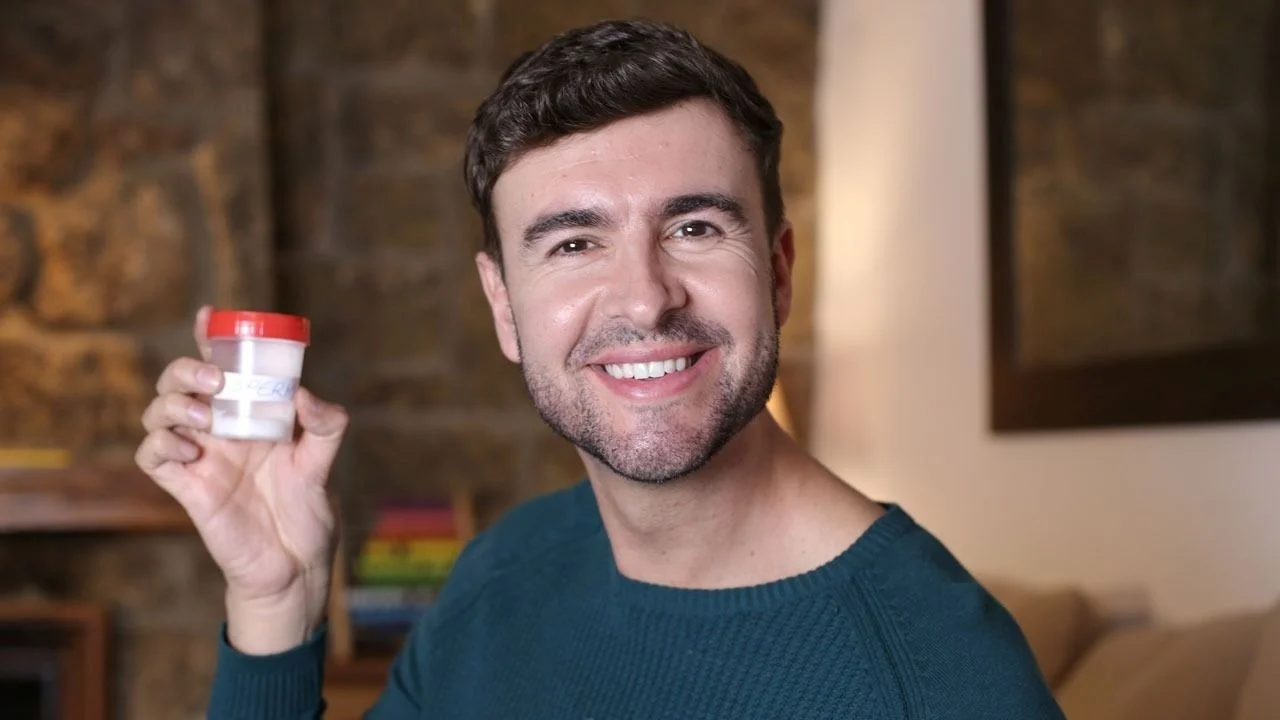
If you can collect a semen sample through masturbation, for example, vaginal insemination with your own semen may be an option for suitable couples. In this home insemination method, semen is placed in the vagina without intercourse. It does not replace assessment of other fertility factors or treatment for distressing symptoms.
An observational study of vaginal insemination for sexual dysfunction reports pregnancies in selected couples. It cannot establish your individual chance of success. Discuss suitability, hygiene and the next steps; this is vaginal use, not an attempt to inject semen into the uterus at home.
When IUI may be an option
In intrauterine insemination, or IUI, a clinic places prepared sperm into the uterus. The UK regulator HFEA lists difficulty with vaginal intercourse as one possible reason to use it. Whether it suits you depends on factors including semen results, ovulation, the fallopian tubes and your history.
If ejaculation or giving a sample is difficult too
Repeating the same situation with even more pressure is not the answer. Tell the clinic early if ejaculation is impossible, very little fluid comes out or giving the sample itself causes anxiety. This needs a focused assessment and, if necessary, other ways of obtaining sperm. Appropriate treatment then depends on the findings; IVF is a possible next step, not an inevitable one.
If providing the sample at the clinic is the main difficulty, ask in advance what arrangements are possible. For example, check whether collection at home is an option, which rules apply to the container and transport, and whom you should contact if you cannot produce a sample at the appointment. These arrangements need to be agreed with the particular laboratory.
Pressure can ease after ovulation too
The tension does not always end with the fertile window. Your attention may shift from timing to whether conception has happened. Tiredness, a pulling feeling in the lower abdomen or a change in desire can quickly be interpreted as signs. Individual symptoms cannot reliably answer that question, and neither can your erectile function during this time.
Agree how much space waiting should take up in daily life and when to test. Closeness can simply be closeness during this time. If interpreting symptoms is your main concern, the article on the two-week wait may help. Discuss any specific instructions from ongoing treatment with your clinic.
Myths and facts about erection problems when trying for a baby
- Myth: if you really want a baby, you can have sex on the fertile days.
- Fact: A strong wish for a baby does not put erections under voluntary control. The expectation that sex absolutely must work can increase tension and self-monitoring. A fading erection is therefore not proof that you do not want a baby. Repeated difficulties call for support, not a test of determination.
- Myth: a soft erection means poor-quality sperm.
- Fact: Erection firmness does not reliably indicate sperm count, movement or shape. Erection problems can prevent semen from reaching the vagina; reduced semen quality is a separate issue. Assessing that requires semen results rather than judging the erection.
- Myth: if sex does not work that one evening, the cycle is lost.
- Fact: The fertile window spans several days, and an ovulation test does not set one compulsory appointment for sex. Whether pregnancy is possible depends in part on when ovulation happens and whether semen reaches the vagina during the right window. One missed attempt cannot answer that question on its own.
- Myth: if masturbation works, a physical cause is ruled out.
- Fact: Different situations can produce different sexual responses. A better erection when alone is useful information for the consultation, but not a reliable exclusion test. Physical factors and pressure to perform can both be involved and should be considered together.
- Myth: if the erection fades, you are not attracted to your partner.
- Fact: Desire, attraction and erectile function are not interchangeable. You can desire your partner and still have difficulties because of tension, exhaustion or physical factors. A conversation can clarify what the situation means to you both; the erection alone is not a reliable measure of your relationship.
- Myth: you only need to relax and pregnancy will happen.
- Fact: Reducing pressure can make sex easier, but does not automatically remove physical causes or other fertility factors. Being told to relax can itself become another demand. Counselling and medical assessment can go together without making either of you responsible for pregnancy not happening.
- Myth: an erection tablet solves the problem of conceiving.
- Fact: A suitable medicine can support an erection and make intercourse possible. A steadier erection does not mean that all the other requirements for pregnancy are met. Continuing anxiety, pain or conflict also deserves attention, even when the medicine improves the erection.
- Myth: without intercourse, IVF is the only option.
- Fact: Depending on the situation, treatment for erection problems, vaginal insemination with a partner’s semen or IUI may be suitable. Relevant factors include whether a sample can be obtained and the findings for both partners. IVF may become appropriate, but is not an automatic consequence of erectile dysfunction.
Conclusion
Erection problems can make it harder to conceive, but do not rule pregnancy out. The key is to distinguish erections, ejaculation and fertility in both partners. Pressure to perform deserves attention just as possible physical causes do; both can be addressed alongside each other.
Before the next fertile window, discuss what would help and how you want to handle a difficult attempt. If the problems recur, arrange an appointment early. Depending on the findings, treatment for erection problems or options without intercourse may help. Your plans for a baby need an approach that suits you, and closeness can still have a place of its own.
Where to go next
Read more about erectile dysfunction, semen analysis and insemination in these guides.