Social freezing: egg freezing – steps, chances, risks, costs and alternatives
Social freezing means freezing your eggs earlier in life so they can potentially be used later in fertility treatment. This guide breaks down how the process usually runs, what results depend on, the realistic risks and costs, and what alternatives you can think about.


What social freezing is and what it is not?
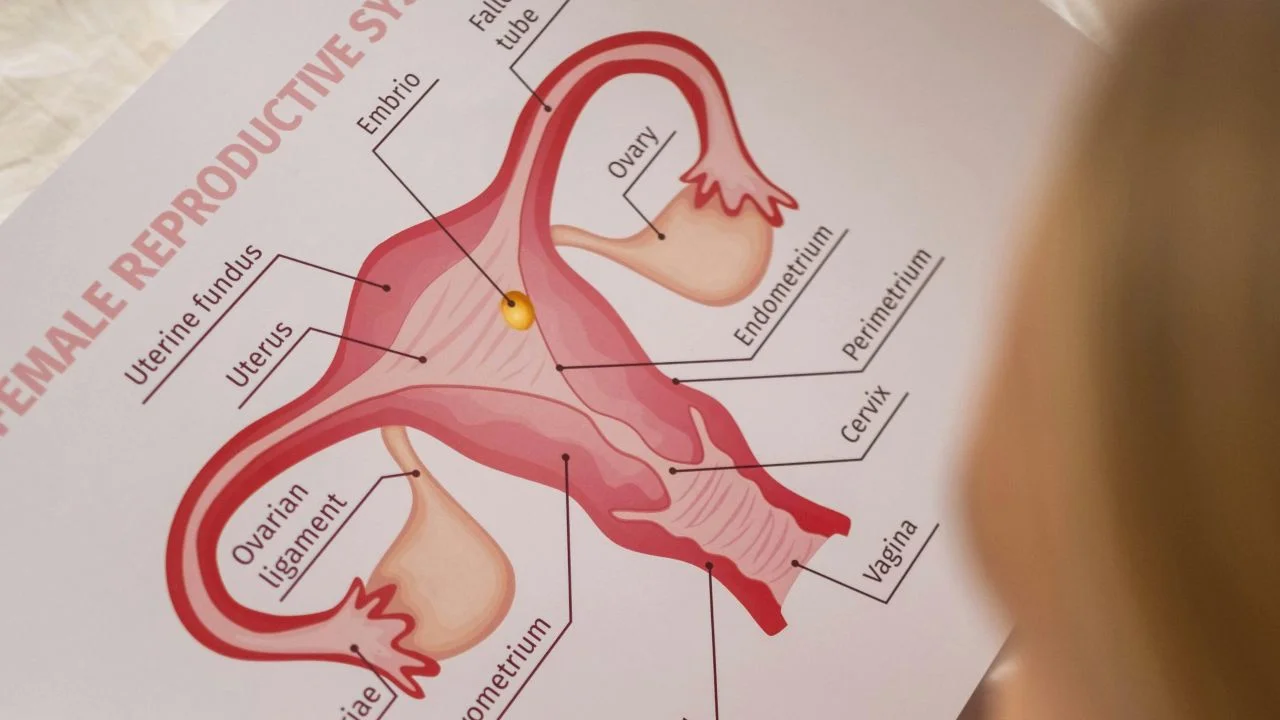
In social freezing, unfertilised eggs are retrieved after hormonal stimulation and then rapidly frozen in a lab. Clinically, this is often described as planned egg cryopreservation, and the freezing method is usually vitrification, a rapid-freezing technique. For a clear official overview, see: HFEA: Egg freezing.
A key point for context: social freezing is not a guarantee of a future child. It is a way to keep options open when your life plans and your biological time window do not line up right now.
Many people confuse social freezing with freezing embryos. With embryos, egg and sperm are already combined, whereas with social freezing, only eggs are frozen first. If you use them later, fertilisation happens as part of IVF or often ICSI. IVF means in vitro fertilisation, and ICSI is a form of IVF where a single sperm is injected directly into the egg.
Social freezing is also sometimes mixed up with medical fertility preservation. Medical fertility preservation can be relevant, for example, before cancer treatment, whereas social freezing usually means freezing without an acute medical reason.
One more point that often gets missed: even if your eggs are younger, pregnancy at an older age still comes with its own medical considerations. Social freezing can buy time, but it does not replace good planning and counselling.
When social freezing can make sense?
Whether social freezing makes sense for you depends on your situation, not only your age. Common reasons are that now is not the right time for a pregnancy, there is not enough stability in a relationship or daily life, or you want to gain time without leaving everything to chance.
Medically, the age of the eggs matters most. As you get older, the proportion of eggs that later do not develop into a healthy pregnancy tends to rise, and ovarian reserve tends to fall. As a general rule: the earlier eggs are frozen, the better the starting conditions for later use. If you want a broader orientation on age and fertility, this overview helps: Fertility and age.
Your individual baseline is just as important. Consultations often look at values such as anti-Müllerian hormone, AMH, and an ultrasound of the ovaries to estimate how many eggs you are likely to retrieve per cycle.
If you feel strong time pressure, it can help to sort that pressure out mentally before you start medical steps. This article may help: Your biological clock is ticking: signs and clear next steps.
For broader context on infertility worldwide, see WHO: Infertility.
The process: step by step
The exact process varies from centre to centre, but it usually follows a similar logic. The goal is to retrieve several mature eggs in one cycle, freeze them safely, and store them so they can later be used for IVF or ICSI. A simple overview of IVF steps is available here: NHS: IVF.
1. Initial consultation and tests
You usually start with a consultation. This is not only about lab values, but also your timeline, medical history, medicines, cycle, risk factors, and how realistic social freezing is in your situation. Good centres also talk openly about limits, emotional strain, possible multiple cycles, and later use including costs.
In practice, it helps to bring a short list to the first appointment:
- Which medicines you take regularly and which medical conditions matter.
- Which time windows you realistically have over the next few weeks for monitoring and appointments.
- What your goal is, for example keeping an option for one child or more than one.
- How important flexibility is for you, for example if a second cycle becomes advisable.
2. Hormonal stimulation
To mature multiple eggs at the same time, the ovaries are stimulated for a short period. This usually involves daily injections for about ten to fourteen days, plus monitoring with ultrasound and blood work. The goal is to time the retrieval correctly and to detect risks such as overstimulation early.
3. Trigger and egg retrieval
Once the follicles have developed well, final maturation is triggered. Retrieval is then done in a short procedure, often under sedation or brief anaesthesia, typically via a vaginal ultrasound-guided approach. You usually need some rest afterwards, and many people go home the same day.
4. Lab: selection, freezing, and storage
In the lab, mature eggs are identified and frozen. Vitrification is commonly used to reduce ice crystal formation. The eggs are then stored in liquid nitrogen and remain there until you decide to use them or storage ends.
5. Later use in fertility treatment
If you decide to use the eggs later, they are thawed and fertilised. ICSI is often used because the egg shell can change after freezing. Embryos can then be transferred to the uterus, similar to a classic IVF cycle.
Preparation and planning: what to clarify before you start
Social freezing is not only medical care, it is also scheduling, budgeting, and expectation management. The better you clarify what your next few weeks look like, the smoother the process tends to feel.
- Organisation: can you come in at short notice for monitoring appointments if the timeline shifts.
- Work: does it fit into a high-pressure phase, or would a calmer month be better.
- Recovery: do you plan a quiet day after retrieval and avoid heavy physical strain.
- Budget: do you have a plan for medication, storage, and possible add-on appointments.
- Later use: are you already thinking about whether you would more likely consider IVF, ICSI, or other routes.
If your main question is what family-building without a classic relationship can look like, this overview helps: Getting pregnant as a single person.
Success: what it really depends on
Success does not depend on one single number, but on a bundle of factors. The most important factor is usually the age of the eggs at the time of freezing, plus the number and maturity of the eggs retrieved and the quality of the lab work.
Practically, that means: more frozen eggs increases the chance of later achieving at least one pregnancy, but it does not guarantee it. And the reverse can also be true: in some situations a smaller number can still be enough when age and baseline are favourable.
Many reputable overviews also stress that overall data are reassuring, but not precise enough to give every person a reliable number of eggs needed for a live birth. Good counselling therefore focuses on realistic scenarios rather than promises.
If you mainly see social freezing as a time buffer, it helps to separate two layers: the quality of the eggs at freezing and the life stage in which you want to become pregnant later. Both layers matter.
If you want to go deeper into stimulation, this article fits: Ovarian stimulation: process, medication, and what to expect.
How many cycles make sense?
Many people expect a clear answer on how many cycles are needed. In practice, it mainly depends on your age, your ovarian reserve, your goal, and how many mature eggs you can retrieve per cycle.
Good counselling turns that into a plan that fits your life. Some people deliberately start with one cycle and decide afterwards whether another cycle is worthwhile. Others plan more from the start if time and budget allow.
What egg quality means in the lab?
In consultations you will often hear the term mature egg. It usually means the egg has reached a stage of maturity that can in principle be fertilised later. Not every egg that is retrieved is automatically mature, and not every mature egg later results in a pregnancy.
That is why it makes sense to look not only at the total number retrieved, but also at how many eggs were actually frozen and how strong the lab is in preparation and storage.
After the retrieval: what is typical in everyday life
After retrieval, many people feel tired and notice pressure in the lower abdomen. It is often recommended to take it easy the same day and avoid heavy exertion for the next few days, because the ovaries can be temporarily enlarged.
What matters is that aftercare depends on your individual course. If you are unsure, the rule is simple: contact the centre rather once too often than not enough.
Myths and facts
- Myth: Social freezing is an insurance policy for a baby. Fact: it can improve chances, but there is no guarantee.
- Myth: If I freeze eggs, I can postpone the decision forever. Fact: even with frozen eggs, health and life stage still matter later.
- Myth: One cycle is always enough. Fact: it is individual and depends on age, reserve, and goals.
- Myth: Only single people do social freezing. Fact: it can also make sense in relationships if timing and life plans do not align.
- Myth: Social freezing is a quick appointment with little planning. Fact: it usually involves several checks, appointments, and a phase with daily injections.
- Myth: With frozen eggs, pregnancy is equally straightforward at any age. Fact: younger eggs can help, but later pregnancy still comes with its own medical considerations.
- Myth: I have to decide today whose sperm I will use later. Fact: social freezing freezes eggs first, and fertilisation is only decided when you use them later.
Risks and side effects
Social freezing is a medical treatment and has side effects. Many symptoms are temporary. Serious complications are overall uncommon, but they should be named clearly.
- During stimulation: pressure in the lower abdomen, bloating, mood swings, headaches, tender breasts.
- After retrieval: tiredness, mild pain or spotting, rarely infections or bleeding.
- Rare but important: ovarian hyperstimulation syndrome, OHSS, with stronger symptoms. This is why monitoring and good risk assessment are so important.
Talk to the centre in advance about which warning signs apply to you and when you should contact them immediately. This is especially important if you notice severe pain, shortness of breath, marked weight gain within a short time, or persistent vomiting.
For context on evidence: reviews describe overall comparable obstetric and child outcomes for pregnancies after using frozen eggs compared with fresh eggs, while also noting that long-term data are limited and still being collected.
A clear overview of typical IVF risks and side effects is here: NHS: IVF risks.
Costs: what to budget for
Costs usually consist of several building blocks, and differences between centres can be substantial. In India, clinics often quote package pricing in rupees, and medication costs can vary, so ask for a clear written breakdown before you start.
- Pre-checks, counselling, and lab diagnostics.
- Medication for stimulation.
- Egg retrieval including anaesthesia or sedation.
- Lab work, freezing, and documentation.
- Storage fees per year or per period.
- Later use: thawing, fertilisation, and embryo transfer.
Ask specifically about package pricing, possible add-on costs, and how cancellation and storage are handled if your plans change. If there are medical reasons for fertility preservation, coverage rules can differ from social freezing depending on the system and the individual case.
As an example of how a regulator explains costs and funding, see: HFEA: Costs and funding.
Legal and logistics: key questions to clarify early
Many questions around social freezing are not medical, but organisational and legal. Rules vary by country and centre, so it is worth reading the paperwork carefully and clarifying open points in writing before you start.
- How long eggs may be stored and which consents have to be renewed regularly.
- What happens to the eggs if you do not want to use them or cannot use them anymore.
- Which options you have later, such as using them with a partner or with donor sperm, and which framework rules apply.
- Which documents the centre needs if you want to transfer the eggs to another centre.
Emotional side: expectations, pressure, and helpful support

Many experience social freezing as relief because it feels like a door stays open. At the same time, that can create new pressure, for example the thought that you must use the eggs later or that you might miss the right timing.
It often helps to focus on one inner guiding question: do you want social freezing as an additional option, or do you expect a kind of insurance. If you notice that fear, time pressure, or conflict in your environment dominates the decision, independent psychosocial counselling can be helpful before you start medical treatment.
Alternatives and complements
Social freezing is not the only way to deal with uncertain timing when you want a child. Which option fits depends on your situation, your health, and the rules in your country.
- Trying to get pregnant earlier if life circumstances and relationship allow.
- Embryo cryopreservation if sperm is already available and it is legally possible.
- Medical fertility preservation when damage to the ovaries is expected, for example before certain treatments.
- Family models and routes such as co-parenting, adoption, or foster care, depending on personal wishes and legal framework.
None of these options is automatically better. What matters is reaching a decision that feels right long term and is medically realistic.
Conclusion
Social freezing can give you time and additional options, but it is not a guarantee. It is a decision with benefits, limits, costs, and an emotional dimension that is best made with realistic information and good support.
If you want to keep reading
Further reading on understanding fertility test results and planning your timeline.