

Start here
- A regular menstrual period is not possible once a pregnancy has started.
- Light spotting in early pregnancy can be harmless, but it should not be dismissed.
- Heavier bleeding, one-sided pain, dizziness, fainting, or shoulder pain are warning signs.
- Most cases can only be sorted out by combining symptoms, ultrasound, and hCG over time.
- Bleeding in the second or third trimester should always be checked promptly.
Why there can't be a period during pregnancy?
Menstruation is the shedding of the built-up uterine lining when there is no pregnancy. Once pregnancy is established, that lining stays in place. Bleeding in pregnancy therefore has other causes. It is not a normal period, even if it happens around the time a period would usually be expected.
People still say period despite pregnancy because the bleeding may show up around the expected date. Medically, that is not precise. What matters is whether the bleeding looks more like light spotting, contact bleeding, a pregnancy that is not developing normally, or an urgent warning sign.
When bleeding seems harmless and when it does not?
Light, short bleeding without strong pain can happen in the first weeks. It can occur around implantation, after vaginal sex, or after an examination. That does not automatically mean something dangerous is going on.
It is different when the bleeding gets heavier, turns fresh bright red, comes with clear lower abdominal pain, or affects your circulation. In that situation, waiting is not enough. In early pregnancy, bleeding plus pain can also mean an ectopic pregnancy or a miscarriage.
Quick check for home
- Very little, pink or brown, gone within a few hours: usually less concerning, but still worth watching.
- Bright red, recurring, or increasing: get it checked promptly.
- Cramping pain or one-sided pain: do not look only at the bleeding, look at the whole situation.
- Dizziness, fainting, cold sweat, shoulder pain, or marked weakness: emergency.
- Bleeding in the second or third trimester: always get medical care.
Common causes in early pregnancy
Implantation-related spotting
Very light, short bleeding can happen around implantation. What is typical is not a period-level flow but rather small spots of blood. If the bleeding gets heavier or lasts for several days, that fits this explanation less well.
A sensitive cervix
The cervix is more heavily supplied with blood during pregnancy. Because of that, small contact bleeds can happen after sex, a vaginal examination, or even without a clear trigger. They are often bright red, short-lived, and settle again.
Infections or changes on the cervix
Infections, small injuries, polyps, or a harmless tissue change on the cervix can also cause spotting. That is unpleasant, but it does not automatically mean pregnancy loss.
Subchorionic haematoma
Sometimes an ultrasound shows a blood collection next to the gestational sac. That can explain bleeding and needs follow-up depending on the finding. Bleeding amount alone does not reliably tell you how important the finding is.
Pregnancy that is not developing normally
If bleeding and pain happen together, or if the ultrasound does not fit a viable pregnancy, then a non-viable early pregnancy has to be considered. That includes biochemical pregnancy, where the test is positive but the pregnancy stops very early.
Warning signs that mean you should not wait
Certain combinations suggest that this is not just harmless spotting. Strong symptoms together with a known or possible pregnancy are what matter most.
- one-sided or very strong lower abdominal pain
- dizziness, collapse feeling, fainting, or shortness of breath
- shoulder pain together with belly pain or weakness
- heavy or rapidly increasing bleeding
- fever or a clearly unwell feeling
These signs can point to a ruptured ectopic pregnancy or heavier internal bleeding. Tubal ectopic pregnancy is the most common form of extrauterine pregnancy and can become dangerous if untreated. Recent review on diagnosis and treatment
What changes by pregnancy week?
First weeks
Light bleeding is relatively common in early pregnancy. The issue is not that every bleed is dangerous. The issue is that without an examination you often cannot tell whether it is harmless spotting, an early pregnancy problem, or an ectopic pregnancy.
Second trimester
Bleeding is less common here and therefore taken more seriously. The cervix, placental location, and the overall pregnancy situation need to be checked.
Third trimester
Late bleeding always needs urgent assessment. Causes like placenta praevia or placental abruption cannot be sorted out safely at home. Especially if there is pain, a hard abdomen, or circulation problems, hospital is the right place.
Diagnostics: why one appointment is not always enough
Many people want a clear answer right away after bleeding starts. In very early pregnancy, that is often not possible. A positive test only shows that pregnancy hormone is present. It does not yet tell you where the pregnancy is or whether it is developing normally.
For evaluation, three pieces usually matter most:
- your symptoms and circulation status
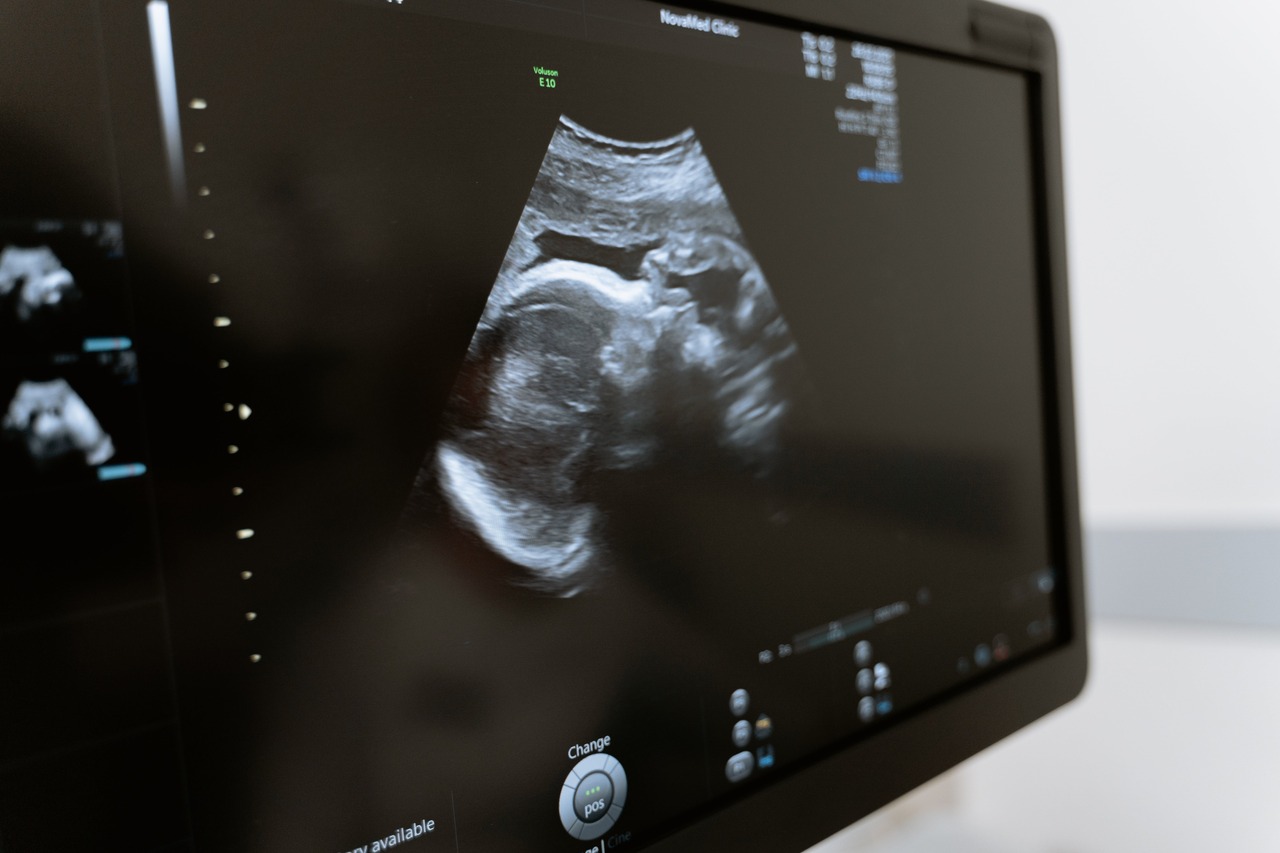
- transvaginal ultrasound
- hCG over time instead of a single value
When the ultrasound is still unclear, a repeat check after 48 hours is common. A current review of early hCG dynamics shows why safe interpretation usually comes from the trend and the full picture, not from one lab result. Review on beta-hCG dynamics in early pregnancy
What is checked in practice?
- How much bleeding there is and how long it has been going on
- Whether the pain is one-sided, cramping, or sudden and severe
- Whether the ultrasound shows a pregnancy in the uterus
- Whether free fluid, a haematoma, or an abnormal adnexal finding is seen
- How the hCG value changes over time
- Whether infection, blood group, or rhesus factor needs additional review
If the location of the pregnancy is not yet certain, doctors often speak of a pregnancy of unknown location. That is not a final diagnosis. It is a temporary label until the trend becomes clearer.
What you can do before you are seen?
Use pads rather than tampons or a cup so that the amount and colour are easier to judge. Note when the bleeding started, whether it is getting heavier, and what other symptoms show up.
Avoid unnecessary exertion for now and skip vaginal sex until it is clear what is behind the bleeding. The main goal is not perfect rest. It is to spot warning signs early.
Myths and facts
- Myth: If the timing feels like a period, it probably is a period. Fact: There is no real menstrual period during pregnancy. Bleeding can still happen around the expected date.
- Myth: A small amount of blood means everything is fine. Fact: An ectopic pregnancy can also start with very little bleeding.
- Myth: If the first ultrasound shows nothing, everything is either fine or already lost. Fact: In very early pregnancy, the trend after repeat checks is often what matters most.
- Myth: Only severe pain is dangerous. Fact: Light bleeding plus dizziness or shoulder pain also needs attention.
- Myth: Bleeding automatically means miscarriage. Fact: Bleeding has several possible causes. That is why it needs medical review.
The emotional side matters too
Bleeding in pregnancy often causes immediate fear, even when everything later turns out to be fine. That reaction is normal. The time before a follow-up appointment can be very hard, especially if the pregnancy has been wanted for a long time.
A clear plan helps: when the next check is, which symptoms are emergency symptoms, and who to contact outside office hours. It does not remove uncertainty completely, but it often makes it easier to handle.
Related reading


Takeaway
Bleeding during pregnancy does not automatically mean the worst, but it is never just a normal period either. What matters is the amount, pain, circulation, and pregnancy week. If you are unsure, early assessment is sensible. If the bleeding is heavy, the pain is one-sided, or you feel dizzy or faint, do not wait. Get medical help right away.