Home insemination kit: contents, buying, use, risks and when a kit makes sense
A home insemination kit is only useful if it genuinely makes the process at home easier rather than being sold with inflated promises. What matters most is not gimmicks but good timing around ovulation, clean single-use supplies, realistic expectations, and a willingness to move on to medical assessment when repeated attempts are not working.

Does a home insemination kit make sense for you at all?
People looking for a home insemination kit usually do not need the method explained from scratch. They want to know whether a kit will actually improve the process. That is the point of this article. A kit makes sense if you want a calm, clean, repeatable arrangement at home. It is the wrong solution if the real issue may already be timing, semen quality, or another fertility factor.
- Do we have plausible timing around the fertile window?
- Are there known medical reasons not to keep experimenting for too long?
- Is it clear where the sample is coming from and how testing, quality, and documentation are being handled?
- Do we actually want a complete kit or just clean basics for a clear routine?
- Do we already know when we would move on if pregnancy does not happen?
If several of those questions do not have solid answers, a bigger kit usually will not create progress. A better plan will. If you want the exact method itself, the cup method is the better companion article. Here the more important question is whether a kit fits your situation.
When a kit means buying past the real problem?
A home insemination kit can organise the process, but it cannot fix a medical cause. When known barriers are already on the table, another kit is often just a polished way to avoid the harder question.
- highly irregular cycles or absent ovulation
- known tubal problems or advanced endometriosis
- an abnormal semen analysis or clearly reduced semen quality
- older age, when waiting too long costs time
- multiple well-timed, documented cycles without pregnancy
In those situations, another internet kit is often less useful than a structured conversation about evaluation, IUI, IVF, or ICSI. The real question is not only whether the kit looks good, but whether it addresses the right problem.
What actually belongs in a good home insemination kit?
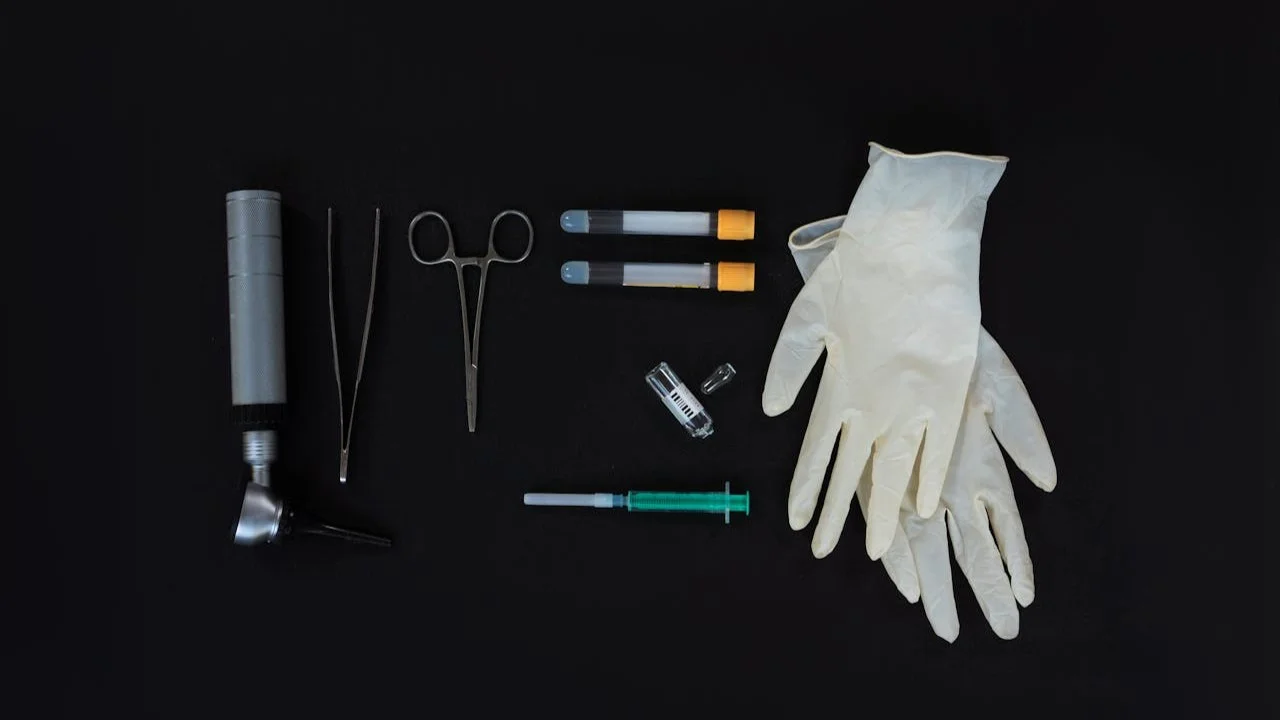
The best shopping list is often surprisingly short. A good kit is not defined by how much it includes but by whether the basics are clean and useful. The simpler the contents, the easier the process is to repeat safely.
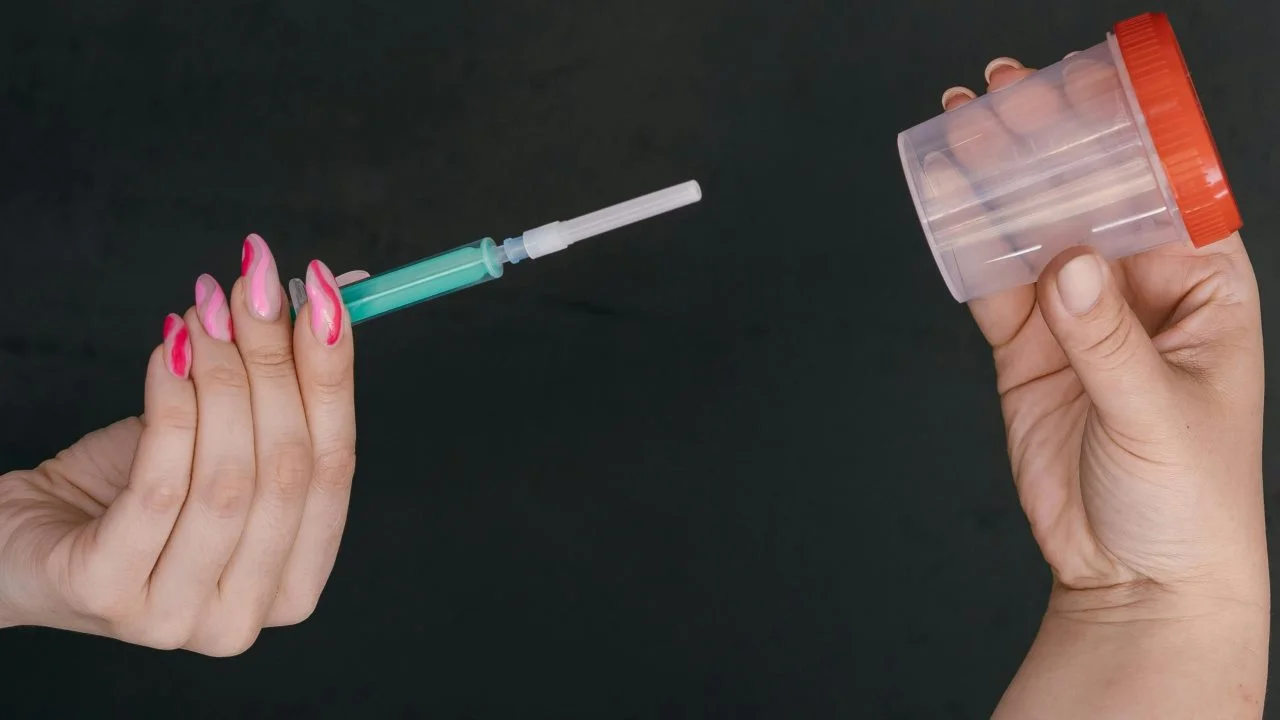
- sterile collection cup or individually wrapped disposable cup
- needle-free syringe as a single-use item
- disposable gloves
- clear, plain-language instructions
- optional ovulation tests for timing
- optional note card for date, time, and cycle day
If a kit covers those points well, that is often enough. Everything else first has to prove that it adds real practical value.
What is usually not necessary?
Many kits are made to look bigger so they sound more valuable. In practice, a lot of the extra parts belong more in the marketing category than in the useful category.
- fragrances, oils, or activators with big claims
- complicated reusable parts without clear sterility standards
- unusual applicators that make the process more stressful
- soft cups or reservoir ideas without a clear proven advantage
- anything framed as a technical shortcut to better odds
With home insemination, less equipment and a clearer plan is often the better arrangement. That makes the process safer and easier to assess.
How to recognise a serious kit?
A serious seller is offering clean supplies, not illusion. The key question is not whether the packaging looks polished but whether the contents, sterility, and instructions make sense.
- single-use materials are clearly identified
- packaging looks medically clean, not improvised
- instructions are understandable and not exaggerated
- there are no cure claims or pregnancy guarantees
- batch details, individual wrapping, or product specifics are traceable
Be sceptical of any product that talks more about miracle success than about hygiene, timing, and the limits of the product.
What many shops leave out even though it matters more?
Sales pages talk a lot about privacy, comfort, and intimacy. Much less often they explain that with home insemination the entire chain matters, not just the supplies: cycle tracking, sample quality, infection safety, documentation, and with donor sperm also the legal and organisational side. The HFEA specifically points to testing, risks, and legal consequences for home insemination with donor sperm. That is not a side note. It is often the real difference between a well-prepared attempt and a poorly protected one.
A good kit should therefore never imply that it replaces fertility workup, semen analysis, or clean agreements with a known donor. Once a seller acts as though the main problem is usually missing accessories, the story being sold is the wrong one.
Timing: why the fertile window matters more than the kit
The most important biological factor is usually the time window around ovulation. The egg is only fertile for a short time after ovulation, while sperm can survive for several days in favourable cervical mucus. That is why the focus is not only one perfect day but also the days leading up to it. For more on that, see how long sperm survive.
ASRM recommends intercourse or equivalent attempts every one to two days during the fertile window when trying to conceive. For home insemination that means a good kit adds very little if the attempt keeps happening outside the useful interval. On the other hand, a simple kit can be fully adequate when timing is good.
A systematic review of ovulation predictor kits found that home-based OPKs may help with fertility management. The evidence is limited and not equally strong in every setting, but it is enough to view timing tools more seriously than most other kit extras.
What realistic expectations look like?
Many people buy a home insemination kit at a point when every cycle already feels emotionally loaded. That is exactly why a reality check helps. The NHS notes that most couples become pregnant within a year if they have regular sex and are not using contraception. That cannot be mapped one-to-one onto every home insemination situation, but it is still a useful framework: trying to conceive is often a process across several cycles, not a product problem solved by the right box.
The practical lesson is not endless patience. It is better expectation-setting. A good kit can improve organisation, privacy, and routine. It cannot turn a biologically difficult situation into an easy one or turn a poorly timed attempt into a well-timed one.
What a sensible at-home routine looks like?
A good routine is not complicated. It is calm, hygienic, and repeatable. If every cycle includes a new technique, a new accessory, and a new timing idea, your own pattern becomes harder to evaluate.
- define the fertile window, for example with ovulation tests
- lay out all supplies in advance
- wash hands and create a clean surface
- collect the sample without rushing and use it promptly
- document the attempt instead of immediately forgetting it
If you want the actual method step by step, the cup method is the better deep-dive article. This piece is focused on how to judge the kit realistically.
Why documentation helps more than another accessory?
Simple documentation is worth it, especially with repeated at-home attempts. Note the cycle day, positive LH result, date and time of the attempt, anything unusual about the process, and whether the sample was fresh or delivered some other way. That sounds plain, but it is often the difference between a vague feeling that you have been trying forever and a clear picture of what actually happened.
That record becomes especially valuable once you start thinking about medical next steps. Instead of saying vaguely that you have tried a lot, you can show how many cycles were actually well timed. That also makes it easier to see when the supplies are no longer the bottleneck.
Hygiene: the part where improvising is a bad idea
The HFEA emphasises the importance of testing, preparation, and clear routines for home insemination with donor sperm. In day-to-day practice at home, that means anything touching the sample or mucosa should be as sterile as possible and intended for single use.
- do not reuse single-use items
- do not use household disinfectants on parts that touch the sample directly
- do not use unsuitable kitchen tools or improvised containers
- do not overheat, shake, or store the sample for too long
- seek medical advice for pain, fever, or unusual bleeding
With a known donor, open conversations about infection testing and current health matter as well. The organisational side is almost as important as the supplies themselves.
Fresh sample, known donor, sperm bank: the kit stays the same, the risks do not
Many product pages act as if only the procedure matters. In reality, the origin of the sample changes the entire risk picture. With a known donor, infection testing, family history, documentation, and clear agreements belong at the centre. The HFEA also points out that legal parenthood outside licensed clinics may be handled differently. Anyone looking only at the supplies can miss the most sensitive part of the topic.
Even with sperm bank material, not every scenario is automatically simple. The HFEA explicitly says that samples from overseas should not be shipped directly home for home insemination but to a licensed clinic so origin and integrity remain traceable. In practical terms, that means a kit may still be useful, but sample quality, transport, and legal protection are often the bigger story.
Home or clinic: where the real difference is
The biggest difference is not just the location but the medical framework. At home, this is a self-organised process. In a clinic, there is lab preparation, evaluation, close monitoring, and different procedures depending on the situation.
That does not mean a clinic is always the best first move. It does mean a home kit should not be compared to IUI as if they were just cheaper and pricier versions of the same thing. Understanding that difference prevents a lot of false expectations.
The most common mistakes with home insemination kits
- focusing too much on the kit and too little on timing
- changing something every cycle
- confusing expensive extras with actual medical help
- not documenting attempts
- waiting too long to rethink the plan even though the situation already points to evaluation
The last point is especially common. After several well-planned attempts without success, what people often need is not a new product variation but better information about their situation.
When it is time to stop tweaking the supplies?
ASRM typically frames infertility evaluation around 12 months without pregnancy for people under 35, 6 months for people 35 and older, and no unnecessary delay with a known cause or more advanced age. That cannot be transferred one-to-one to every home insemination scenario, but it is a useful decision framework.
If you are documenting carefully, hitting the right window, and still not seeing pregnancy, the supplies eventually become a side issue. At that point the more important questions are ovulation, semen quality, tubes, age, and other medical factors.
Myths around home insemination kits
- Myth: An expensive kit raises the odds a lot. Fact: The biggest difference is usually timing and baseline fertility.
- Myth: More accessories means better results. Fact: More parts often just mean more complexity.
- Myth: Home insemination is basically the same as IUI. Fact: Lab preparation and clinical placement are missing at home.
- Myth: You just need to find the right accessory. Fact: In many cases the real barrier is somewhere else.
- Myth: You need special positions or tricks after the attempt. Fact: There is no convincing evidence for that when timing and baseline factors are not right.
If you want to buy a kit, these three questions matter more than price
- Are the contents actually clean, sterile, and plausible?
- Does this set fit our situation or do we really need evaluation instead?
- Will this kit help with timing and routine or is it mostly selling hope?
If you answer those questions honestly, useful supplies separate from unnecessary marketing very quickly.
Conclusion
A good home insemination kit is not a miracle product. It is a clean, simple tool for a calm process at home. What actually matters is sterile single-use supplies, a realistic plan around ovulation, an honest view of your starting situation, and a willingness to stop buying more accessories and make smarter next decisions when attempts are not working.
Read next
More on home insemination: the process, timing and handling the sample.