Ovulation Trackers Compared: LH Tests, Temperature Trackers, Rings and Apps
Ovulation trackers are tools that narrow down fertile days using hormones, temperature, or observable body signs. This guide explains which devices can genuinely help predict fertile timing, which mainly confirm it afterwards, and how to choose and combine LH tests, wearables, rings and apps in a sensible way.

What ovulation trackers are actually for?
A good ovulation tracker should not simply guess a cycle day. It should help you make sense of the fertile window in real life. That starts with separating what a device is measuring in the first place. Some systems look for a hormone rise before ovulation, some detect the temperature shift afterwards, and others mostly work from calendar logic plus your own entries.
That difference matters because the fertile window is not just one single moment. If you want a clearer picture of why the days before ovulation are often the most important ones, the basic guide to ovulation helps.
Quick comparison: which signal helps with what?
- Urine LH tests are usually the strongest at-home signal if you want to spot ovulation shortly before it happens.
- Basal body temperature and many temperature wearables are better for confirmation and pattern review than for early prediction.
- Multi-sensor wearables and rings can narrow the periovulatory window better than calendar-only apps, but accuracy depends heavily on the device and the quality of the data.
- Apps without real biomarkers are convenient, but they are much weaker when cycles are irregular.
- If you want one system only, the key question is not the brand. It is your goal: prediction, confirmation, long-term pattern tracking, or low effort.
LH tests: the best at-home prediction window
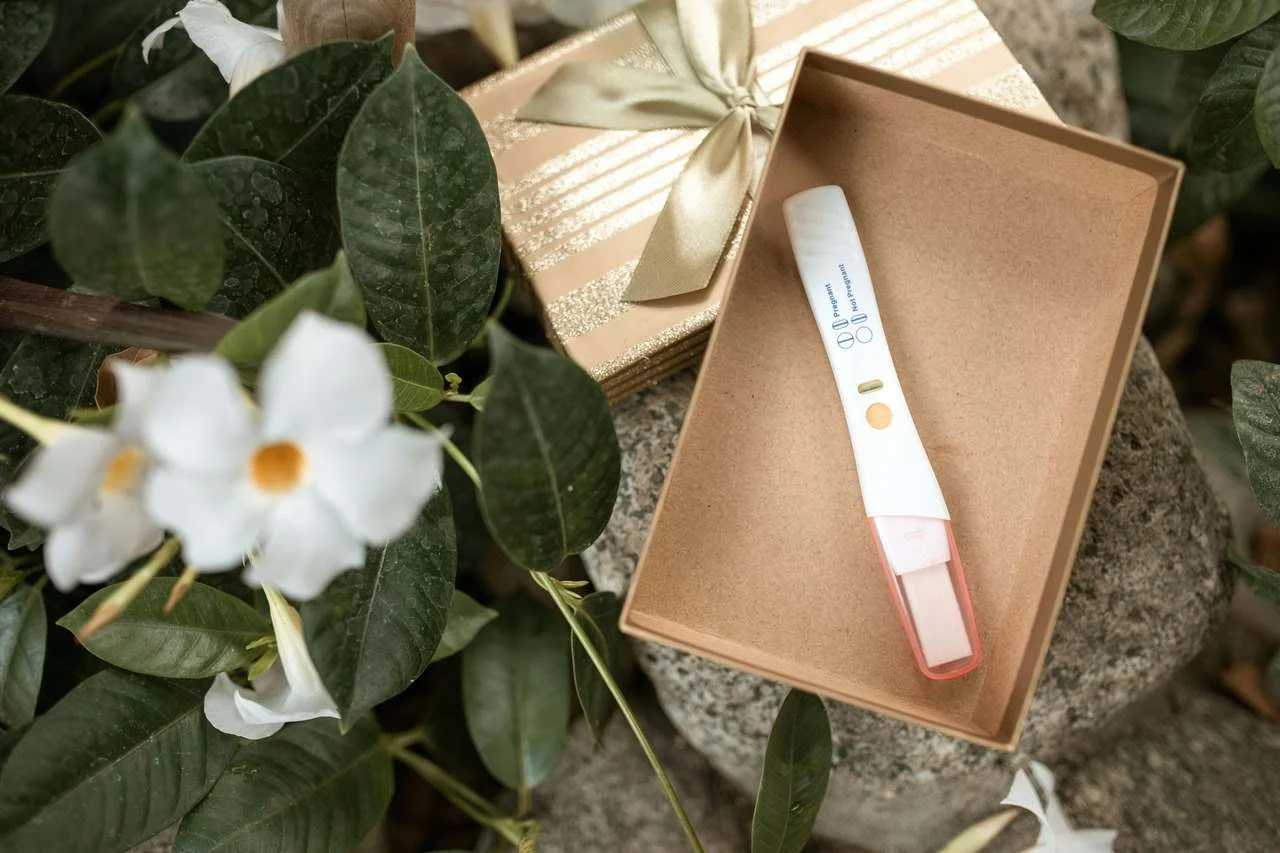
Ovulation tests measure the luteinizing hormone surge in urine. That signal is so useful for timing because the LH rise typically happens shortly before ovulation. In a prospective comparison study, urine LH tests were used as a practical reference because they often reflect the relevant hormone rise around 24 to 36 hours before ovulation.
The main advantage is clear: you get a biological signal rather than a calculated guess. The downside is that a positive LH test does not guarantee that ovulation definitely took place in every cycle. If you want to understand LH better, the more detailed guide here is useful: LH surge and ovulation tests.
In day-to-day use, that usually means planning for the same day and the following day once the test turns positive. A simple overview of fertility across the cycle is also available from the NHS.
Basal thermometers, wrist devices, rings, and other temperature trackers
Temperature-based trackers work differently from LH tests. They look for the temperature rise that usually becomes visible after ovulation because of progesterone. That is why classic basal thermometers and many overnight trackers are especially good at confirming patterns in retrospect.
It helps to stay sober about this. Not every wearable is automatically a good ovulation tracker. Some systems record temperature only, while others combine temperature with heart rate, breathing rate, or additional signals. Reviews and device studies suggest that these systems can often narrow the periovulatory time frame in a useful way, but quality varies sharply from one product to another.
In practical terms, a ring or wrist tracker is often more comfortable than manual daily measuring, but comfort does not replace solid logic. If your device relies mainly on temperature, it is usually stronger for patterns, luteal-phase review, and hindsight than for a genuinely early signal you can act on.
What temperature wearables do well and where they fall short?
- They reduce errors from grogginess or missed one-off readings because they collect data continuously during sleep.
- They help you see recurring patterns across several cycles, such as whether your temperature rise looks plausible.
- They are useful if you do not want the discipline of taking your temperature manually every morning.
- They are still vulnerable to poor sleep, illness, alcohol, jet lag, and irregular nights, even if the algorithm smooths some of that noise.
- Many studies compare them with LH tests rather than with daily ultrasound monitoring. That is why marketing claims about precision deserve caution.
If you are tracking with temperature, combining it with a second marker usually helps. The simplest option is often cervical mucus or an LH test.
Rings, ear sensors, and vaginal sensors: more comfort or more accuracy?
Rings and other multi-sensor wearables often measure overnight at the finger or wrist. Ear-adjacent or vaginal sensors are closer to more stable body temperatures and may be technically closer to core physiology. That does not automatically make them the best choice for everyone.
The closer a device measures to the centre of the body, the more comfort, hygiene, and real-life usability matter. For many people, a ring or wrist device is easier to sustain long term. For others, a classic basal thermometer together with LH tests is already enough. The best solution is not the most technically complex one. It is the one you can use consistently over several cycles.
Apps and symptothermal systems
Apps are not all the same. One app may be little more than a diary that projects future cycles from previous ones, while another may be a symptothermal system that interprets real observations such as temperature, mucus, and LH results according to specific rules. That difference is substantial.
Calendar-only apps are the easiest to use, but they lose precision quickly when the follicular phase shifts. That matters especially with stress, travel, poor sleep, or irregular cycles. Systems built around biomarkers take more effort, but they give you much more actual cycle information.
If you use an app, it ideally should not only show polished predictions. It should also show raw data, trends, and export options. That makes it easier to tell whether the app is measuring something real or just offering a friendly guess.
Which solution fits which goal?
The right choice depends less on market trends than on your actual goal.
- If you want to time fertile days actively, start with LH tests and add cervical mucus if needed.
- If you want to understand patterns across months, a temperature tracker or ring can help a lot.
- If you want low effort, a good wearable is often more realistic than manual daily measurements.
- If you want to spend very little, a basal thermometer plus cervical mucus observation often goes further than people expect.
- If unclear signals frustrate you quickly, two complementary markers are usually smarter than buying one new device after another.
The most important buying decision: prediction or confirmation?
Many people buy trackers as if every device solved the same job. That is what leads to disappointment later. The central difference is not ring versus bracelet or app versus sensor. It is prediction versus confirmation.
If you want to plan sex, ICI, or another narrow timing window on purpose, you need a system with actual lead time. That is where LH tests and carefully observed cervical mucus are usually the best foundation. If your main aim is to see whether your cycle looks plausible, how long the luteal phase is, or whether a pattern stays stable over months, temperature systems are very strong.
Many supposed all-in-one systems look elegant at first glance, but in reality they mix prediction, hindsight, and calendar logic. That can be good enough if you understand what the device is really telling you. It becomes a problem when you treat a mixed signal as an exact medical statement.
How to recognise a good device in everyday use?
A useful ovulation tracker should feel less like tech theater and more like clarity. What matters is not how many sensors a product advertises, but whether the data can support sensible decisions.
- The device or app clearly separates estimate, likely, and confirmed.
- You can see raw values or at least understandable trends instead of a colourful prediction window only.
- It offers a simple way to mark exceptions such as illness, jet lag, or a terrible night of sleep.
- The routine is realistic. If the system annoys you after two weeks, it is not a good system for you.
- Export or sharing is possible in case you want to review data with a practice or fertility clinic.
- Privacy settings are understandable and not buried under marketing copy.
This is where many products fail. They look modern but provide too little context. A tracker becomes useful only when you understand what the result means and how certain it really is.
Typical setups that actually work in real life
A good setup rarely comes from a single device. It comes from choosing something that fits your goal and your everyday routine. These four combinations cover the most common realistic cases.
Setup 1: low cost and very effective
LH tests plus cervical mucus are enough for many people. You get a prediction signal and a body sign that is useful in real life. This is especially strong if you want active timing without a lot of technology.
Setup 2: comfort without daily discipline
A ring or overnight tracker plus LH tests often makes sense if you cannot stick with manual temperature readings. The wearable collects background patterns, and LH gives you the concrete action signal during the relevant window.
Setup 3: irregular cycles with a lot of uncertainty
When cycles swing widely, combining cervical mucus, LH, and temperature is often more reliable than any single calculation model. It sounds more involved, but it usually saves frustration because you are not relying on one system alone.
Setup 4: fertility clinic or medical support
If evaluation or treatment is already underway, home tracking becomes more of a supplement than the main tool. Then the important point is good documentation, not pretending the device is more accurate than ultrasound or lab work.
When a tracker causes more stress than benefit?
Ovulation trackers are not automatically reassuring. For some people, they mostly increase pressure, self-monitoring, and disappointment. That is especially true when every line, every graph, and every app colour becomes emotionally loaded.
- If you check the app several times a day to see whether the forecast has shifted.
- If one unclear test can ruin the whole month for you.
- If you keep switching devices instead of using one system consistently across several cycles.
- If you continue tracking for a long time without seeking medical evaluation despite ongoing uncertainty.
At that point, the answer is often not more technology. It is less input and a clearer plan. Many people do better with a simple system and a fixed moment to review the month rather than reinterpreting everything afresh each day.
What studies and guidelines realistically support?
The clearest evidence is still for urine LH tests when the goal is the short prediction window before ovulation. Temperature-based methods remain valuable, but they are traditionally stronger for confirmation and pattern review. Modern wearables can do more than just basal temperature, yet their accuracy varies by device, algorithm, and user behaviour.
A systematic review of reproductive wearables describes finger, wrist, ear, and vaginal systems as promising, but it also stresses the need for more independent validation and flags privacy concerns. Larger newer analyses likewise suggest that physiology-based wearables can outperform calendar methods without proving that every app suddenly becomes clinically robust.
Guidelines stay practical for that reason. If you are trying to conceive, you do not have to find the perfect tracker. NICE still lists regular sex every two to three days as a solid base strategy. ACOG also explains why cervical mucus, temperature, and other fertility-awareness signals can be used together sensibly.
What the studies do not prove and what that means for you?
Many readers treat percentages as if they applied to every body in every month. That is not realistic. Studies often exclude cycles with missing data, poor documentation, or biologically implausible patterns. That is scientifically clean, but it does not fully reflect ordinary life.
New devices are also often compared with LH tests rather than with the more elaborate combination of serial ultrasound, lab work, and clinical interpretation. That is fair as long as the conclusion is not exaggerated. A good result against calendar methods is interesting, but it still does not replace clinical monitoring.
So use trackers as decision aids with a margin of uncertainty, not as a final verdict. That does not make them less useful. It makes their role more realistic.
Irregular cycles, PCOS, and other special situations
The more irregular the cycle, the more careful you should be with calendar predictions. With PCOS or strongly shifting cycles, LH patterns can be harder to interpret because multiple rises or higher baseline values may occur. That is why some ovulation tests can look weakly positive all the time or fail to show one clear window.
In those situations, combination matters more than any single device. One tracker rarely solves the problem on its own. It is usually better to treat LH as one marker, watch mucus or temperature alongside it, and seek medical evaluation earlier if pregnancy is not happening. For common patterns and questions, see the article on PCOS.
When home tracking is enough and when it is not?
Home tracking is strong when you want to understand cycles, improve timing, and review patterns over a few months. It reaches its limits when the question is no longer just when you are probably fertile, but why the cycle itself does not look plausible.
- If bleeding is very infrequent, extremely irregular, or absent for a longer time, diagnostic work-up matters more than device shopping.
- If LH never gives a clear window over months, medical evaluation may help more than even more sensitive tests.
- If you are not getting pregnant despite plausible timing, it helps to look at both partners in a structured way rather than focusing only on your tracking.
- If you have severe pain, fever, or unusual bleeding, a tracker is not an appropriate decision tool.
A tracker does not stop being useful when medicine enters the picture. Its role simply changes from steering tool to documentation tool.
Privacy and product claims
Cycle data is health data. With wearables and apps in particular, you should look not only at predictions but also at account security, export, deletion, and whether data can stay local. If one product stores photos, temperature curves, cycle notes, and location in the same account, that is not a side issue. It is part of the product quality.
It is just as important to stay realistic about marketing. Words such as exact, reliable, precise, or medical sound strong, but they mean little without a comparison standard. Ask instead: was the device validated against LH or against ultrasound? Does the claim apply only to regular cycles? Does the system need many previous months before it becomes useful? Good products make those limits visible instead of writing around them.
Myths and facts about ovulation trackers
- Myth: the most expensive device is automatically the best. Fact: simple LH tests can be more useful for active timing than complex wearables.
- Myth: temperature trackers predict ovulation early enough on their own. Fact: many systems are strongest in confirmation and pattern analysis.
- Myth: an app knows your ovulation after two logged periods. Fact: without real biomarkers, much of it remains estimation.
- Myth: if your cycle is irregular, only high-tech devices can help. Fact: in that setting, combining several markers matters more than buying one device.
- Myth: a positive LH test proves that ovulation definitely happened. Fact: it shows the hormone rise before the expected window, not automatic confirmation.
- Myth: privacy is a side issue in cycle apps. Fact: the wearable literature explicitly names privacy as a central concern.
Bottom line
Ovulation trackers help only if you understand which signal they are giving you. For at-home prediction, LH tests are still usually the strongest foundation. Temperature trackers and rings are especially helpful for confirmation and long-term pattern review, while calendar-only apps are better treated as convenience tools than as real cycle diagnostics. The best solution is usually not one miracle device but a combination that fits your routine, your cycle, and your goal.
If you want to read more
These four articles help connect tracker signals with body signs and cycle logic.