Curious questions about semen: colour, smell, and myths fact-checked
Why does semen not always smell the same, can it run out, and does it glow under black light? This companion to our medical semen guide looks at curious everyday questions, diet tricks, and urban legends—clearly and calmly, without treating taste or appearance as a fertility test.

What you will find here—and what belongs in the medical semen guide
This article is for questions that rarely appear on a laboratory report: What do semen taste and smell like, can it glow under black light, and can the body ever run out? It also covers unusual colours, supposed diet tricks, and a few especially persistent internet legends.
If you want to understand how semen is made, which changes are medically common, what can affect quality, or when a semen analysis may be useful, read Understanding semen: what is normal, what affects quality, and when to get checked.
The distinction is intentional. This page focuses on curious everyday questions and myths. Medical testing, detailed warning signs, and fertility assessment stay in the main guide and the relevant specialist articles.
What does semen taste like, and does pineapple really help?
Salty, slightly bitter, mineral-like or sometimes a little sweet: people perceive taste differently, and it is not a health test. A reliable effect from pineapple juice has not been established either.
The separate article What does semen taste like? explains what shapes the taste you perceive, how to assess dietary tips and what may help if the taste is unpleasant.

The 30-second foundation: semen is more than sperm
Sperm are the reproductive cells. Semen, or ejaculate, is the entire fluid that carries them. Most of it comes from glandular secretions, so taste, smell, colour, and volume do not reveal how many motile sperm it contains.
Why is semen not always the same colour?
The colour you perceive depends partly on lighting, the surface beneath it, dilution, and the time since the last ejaculation. One observation can therefore tell you only so much.
- Whitish, grey, or cream-coloured
- This is the most common range. Small differences in brightness and cloudiness are normal.
- Slightly yellow
- This can happen temporarily, for example after a longer break between ejaculations, because of small traces of urine, or in connection with some medications and supplements. Without symptoms, one yellowish sample is usually not proof of an infection.
- Clearer or more watery than usual
- This can also be a temporary snapshot, such as when ejaculations are close together. Appearance alone cannot tell you the sperm count.
- Pink, red, or brown
- Blood may be the reason. Brown often suggests older blood. This is frequently temporary, but repeated episodes, accompanying symptoms, or uncertainty should be medically assessed. Read more in Blood in semen.
- Clearly yellow-green or accompanied by a very unpleasant smell
- If burning, pain, fever, discharge, or pain during urination also occurs, inflammation or infection may be involved. A prompt medical assessment is then appropriate.
Why is semen sometimes lumpy before it turns liquid?
Fresh ejaculate can initially look gel-like, stringy, or uneven. It then normally begins to liquefy. Small clumps immediately after ejaculation are not automatically a sign of disease.
Consistency also varies. For the medical interpretation—and the difference between a visible change and sperm quality—see the main guide.

What does semen normally smell like?
There is no smell test that healthy semen has to pass. Seminal fluid usually has its own fairly mild odour. Some people describe it as slightly alkaline, mineral-like, or similar to chlorine, while others notice almost nothing. These comparisons are subjective, not diagnoses.
The overall impression also comes from more than the ejaculate. Skin, sweat, condoms, lubricant, personal care products, clothing, and smells in the room all mix together. What seems to be the smell of semen may therefore not come from seminal fluid alone.
A suddenly foul or very unpleasant smell together with burning, pain, fever, discharge, or problems urinating should be assessed. Smell alone, however, identifies neither a particular infection nor fertility.
Curious internet myths, fact-checked
- Is semen a protein shake?
- No. Seminal fluid contains proteins, sugars, and minerals, but the amounts make it neither a useful dietary supplement nor a health superfood.
- Is semen good for skin and hair?
- There is no convincing medical benefit. Contact can irritate sensitive skin or mucous membranes, and sexually transmitted infections remain relevant.
- Can you see, smell, or taste fertility?
- No. White, thick, or unremarkable-tasting semen does not prove a normal sperm count or normal motility. Conversely, watery ejaculate does not automatically mean infertility.
- Does more semen automatically mean more sperm?
- No. Ejaculate volume and sperm count are different measurements. Motility, shape, the fertile window, and many other factors also matter for pregnancy.
- Is semen sterile?
- Do not rely on that assumption. Pathogens can pass during sexual contact even when ejaculate looks, smells, and tastes normal.
- Can swallowing semen cause pregnancy?
- No. The digestive tract does not lead to the uterus. The situation is different if fresh semen reaches the vaginal opening or enters the vagina.
- Does frequent ejaculation permanently drain nutrients or testosterone?
- A normal ejaculation does not cause medically significant nutrient depletion. The body continually makes new sperm and seminal fluid. Short intervals can temporarily change the amount and appearance of the next sample.
- Do clumps mean there are especially many sperm?
- No. Visible consistency is not a counting device. Clumps can be part of the initial gel formation and do not show how many motile sperm are present.
More questions many people only ask in private
- Can the body run out of semen?
- The body continually makes sperm and glandular secretions. After several ejaculations within a short time, the next ejaculation may temporarily have less volume and fewer sperm. That does not mean a limited lifetime supply has been permanently used up.
- Is there still semen after a vasectomy?
- Yes. The prostate and seminal vesicles continue to produce most of the seminal fluid. After a successful vasectomy, no sperm—or only very few non-moving sperm—should be detectable in the ejaculate, while appearance and volume usually change very little. Important: rely on the vasectomy for birth control only after the follow-up sample required by your health care provider confirms success. Vasectomy explains more.
- Are all of one man's sperm genetically identical?
- No. Genetic material is recombined when sperm cells are made. Each sperm carries one set of chromosomes and its own genetic combination. A sperm cell alone is not an embryo.
- Can you see an individual sperm cell with the naked eye?
- No. Even the head of a normally shaped sperm cell is only a few micrometres long, so individual cells become visible only under a microscope. What you see without one is the entire ejaculate, which consists mostly of fluids from different glands. The WHO laboratory manual for human semen describes microscopic measurement and assessment.
- Is a sperm cell already male or female?
- Not in the sense of being a tiny male or female person. In the usual human chromosome pattern, an egg contributes an X chromosome, while a sperm can contribute an X or a Y. This affects the embryo's chromosomal starting point. Later sex development is more complex and, as the National Human Genome Research Institute explains, also involves other genes.
- Does semen glow under black light?
- Semen stains can fluoresce under some light sources, but this is not a reliable home test. Other body fluids, detergents, cosmetics, and materials can also glow. Forensic identification requires more specific methods; a glowing spot proves nothing by itself.
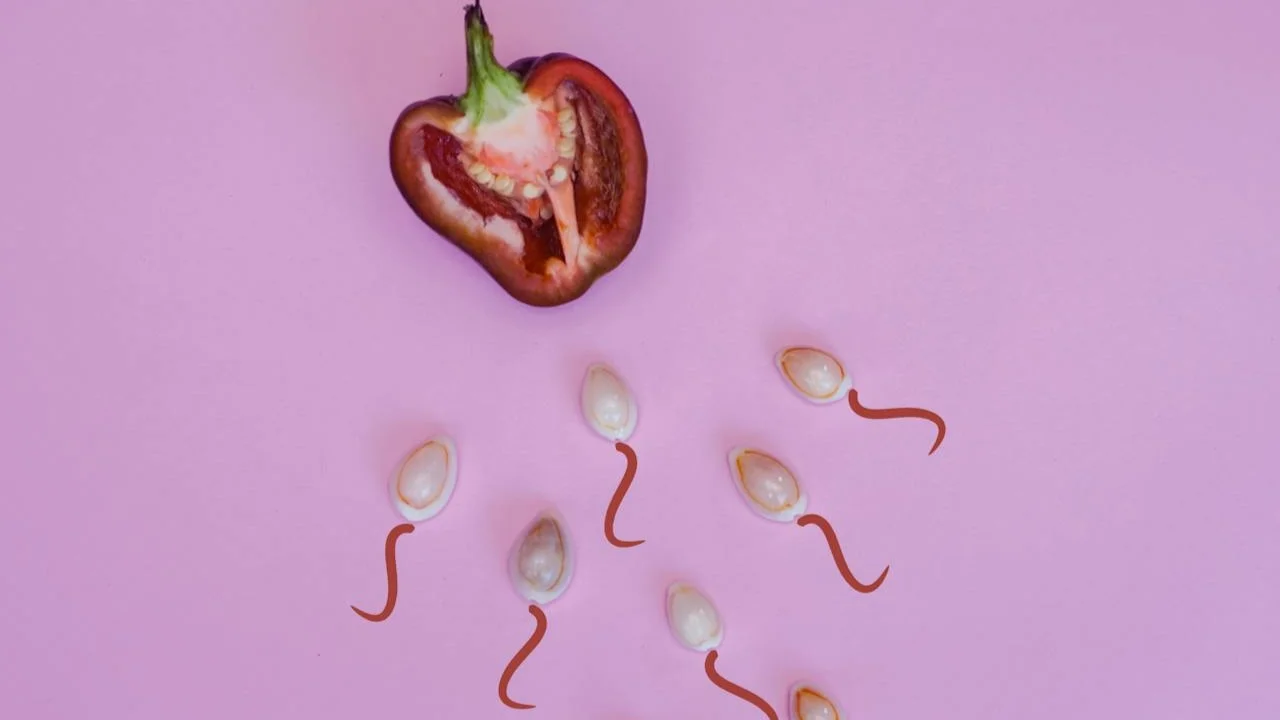
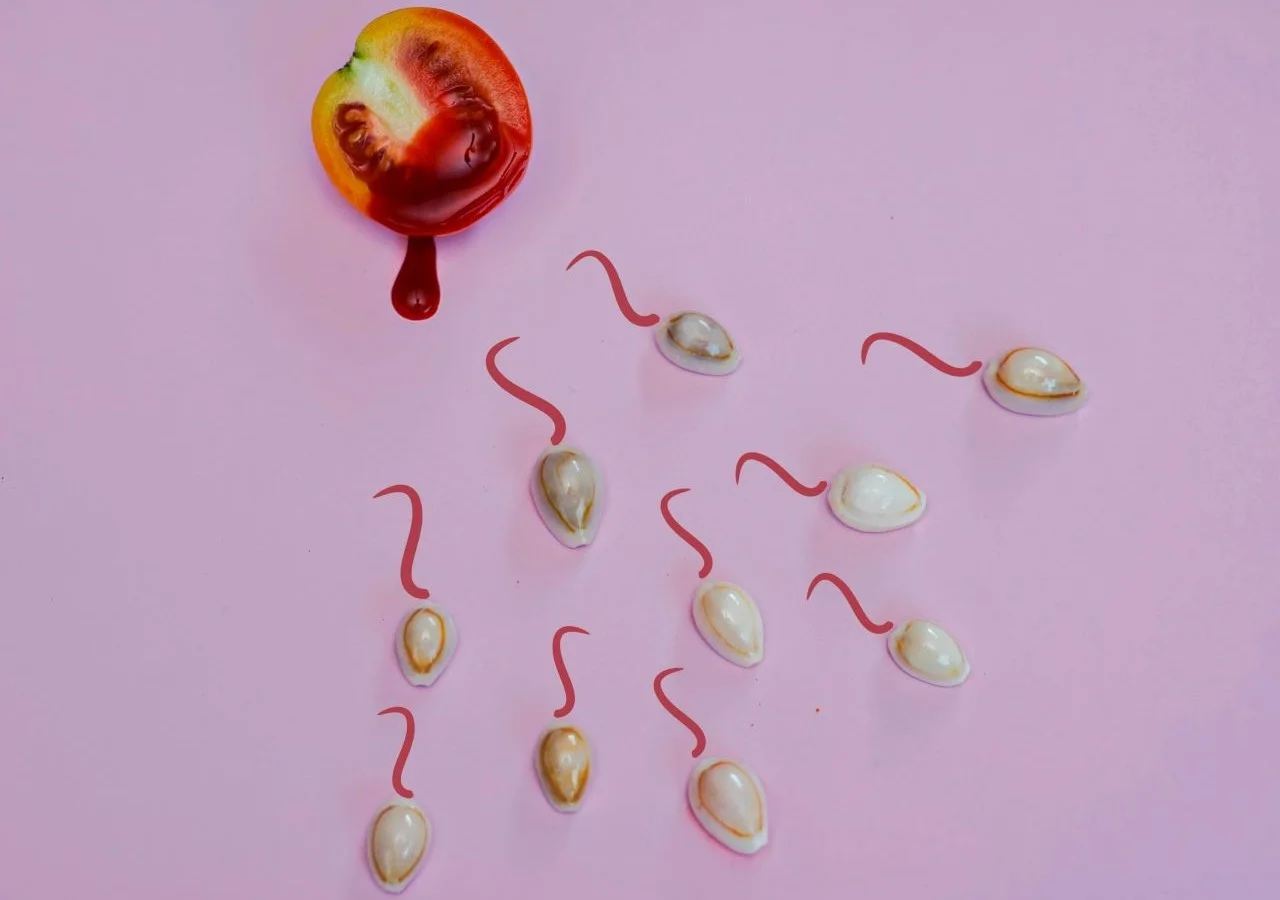
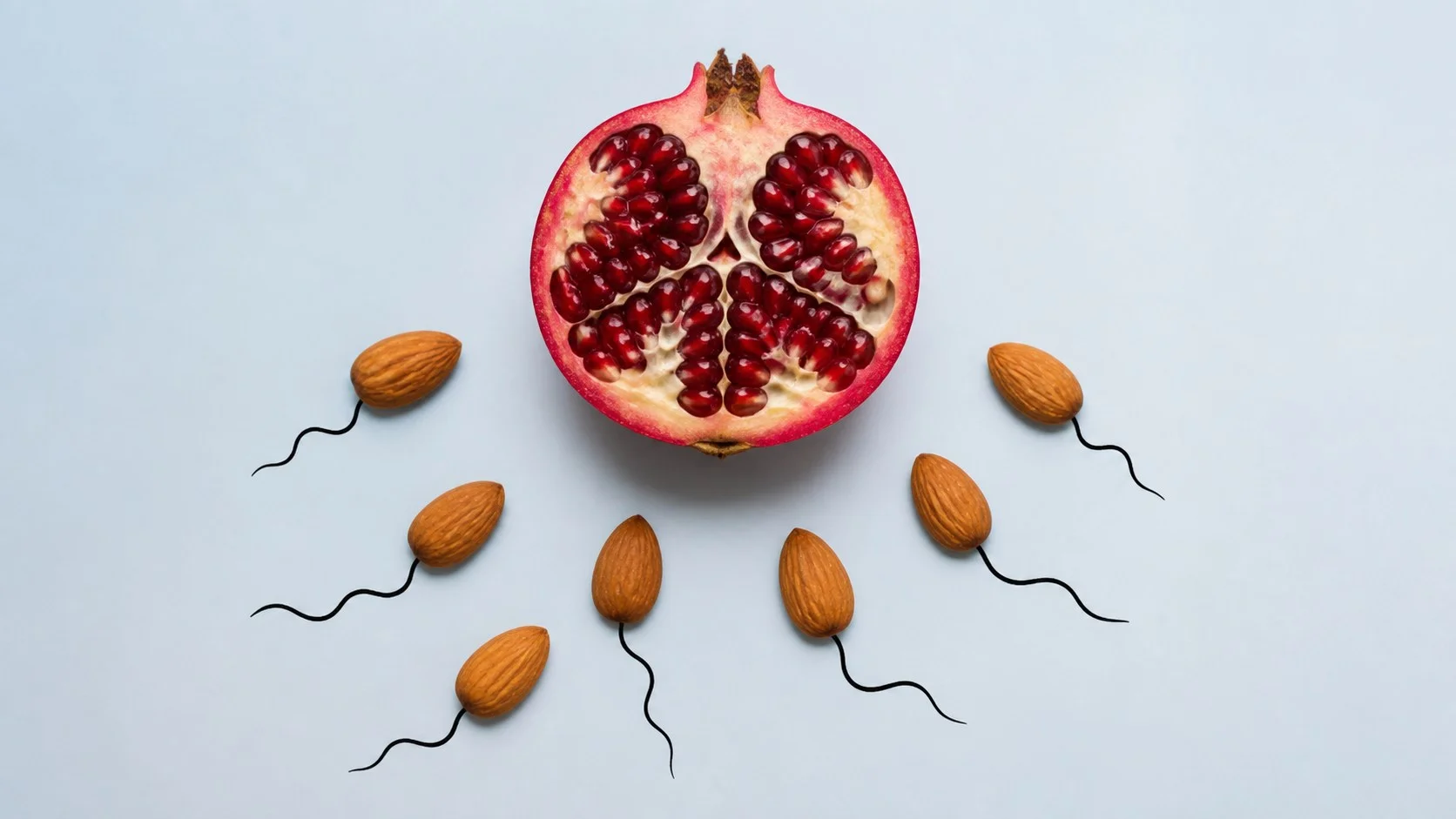
- Do sperm really swim like tiny tadpoles?
- The head-and-tail drawing works as a symbol, but it greatly simplifies the movement. A laboratory assessment considers, among other things, how many sperm move forward. Not every sperm travels in a straight line or ever reaches an egg.
- Is seminal fluid itself alive?
- The fluid as a whole is not a living organism, but it can contain living sperm cells. This distinction explains why ejaculate can look normal even when no sperm are found in the laboratory.
- Does leaking after vaginal sex mean all the sperm came back out?
- No. It is normal for some fluid to leak out, and this does not mean that no sperm moved farther into the reproductive tract. Leakage is neither birth control nor proof that conception is impossible.
- Was I really the fastest sperm?
- Fertilization is not that simple. Motility matters, but sperm must navigate mucus, fluid currents, narrow passages, and other selection processes in the female reproductive tract. A review of sperm migration describes a complex selection process—not a straight sprint that the fastest sperm automatically wins.
- Why are there millions of sperm if only one fertilizes the egg?
- Because the vast majority never reach the egg. Many sperm are not sufficiently developed or motile, while others do not make it through the conditions along the way. According to BIÖG information on sperm and male fertility, only a few hundred reach the egg. The fact that one ultimately fertilizes it does not mean that starting with one sperm would usually be enough.
- What happens to sperm when there is no ejaculation for a long time?
- They do not accumulate without limit. The body breaks down older sperm, and an involuntary nighttime ejaculation may sometimes occur. Production continues. This differs from temporary pressure or pain after prolonged arousal, which Blue balls and semen buildup discusses.
- Do twins result when two sperm fertilize the same egg?
- No, that is not how ordinary twins form. Identical twins develop when one fertilized egg divides. Fraternal twins result when two eggs are each fertilized by one sperm. If two sperm enter the same egg, that is an abnormal multiple fertilization, not a normal path to twins. The specialist article on superfecundation explains the even more curious possibility of fraternal twins with different fathers.
Can someone really be allergic to semen?
Yes. A hypersensitivity to components of seminal fluid is possible, although rare. The reaction typically targets proteins in the seminal plasma rather than the sperm cell itself. Possible signs include repeated burning, itching, or swelling soon after contact. Hives, breathing problems, or a severe allergic reaction can occur in rare cases.
Because latex, lubricant, friction, and infections can cause similar symptoms, diagnosis belongs in a health care professional's hands. Difficulty breathing, circulation problems, or rapidly increasing swelling require immediate help. A systematic review of seminal plasma hypersensitivity summarizes symptoms and diagnosis.
Why taste and appearance are not fertility tests
Sweeter, more bitter, whiter, thicker, or greater in volume does not automatically mean more fertile. Once the question becomes diagnostic rather than curious, it is outside this article's purpose.
Understanding semen explains the relationship between visible changes and sperm quality. Preparation, sample collection, and laboratory values belong in the dedicated guide to semen analysis.
How long do sperm survive on skin, clothing, in the mouth, or in the body?
This is one of the most searched-for questions, but the answer depends heavily on location, moisture, and conditions. Under favourable conditions, sperm can survive much longer in the female reproductive tract than on dry skin or clothing.
Because these differences matter for fertility and birth control, this remains a separate specialist guide: How long do sperm survive? It considers skin, clothing, the mouth, and the reproductive tract separately.
Swallowing semen: medically, it is about more than taste
Swallowing semen itself cannot cause pregnancy. Oral sex can, however, transmit sexually transmitted infections. Pleasant-tasting or healthy-looking semen does not protect against them. The CDC explains STI risks from oral sex and how barriers can reduce risk.
Swallowing semen: healthy or dangerous? discusses infections, mouth symptoms, protection, and consent in more detail. This questions guide keeps the explanation brief.
When a curious question becomes a medical concern
Repeated blood, pain, burning, fever, discharge, testicular swelling, or a clearly new unpleasant smell is not a matter of taste or myth. Detailed guidance is available in Understanding semen, while Blood in semen covers that symptom separately.
For sudden severe testicular pain, difficulty breathing, or circulation problems, prompt medical help matters more than further internet research.
In short: stay curious, but do not confuse myths with diagnoses
No single food is a proven flavour switch, thick white semen is not a fertility seal, and one person's description of an odour is not a laboratory analysis. Colour, consistency, smell, and taste can vary. Repeated changes, symptoms, and the specific question you need answered are what matter.
Explore the basics and medical questions
The medical semen guide explains quality and testing; other articles explore taste, sperm survival and the health aspects of swallowing semen.