How long does sperm survive? What to know about saliva, air, skin, water and condoms
Sperm may survive for up to about five days in the female reproductive tract when conditions are favourable. On skin, in air, in the mouth or in a condom, conditions differ, and a fixed number of minutes cannot describe them all. Moisture, the environment and whether semen can actually reach the vagina help explain both conception timing and everyday pregnancy concerns.

Key points
- In favourable cervical mucus near ovulation, sperm can survive for up to about five days. That is not a fixed survival time after every contact.
- There is no universal number of minutes in air or on skin and clothing; complete drying leaves semen with practically no ability to cause fertilization in ordinary situations.
- Sperm that are still moving in a condom or sample cup do not lead to pregnancy on their own unless they reach the vaginal opening or enter the vagina.
- For people trying to conceive, timing in the days before ovulation matters more than the speed at which sperm travel.
Sperm and semen are different
Semen and sperm are often used interchangeably in everyday conversation. Sperm are the cells; semen is the fluid that carries them and protects them briefly. To judge survival and the ability to fertilize an egg, the key questions are whether the cells can still move and whether they reach a suitable environment.
Outside the body, drying is usually the most useful boundary. Once semen dries, sperm rapidly lose movement and, for practical purposes, the ability to fertilize an egg.
What affects sperm survival?
Three factors almost always matter: moisture, temperature and the actual path towards the cervix, the lower part of the uterus.
- Moisture: sperm may remain able to move for a short time while semen is wet. Drying usually brings that to an end.
- Environment: cervical mucus near ovulation can protect sperm. The mouth, water and soap are unfavourable environments.
- Path to the vagina: even when sperm survive outside the body, natural fertilization requires them to reach the vaginal opening or enter the vagina and continue into the reproductive tract.
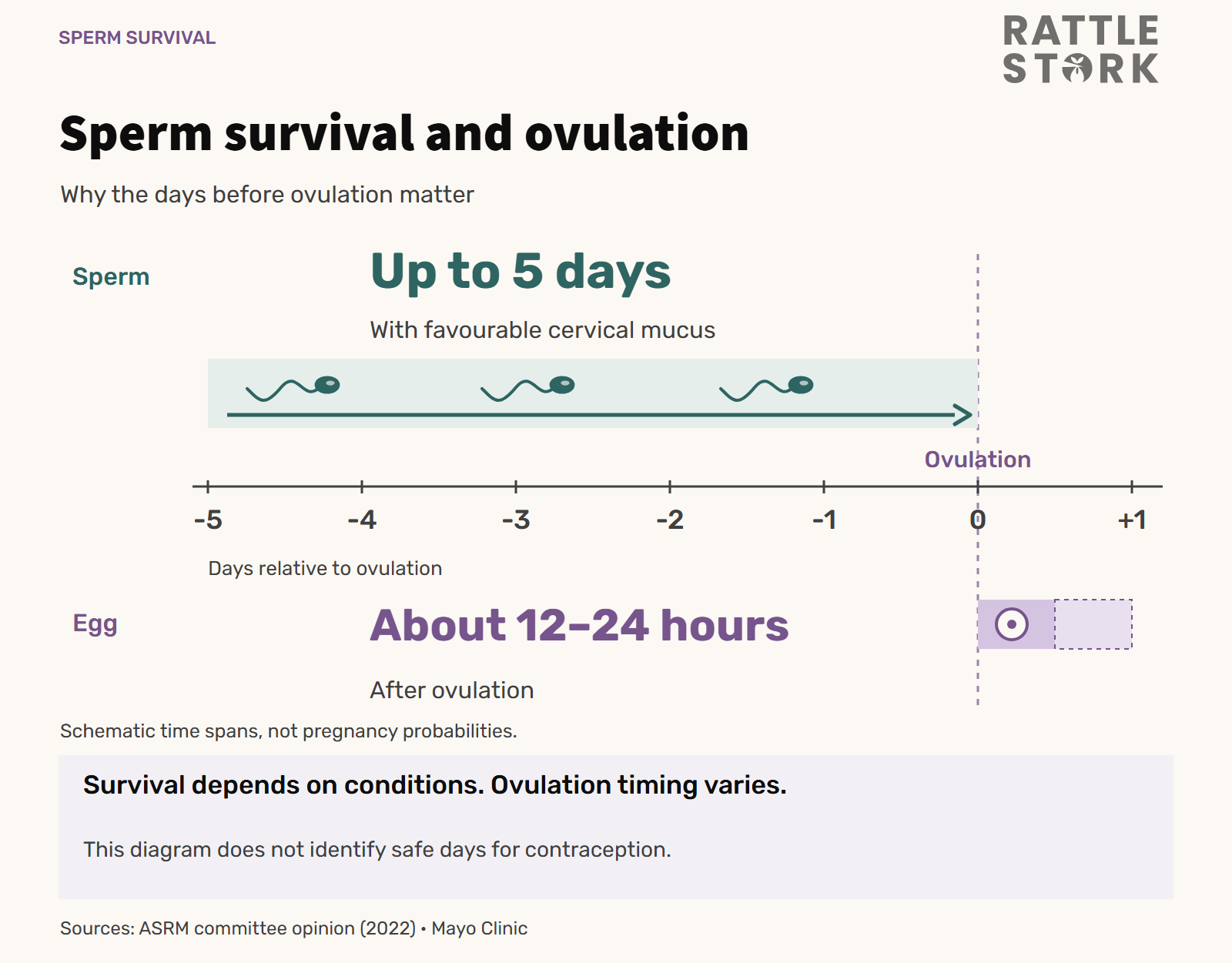
The usual reference for the fertile phase is up to about five days in favourable cervical mucus. This does not give every sperm cell a fixed lifespan or provide a reliable way to identify safe days for contraception.
Maturation and short-term storage
Sperm form in the testes and mature in the epididymis, a coiled tube next to each testicle. They are held there until ejaculation. Cells are not stored for years: older ones are broken down while new ones continually take their place.
When planning a pregnancy, how long sperm have been in the male body is less important than the combination of semen quality, cycle timing and conditions in the female body.
Sperm survival in different settings
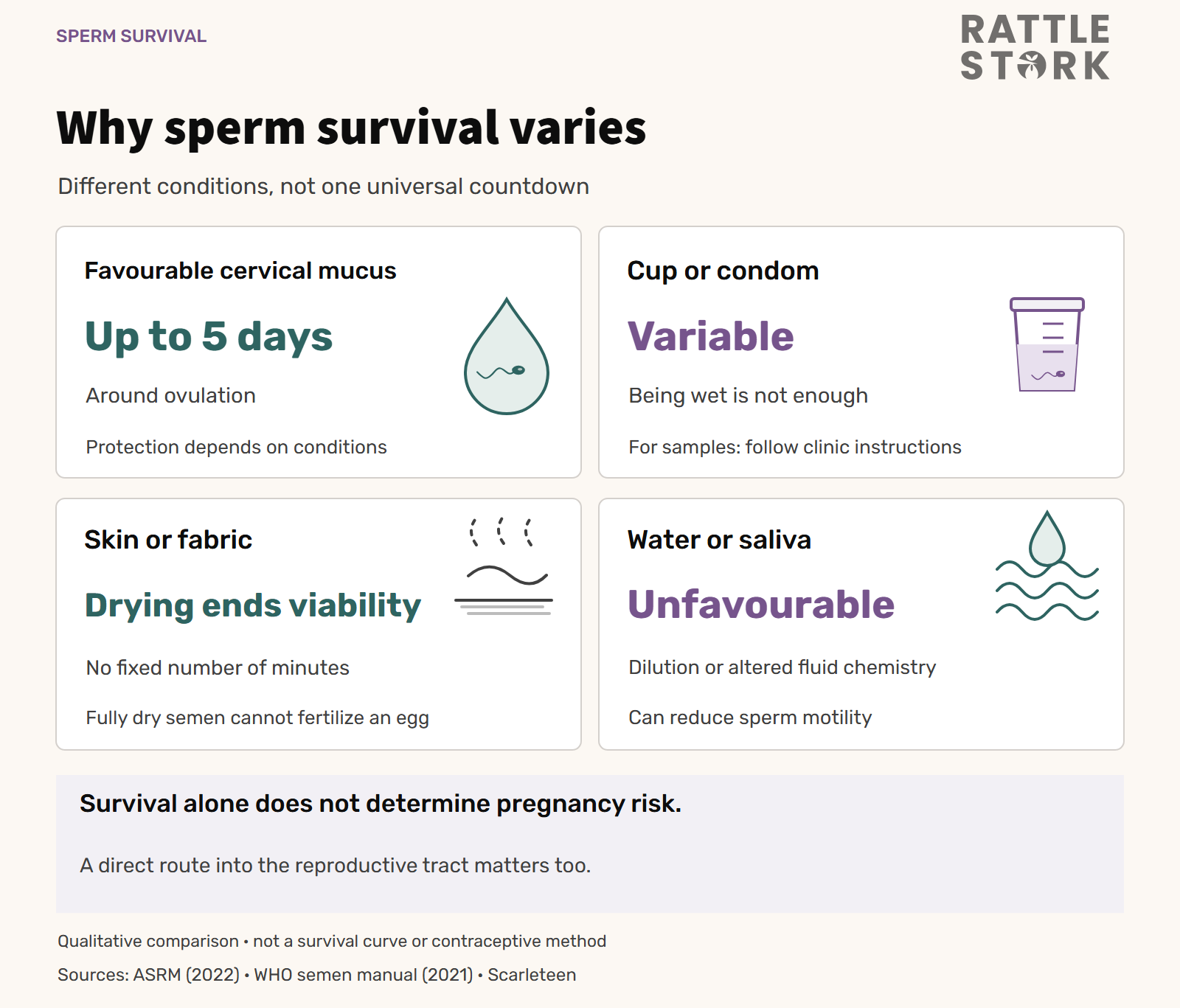
- Female reproductive tract in the fertile phase: up to about five days if sperm reach favourable cervical mucus. This does not mean they stay alive freely in the vagina for that long. The NHS overview of trying to get pregnant explains conception and fertile days.
- Uterus and fallopian tubes: sperm may survive for several days in favourable conditions. This does not establish a fixed two-day minimum.
- Vagina outside fertile days: the acidic surroundings quickly affect sperm. How quickly depends in part on the semen and individual conditions.
- Air, hands, skin, clothing and bedding: until complete drying, often quickly when only thin traces remain. Dry semen has no meaningful fertilizing ability in everyday situations.
- Mouth and saliva: unsuitable conditions for sperm; saliva may impair movement. Oral sex alone provides no route to pregnancy unless fresh semen is also transferred to the vulva or into the vagina.
- Tap water, pools and the sea: sperm generally remain viable only briefly. Dilution, osmosis, temperature and chlorine in pools make conditions unfavourable.
- Condom or sample cup at room temperature: only while semen remains wet; movement and quality decline over time.
- Laboratory sample: the WHO laboratory manual (2021) recommends starting examination preferably within 30 minutes and no later than 60 minutes after collection. This is a standard for measurement quality, not a fixed limit on survival. Follow the practice or clinic's collection and transport instructions.
- Cryopreservation in liquid nitrogen at −196 °C: long-term storage is possible, and a substantial share of sperm survive thawing. See the HFEA guide to sperm freezing.
- Household freezer at about −20 °C: unsuitable for preservation because it lacks controlled procedures and the appropriate protective solutions.
- Hot tubs and very hot baths: warm water is unsuitable for sperm dispersed within it. Frequent or prolonged overheating of the testes can also affect semen quality. That is distinct from the survival time of sperm already ejaculated.
Everyday situations: possible pregnancy or very unlikely?
The concern is often specific: semen on a finger, on skin, in a condom or on clothing. The central question is usually whether the semen was still wet and could actually reach the vaginal opening. For situations without ejaculation, read Can pre-ejaculate cause pregnancy?
- Inside the body near ovulation: the most favourable conditions, because cervical mucus protects sperm and helps guide them towards the uterus.
- On skin or hands outside the body: what matters is direct transfer of fresh, still-wet semen to the vaginal opening or into the vagina. Fully dried residue cannot cause fertilization in everyday situations; partly drying or wiping away semen is not the same as complete drying.
- On fabric, bedding or underwear: fluid is absorbed and dries quickly, after which sperm are inactive.
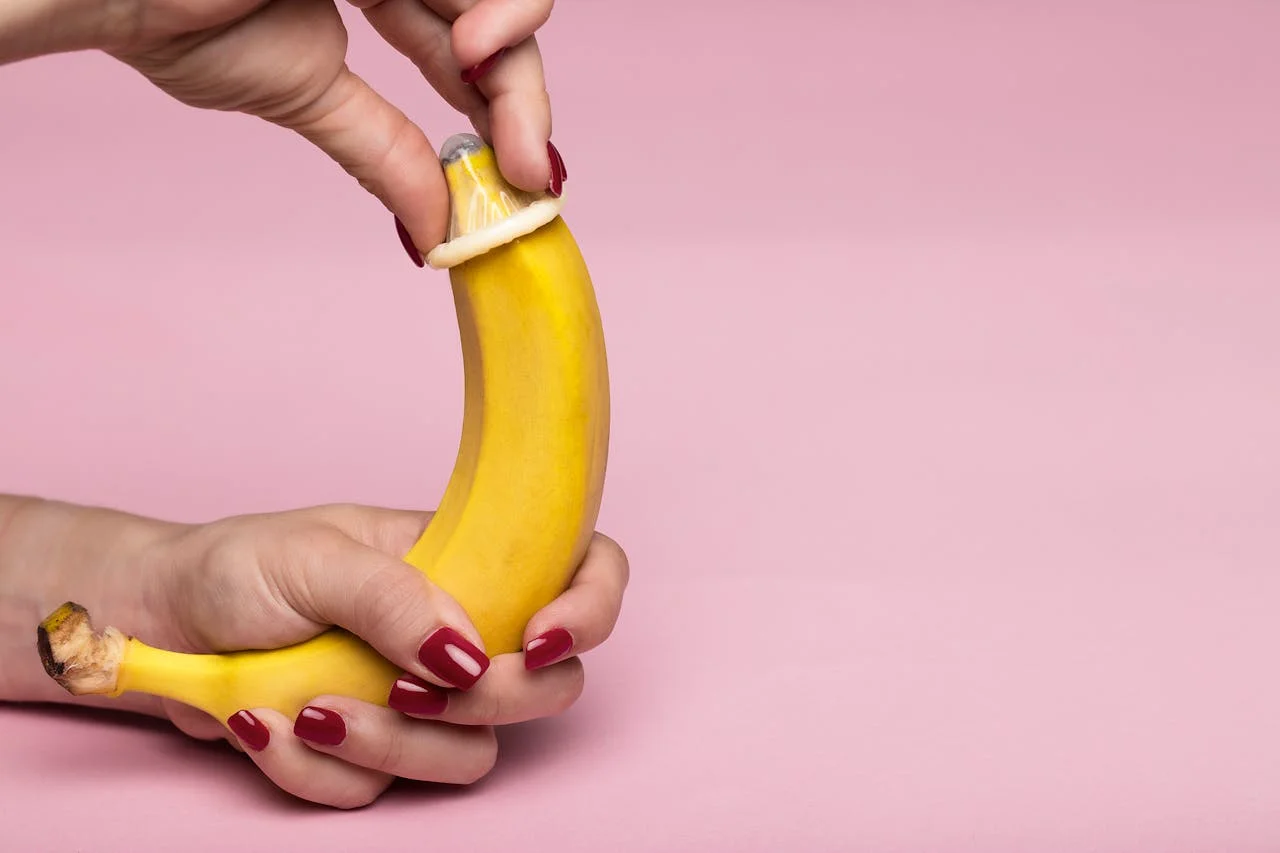
- In a condom or collection cup: movement can persist for a short time. There is no route to pregnancy if semen stays in the container without reaching the vaginal opening or entering the vagina.
- Mouth, saliva and stomach: very unfavourable conditions; pregnancy through oral sex is practically excluded.
- Water, showers, pools and the sea: semen dispersed in water is not a realistic pregnancy route. Intercourse in water remains a pregnancy risk if semen enters the vagina directly; water does not act as contraception.
If you are unsure, ask whether fresh semen actually reached the vaginal opening or entered the vagina. An estimated ovulation day cannot reliably rule out risk. After unprotected sex or a condom problem, get prompt medical advice about whether emergency contraception is appropriate. Our article on a broken condom explains more.
Why sperm may survive for up to five days in the body
The often-quoted five days is a favourable upper range, rather than a fixed standard. Around ovulation, cervical mucus becomes more permeable, less acidic and generally more supportive of sperm. It serves as a filter and a means of transport.
Mucus structures in the cervix may also protect sperm temporarily. Outside this phase, the vaginal environment is usually more acidic and immune defences more active, so sperm movement and survival decrease more quickly.
The American Society for Reproductive Medicine (ASRM) describes the fertile window as the five days before ovulation and ovulation day. After release, the egg can be fertilized for about 12 to 24 hours, as the Mayo Clinic explains. These time ranges provide biological context, not a safe calendar for contraception.
How quickly does semen dry, and why does that matter?
Drying usually marks the end of meaningful sperm movement in ordinary situations, which is why this question comes up so often. Thin traces on skin or smooth surfaces often dry in a few minutes. Fabric absorbs the fluid as well, which can speed things up.
There is no precise minute for every case. Amount, temperature, airflow and material all contribute; a larger drop may dry more slowly than a thin smear. A practical guide is that fully dried semen generally has no meaningful ability to fertilize an egg in everyday situations.
What makes sperm inactive?
The main explanation is usually simple physics and chemistry. Sperm lose movement when their surrounding fluid is gone, and cell membranes become more vulnerable. Environmental conditions can add stress to the cells.
- Drying: the main reason sperm in air become inactive quickly.
- Soap and alcohol: surfactants and disinfectants disrupt cell membranes and proteins.
- Chlorine and major changes in salt concentration: lead to osmotic stress and cell damage.
- Heat: extended local warmth reduces motility, or movement, and may affect DNA integrity.
- Unfavourable pH and high osmolality, as with some lubricants: can noticeably reduce movement. Osmolality refers to the concentration of dissolved particles.
These are not methods of contraception. Saliva, water, soap and disinfectants cannot reliably prevent pregnancy after unprotected sex. Do not put soap or disinfectants inside the vagina.
How long do sperm survive in a condom or cup?
Thinking about survival in a condom or cup can help interpret risk. It does not make fertilization more likely; it describes only how long sperm can keep moving before drying and temperature stop them.
Semen does not stay viable indefinitely in a condom. Moisture may maintain movement temporarily but does not guarantee undamaged cells or fertilizing ability. Material, lubricant, possible spermicidal additives and temperature affect the conditions. An ordinary condom therefore does not replace an appropriate container for a medical sample.
For conception, cycle timing and the route towards the cervix are more relevant than the condom itself. Standards for medical samples help keep measurements comparable. If a condom problem has caused concern, see Broken condom.
Inside the body: timing is more important than speed
The first sperm can reach the cervix within minutes and some can reach the uterus in less than an hour. Timing relative to ovulation and the quality of cervical mucus matter more than speed. If you use ovulation tests, the article on the LH surge, the rise in luteinizing hormone, can help with timing. This is why many pregnancies result from sex in the days before ovulation, rather than only on ovulation day.
At what temperature do sperm die faster?
Sperm are heat-sensitive. A brief period of warmth is not automatically harmful, but a sustained increase in temperature may reduce motility and affect cell processes. Intensity and duration both matter; repeated substantial overheating may also affect DNA integrity.
Human studies report associations between temperature exposure and poorer semen parameters, including a meta-analysis and a large multicentre cohort of over 33,000 men, PMID 38434420.
The studies measure semen parameters and temperature exposure, not an exact survival time for one sperm cell. A heat source cannot establish reliable contraception or show that an individual is infertile. For current guideline context, see the NICE guideline on fertility problems.
Technology and everyday sources of heat
A warm laptop resting on the lap can raise scrotal temperature, as shown in a small experimental study. That finding alone does not prove that everyday use reduces fertility. Broad statements that a smartphone in a pocket or tight clothing causes infertility also go beyond the evidence. Practical adjustments are enough: use a desk, avoid prolonged overheating and take breaks.
Daily habits that support semen quality
- Reduce overheating: move the laptop off your lap, take breaks from heated seats and avoid daily sauna use when trying to conceive.
- Reduce alcohol and nicotine: both can impair semen quality, particularly when used regularly.
- Sleep and stress: chronic stress and insufficient sleep can affect hormonal regulation.
- Take infections seriously: rest with a fever; effects may become apparent only weeks later.
- Medications and supplements: do not add supplements without thought; discuss them with a clinician when trying to conceive.
- If you are trying to conceive, discuss semen analysis and next steps with a clinician. The WHO laboratory manual (2021) provides methods and reference information. These habits affect longer-term quality, rather than survival after a single accidental exposure.
Myths and facts: useful distinctions
- Myth: sperm live for seven days.
- Up to five days in cervical mucus around ovulation is a realistic guide; longer survival is an exception.
- Myth: sperm remain fertile in a condom for a long time.
- Movement is maintained temporarily while semen remains wet, then drops substantially.
- Myth: sperm survive for hours in air.
- Movement decreases quickly; after drying, sperm cannot fertilize an egg.
- Myth: sperm can live in the mouth for a long time.
- Saliva is not supportive of sperm and can impair movement, but it does not establish a reliable number of minutes.
- Myth: pool water and tap water are neutral.
- Chlorine and unsuitable osmolality generally inactivate cells very quickly.
- Myth: soap and disinfectants do nothing.
- Surfactants and alcohol disrupt membranes and proteins quickly.
- Myth: semen stays optimal in a cup for hours.
- Conditions and the interval before testing affect measurements. The WHO recommendation of preferably 30 minutes and no later than 60 minutes is about starting examination, not a fixed lifespan.
- Myth: higher temperatures only cause brief warmth.
- Repeated or prolonged overheating may impair movement and semen quality.
- Myth: sperm age determines a baby's sex.
- Neither the age of sperm nor the timing of intercourse around ovulation can reliably be used to select a baby's biological sex.
- Myth: a household freezer preserves semen.
- A home freezer cannot replace professional cryopreservation. Protective solutions, controlled procedures and appropriate storage temperatures are needed.
- Myth: semen takes a long time to dry.
- Thin films often dry in minutes and are then inactive.
When to ask for a medical assessment
When regular unprotected intercourse has not led to pregnancy, common reference points depend on the age of the person who would become pregnant:
- Under 35: after 12 months of regular unprotected intercourse without pregnancy.
- 35 or older: after six months of regular unprotected intercourse.
- Earlier with irregular cycles, absent ovulation, severe pain, existing conditions or an abnormal semen analysis.
The NHS overview of how long it takes to get pregnant explains the time involved and the factors that influence it. Assessment can be tailored to individual medical history.
Conclusion
Sperm survival is strongly influenced by the environment. Up to about five days is possible in favourable conditions in the female reproductive tract; outside the body, complete drying ends the ability to cause fertilization in ordinary situations. To assess risk, consider moisture, surroundings and whether fresh semen might have reached the vaginal opening or entered the vagina. A fixed minute count or an estimated ovulation day cannot replace that assessment.
Keep reading
Explore ovulation, ovulation testing, pre-ejaculate and condom problems.