Sperm donation banned? Diseases and surprising exclusion criteria worldwide
A good semen analysis is not always enough to become a sperm donor. Sperm banks also check for infections and inherited risks, and ask where applicants have lived or spent time. This may lead to a waiting period, an additional test, or exclusion. Looking at different countries’ rules reveals the diseases behind them—and why even a vaccination or treatment received long ago can matter.


At a glance
- Infections, inherited risks, and personal history matter in sperm donation. Exclusion may be permanent, temporary, or lifted after further assessment.
- Questions about countries have different reasons, including HTLV-1, Chagas disease, malaria, and historical BSE precautions. A passport alone says little about personal risk.
- Unusual factors can matter too: a dengue vaccination in Brazil, older growth hormone preparations, or a positive genetic test in a healthy person.
- Rules change. Examples include the reassessment of Zika in the US and donation to known recipients now being possible for people with treated HIV in the United Kingdom.
Why donor questionnaires reach so far into the past
Questions about HIV or hepatitis make immediate sense. Asking where someone lived in the 1980s can initially seem odd. The reason is that some infections remain unnoticed for a long time or cannot be ruled out with a routine laboratory test. For inherited conditions, family history may reveal more than how well you feel.
A sperm bank therefore needs to answer several questions at once: Is the donation medically suitable? Which tests are still needed? And may it be used in the intended country of treatment? Answers vary internationally. The examples below explain why, from common infections to rare special cases. Research is current as of September 14, 2026.
What exclusion from sperm donation means
A rejection can reflect very different decisions. Understanding the distinctions also helps explain apparently contradictory answers from different sperm banks.
- Exclusion from the donor program
- A finding or medical history does not meet this program’s requirements. This may be a long-term decision without saying anything about your ability to father a child.
- Temporary deferral
- A waiting period is required after an infection, exposure, or particular treatment. Eligibility is then reassessed.
- Additional testing
- A question about countries or family history initially leads to a targeted test or specialist assessment. The question itself is not an exclusion.
- Restricted use
- A donation may only be usable in a particular situation, such as for someone known to the donor or following genetic assessment on the recipient’s side.
Facilities also set their own acceptance criteria. For example, the American Society for Reproductive Medicine, ASRM, lists good general health and suitable semen parameters among the foundations of donor selection. A sample can be unsuitable for a donor program even if the man is fertile. ASRM: selecting gamete donors
Common infections: which pathogens are involved
The basic medical assessment includes infection testing and medical history. What a finding actually shows, and whether an earlier infection was successfully treated, are especially important.
- HIV, hepatitis B, hepatitis C, syphilis, and chlamydia
- These involve HIV-1 and HIV-2, hepatitis B virus (HBV), hepatitis C virus (HCV), the syphilis bacterium Treponema pallidum, and the bacterium Chlamydia trachomatis. Testing aims to prevent transmission through donation. FDA: pathogens and donor testing For sperm donation to other people, Germany’s TPG Tissue Ordinance requires negative results for HIV 1 and 2, hepatitis B and C, and syphilis. For chlamydia, it specifies a urine nucleic acid amplification test (NAT), which looks for the pathogen’s genetic material and must be negative. TPG-GewV, Annex 4, point 2
- Treated infections
- Gonorrhea, sometimes called the clap, is caused by the bacterium Neisseria gonorrhoeae. Canada treats chlamydia or gonorrhea diagnosed or treated within the past two months as grounds for deferral. If infection and treatment occurred earlier, documented treatment success one month after completing therapy is required. A resolved infection therefore does not automatically mean lifelong exclusion there. Health Canada: donor suitability
- CMV: antibodies do not mean an active infection
- CMV stands for cytomegalovirus. It can be transmitted through bodily fluids, including semen; infection during pregnancy can harm the child. CDC: CMV and transmission Under ASRM guidance, antibodies detected after past exposure nevertheless do not automatically mean exclusion. Relevant factors include ruling out an active infection, the recipient’s CMV status, and the required counseling. ASRM: handling CMV findings
Inherited conditions: why a healthy carrier may be assessed differently
There is no pathogen here. The issue is genetic variants that can be passed on to a child. A person can be healthy while carrying such a variant. With many recessive conditions, the child’s risk arises only if they inherit a corresponding disease-causing variant from both genetic parents. That is why the results of the person whose egg will be used may also matter.
A study from China’s Hunan province shows how selection can differ: the sperm bank studied excluded applicants with indications of thalassemia carrier status or G6PD deficiency. Thalassemias affect the production of hemoglobin, the red blood pigment. In G6PD deficiency, the enzyme glucose-6-phosphate dehydrogenase does not work adequately, allowing red blood cells to break down prematurely. Published in 2022, the study describes this facility’s practices from 2018 to 2021. It does not establish a nationwide ban in China. Hunan study, MedlinePlus: G6PD deficiency
At Sperm Donors Australia, screening for many inherited risks is part of the program for clinic-recruited donors. However, a finding does not lead to the same decision everywhere: ASRM does not automatically consider healthy carriers of certain autosomal recessive conditions unsuitable when there is no risk to their own health. The variant and the risk to the resulting child remain decisive. Sperm Donors Australia: donor program, ASRM: genetic selection
Sometimes the information is simply unavailable: someone who was adopted may not know their biological parents’ and grandparents’ medical history. ASRM then recommends an individual assessment. The issue is an incomplete risk assessment, not an established disease finding. ASRM: unknown family history
The article on carrier screening before sperm donation explains how both genetic parents’ carrier status affects the risk to a child.
HTLV-1, Chagas disease, and malaria: why origin and travel are checked
Questions about residence or origin may initially help select the right tests. Germany specifies additional HTLV-I antibody testing if the donor lives in, or comes from, an area with higher prevalence. Parents’ or sexual partners’ origins also count. Depending on the history, testing for malaria or Trypanosoma cruzi may be added. TPG-GewV: additional testing
- HTLV-1: a virus that can remain unnoticed for years
- Human T-lymphotropic virus type 1 can be sexually transmitted. In some infected people, it causes a particular blood cancer, adult T-cell leukemia/lymphoma, or a spinal cord disorder. Many infected people have no symptoms. History can therefore justify testing even in healthy applicants. WHO: HTLV-1 The WHO lists parts of Japan, Australia, and the Pacific islands among areas with higher prevalence. These are regional concentrations, not blanket bans on these countries. WHO: regional distribution
- Chagas disease: the parasite Trypanosoma cruzi
- This single-celled parasite occurs mainly in Latin America. Transmission there includes contact with the feces of infected triatomine bugs; blood transfusions and transmission during pregnancy or birth are also possible. An infection unnoticed for years can later damage the heart and digestive system. This explains why origin and past stays may prompt testing. WHO: Chagas disease
- Malaria: parasites of the genus Plasmodium
- Malaria is caused by parasites of the genus Plasmodium, including P. falciparum and P. vivax. Transmission is mainly through infected Anopheles mosquitoes. The destination, possible exposure, and previous illness explain the medical questions; nationality alone cannot answer them. WHO: malaria
These pathogens have very different transmission routes. A regulation requiring an additional test does not in itself establish transmission through donor semen. Individual assessment depends on the specific region, timing of travel, and any illness. A country list alone is not enough.
Brazil: even a dengue vaccination can trigger a donation pause
A measure intended to protect your own health can unexpectedly postpone donation. In March 2025, Brazil’s health regulator Anvisa published updated criteria for egg and sperm donations and reproductive treatments relating to dengue and chikungunya.
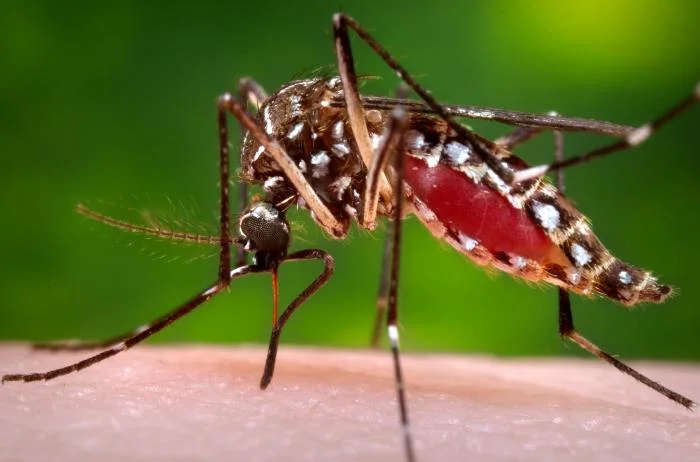
The pathogens are dengue virus (DENV) and chikungunya virus (CHIKV). Both are transmitted by Aedes mosquitoes. Dengue can cause severe bleeding and circulatory problems, among other effects; chikungunya is particularly known for joint problems that can sometimes persist. WHO: dengue, WHO: chikungunya
- After dengue or chikungunya, Anvisa specifies a 30-day deferral after complete recovery.
- After severe dengue, the specified period is six months after complete recovery.
- After dengue vaccination with live attenuated viruses, a 30-day waiting period is specified.
- Sexual contact with someone diagnosed with dengue or chikungunya in the past 30 days also counts: the period is 30 days after the last contact.
These time-limited precautions also apply to foreign providers from affected regions wishing to supply eggs or sperm to Brazil. Health conditions in the recipient country can therefore influence which donations a sperm bank may export. Anvisa: 2025 criteria, detailed conditions
West Nile and Oropouche: what happens when new risks emerge
West Nile virus (WNV) is transmitted mainly by mosquitoes. It can cause fever and, in severe cases, inflammation of the brain or its membranes. Canada considers diagnosed or suspected WNV infection within 120 days after diagnosis or symptom onset, whichever is later. This concerns a specific infection history with a defined period. CDC: West Nile disease, Health Canada: WNV criterion
Oropouche virus (OROV), meanwhile, shows how carefully new findings need to be interpreted. Following outbreaks in parts of South and Central America and the Caribbean, and detection of replication-competent virus in a traveler’s semen, the US Food and Drug Administration, FDA, issued a notice to cell and tissue donation facilities in November 2024. Oropouche can cause fever, headaches, joint pain, and occasionally nervous system disease; it is transmitted mainly by small blood-feeding insects, especially biting midges.
The agency did not require a special Oropouche testing program or a blanket ban after every trip. It suggested considering possible illness and related symptoms in the previous six weeks when deciding eligibility. This is a precautionary notice based on limited evidence, not proof of transmission through sperm donation. FDA: Oropouche and donor assessment
Zika: why a once-correct country warning can now be wrong
The pathogen is Zika virus, or ZIKV. It is transmitted mainly by Aedes mosquitoes but also sexually. In adults, infection often goes unnoticed or is mild; during pregnancy, it can cause severe birth defects. This made Zika especially relevant to reproductive medicine. CDC: Zika and pregnancy risks
Testing for Zika is possible. Molecular tests detect the virus, and antibody tests also exist. However, a diagnostic test cannot safely clear semen for use: a negative blood test may reflect the virus no longer being detectable in blood even though it is still present in semen. Viral shedding in genital secretions can also fluctuate. The CDC therefore does not recommend these tests to rule out sexual transmission. CDC: Zika tests, CDC: testing limitations for sexual transmission
On May 20, 2024, the FDA withdrew its specific Zika guidance for human cell and tissue donations. It cited the sharp decline in case numbers and the resulting change in relevance to potential donors. Facilities may therefore stop the special Zika risk screening. The change rests on the epidemiological situation, not a guarantee from negative tests. FDA: withdrawal and rationale
An old US travel restriction may therefore be outdated even though the pathogen remains medically relevant. For donation in another country, its current requirements must be checked separately.
BSE and vCJD: why Germany, Ireland, and the Falkland Islands appear
The historical background to these unusual country questions is variant Creutzfeldt-Jakob disease (vCJD). It is linked to eating products from BSE-infected cattle. BSE means bovine spongiform encephalopathy, commonly called mad cow disease. The causes are prions, abnormally misfolded proteins. They are neither viruses nor bacteria. CDC: BSE and vCJD
vCJD damages the brain, is fatal, and may only become apparent years after exposure. This explains the questions reaching far into the past. No FDA-approved prion test is available for donor screening. A residence criterion is nevertheless a precaution, not a diagnosis. CDC: long incubation period, FDA: limitations of prion donor screening
The FDA’s 2007 guidance gives two different geographic criteria: a total of at least three months in its defined UK area between 1980 and 1996, and a total of at least five years in the listed European countries since 1980. Germany and the Republic of Ireland appear on the Europe list. Northern Ireland and even the Falkland Islands fall within the UK grouping for this guidance. The criteria concern stays, not citizenship. FDA: sections IV.E.23–25 and Appendix 5
ASRM also includes the European residence criterion in its 2024 donation guidance. These countries are therefore more than an internet rumor. However, the stated periods and length of stay remain decisive; a short vacation today is different. ASRM: US donor screening

Other special cases: old hormone treatments, dura mater grafts, and tattoos
Some exclusion questions seem odd only because their medical history is unfamiliar. For example, Canadian donor guidance asks about certain past treatments with human growth hormone and grafts of the tough outer brain membrane, the dura mater. Health Canada: medical exclusion criteria
The background here is iatrogenic Creutzfeldt-Jakob disease, meaning CJD transmitted through medical procedures. Historically, growth hormone preparations from deceased people’s pituitary glands or contaminated dura mater grafts could transmit prions. The criterion concerns this specific treatment history, not every modern hormone treatment, nor automatically BSE-related vCJD. FDA: iatrogenic CJD and historical preparations
Tattoos also involve more than a yes or no. Canada, for instance, specifies tattoos and piercings performed within the previous six months without sterile procedures. The key issue is the procedure’s potential infection risk. Health Canada: medical history and exposures
Animal transplants: why even close contacts may count
A rare special case is xenotransplantation: treatment involving living animal cells, tissues, or organs. The FDA considers the possible transmission of both known and as-yet unknown animal pathogens. This therefore concerns a group of potential infection risks, not a single already diagnosed disease. FDA: xenotransplantation background
The donor guidance also covers certain close contacts where an exchange of bodily fluids may have occurred. Examples include sexual partners or sharing razors and toothbrushes. Simply living together is not enough. The recommendation also contains product-specific exceptions. FDA: section IV.E.29
The key word is living: the same guidance explicitly excludes medical products made from nonliving animal material, such as certain pig heart valves, from these xenotransplantation products. Even a very unusual question requires clarification of the exact treatment.
When appropriate tests replace a country question: HIV-1 group O
HIV-1 group O, a variant of HIV-1, is a particularly clear example. The FDA’s 2007 guidance specifies questions about certain African countries, such as Cameroon, Gabon, and Equatorial Guinea. These concern a particular pathogen variant and its detection by tests.
The decisive qualification already appears in the same guidance: if a facility uses an FDA-approved HIV antibody screening test whose intended use explicitly includes detecting group O, it may omit those country questions. Merely repeating the country names leaves out that very exception. FDA: sections IV.E.27–28 and the following note
What has changed: HIV, sexual behavior, and BSE precautions
Some earlier exclusions have now been explicitly reassessed. In the United Kingdom, a November 2024 legislative change allows people with HIV to donate to known recipients under certain conditions. The regulator HFEA specifies, among other requirements, at least six months of HIV medication and two prescribed blood tests confirming a sufficiently low level of virus in the blood. Recipients must receive information and consent, and the clinic must be authorized to provide the procedure.
This exception applies to known recipients. It does not open general sperm bank donation to unknown people. This example shows why even saying that HIV always means an absolute donation ban is too sweeping. HFEA: known donation with treated HIV
Canada also changed its selection criteria in 2024: questions about specific sexual behavior replaced the former blanket exclusion of men based on sexual contact with men. For example, the current directive considers certain new or multiple sexual contacts involving anal intercourse. Sexual orientation is not a disease; a defined exposure is being assessed. Health Canada: revised selection criteria, current criteria
For BSE precautions in the US, the FDA removed certain geographic deferrals for blood donation in 2022 following new risk assessments. Requirements for sperm donation did not automatically change. Being allowed to donate blood again therefore does not necessarily mean meeting a sperm bank’s requirements. FDA: change for blood and blood components
Why the same donation is accepted in one country but not another
Several layers come together: local health conditions, required tests, the type of donation, and the recipient country’s conditions. A Brazilian importer, for example, must consider Anvisa’s requirements there. A British exception for known HIV-positive donors cannot simply be extended to use abroad. Anvisa: imported donations, HFEA: export limitations
The status of a source also matters. As of September 14, 2026, the FDA still lists its new general donor eligibility guidance from January 2025 as a draft not for implementation. A draft is not an already effective replacement. Conversely, an older professional overview may still contain criteria changed by a later agency notice. FDA: guidance status
If you are rejected, it is therefore worth asking for the precise criterion. Only then can you establish whether the decision is permanent, a waiting period is still running, or donation might be possible under different conditions.
How to clarify a possible restriction before applying
You do not need to interpret the rules medically yourself. A brief overview of your history helps the sperm bank assess your situation.
- List previous places of residence and extended stays, with country, dates, and approximate total duration.
- Add recent travel, vaccinations, special treatments, and known diseases in your family.
- For treated infections, have your results, treatment dates, and evidence of treatment success ready.
- If rejected, ask: permanent exclusion, deferral until a particular date, or a test still needed?
- Clarify whether the decision concerns this program, the treatment country, or a particular donation arrangement.
Your health information should remain complete even on a second application. The article on health information for sperm donors explains what is useful. The guides to sperm donation in Germany and sperm donation in the US explore the respective frameworks.
Conclusion
A dengue vaccination, a previous place of residence, or a genetic test can affect sperm donation for entirely different reasons. Understanding the disease, the specific condition, and the rule’s current status helps explain even unusual questions on a donor questionnaire. A rejection initially says something about this donation in this program, not about your health or fertility in general.
Further reading
Learn more about sperm donation in Germany and the US, important health information, and genetic testing before donating.