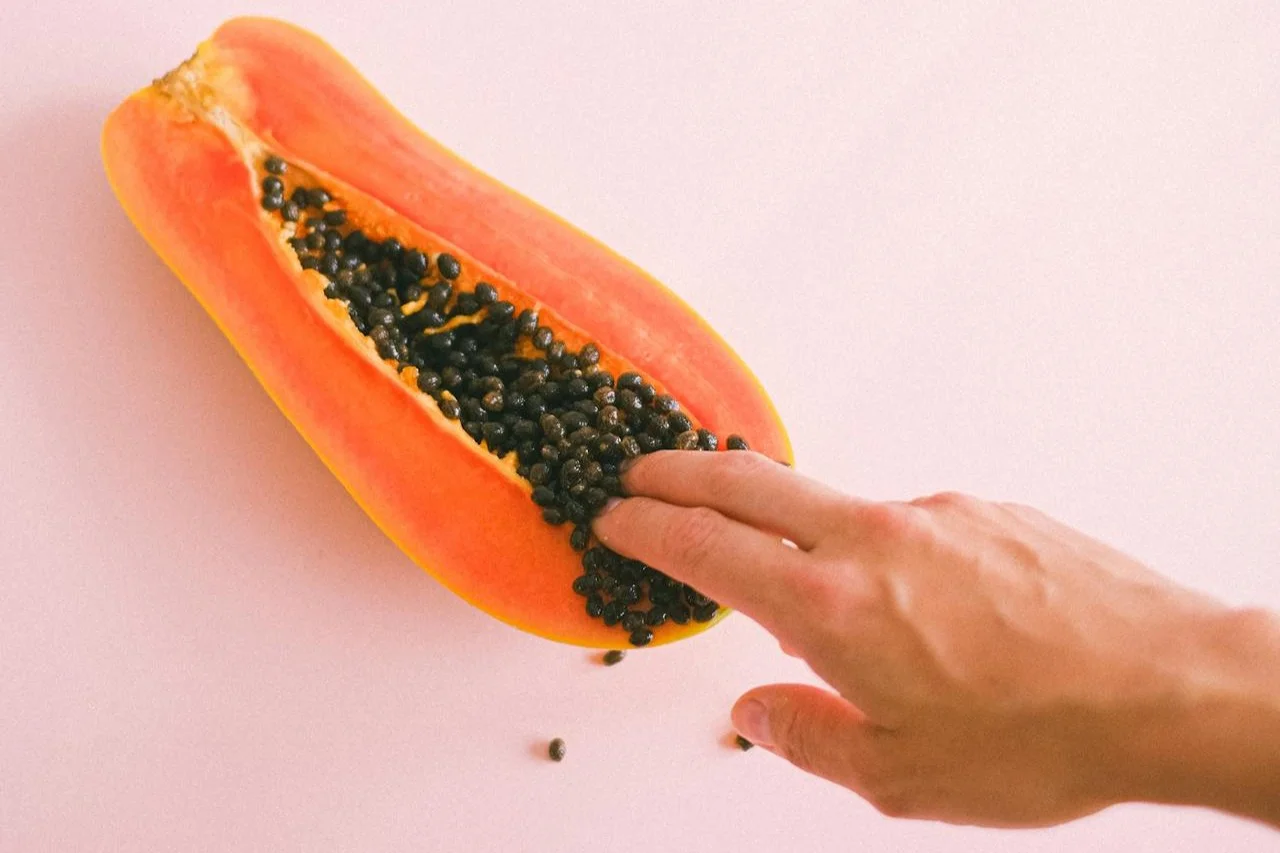
Understanding porn addiction: when porn and masturbation become a problem
Masturbating three times a day: is that still normal, is it too much or is it a sign of porn addiction? The number alone cannot tell you. What matters is whether you are still choosing freely, whether your body, everyday life, relationship or sex life is suffering, and whether frequent ejaculation clashes with sex, insemination or a semen sample while you are trying to conceive. This guide brings together problematic pornography use, real-life sexuality and male fertility without panic or minimisation.


The short answer: three times a day is not a diagnosis
Masturbating three times a day can happen during a period of strong sexual desire without making you ill or infertile. It can, however, be too much if you can hardly postpone it, rub your skin raw, lose sleep or neglect responsibilities, put growing pressure on shared intimacy, or carry on against your own intentions. The important question is therefore not only how often, but how freely and with what consequences.
Porn, masturbation and ejaculation are not the same thing. You can watch porn without having an orgasm, masturbate without porn, or ejaculate during sex. To make sense of the situation, identify which part is actually causing difficulty: the screen, the automatic habit, a very fixed stimulation pattern, the frequency of ejaculation, or pressure around fertility and performance.
The same distinction matters for fertility. Frequent ejaculation does not leave a man permanently depleted. It can temporarily alter semen volume and individual measurements in the next sample. When trying to conceive naturally, it mainly becomes a practical issue if masturbation replaces sex or insemination during the fertile window, or if the instructions for a semen analysis or sperm donation are not followed.
What porn addiction can mean medically
Porn addiction is an understandable everyday term, but it is not a separate diagnosis in ICD-11. More precise clinical terms include problematic pornography use and, where there is a broader persistent pattern, compulsive sexual behaviour disorder. The World Health Organization lists this condition as 6C72 under impulse control disorders, not as a separate pornography or substance addiction. WHO clinical descriptions and diagnostic requirements for ICD-11
The central features are repeated loss of control and substantial harm over an extended period. A high libido, frequent masturbation, unusual fantasies or occasional periods of heavy porn use are not enough on their own. Distress arising solely from moral disapproval or shame must also be distinguished from an actual difficulty regulating behaviour. A sexual-medicine consensus specifically warns against prematurely labelling normal sexual diversity or strong desire as illness. Sexual Medicine Reviews on assessing and treating compulsive sexual behaviour
Shame is still real and deserves support. It simply does not prove addiction. An international study across 42 countries identified different profiles in which moral disapproval and dysregulated use did not fully overlap. Good counselling therefore asks both questions: what is actually happening, and what inner conflict is making it distressing? Study on moral disapproval and problematic pornography use
Porn is staged entertainment, not a guide to real sex
Pornography is designed to capture attention and create arousal. Casting, lighting, camera angles, editing, breaks and repeated takes disappear from the finished clip. Bodies, erections, orgasms and stamina can therefore look more predictable than they are in everyday life. That is not automatically harmful, provided entertainment does not quietly become the standard.
What appears on screen also represents a narrow range. Bodies, genitals, sounds, semen volume and duration are selected for the camera; they are not a cross-section of what people find normal or pleasurable. If porn was your first source of sex education, curiosity is not the problem. It helps to deliberately learn the missing context later: real body diversity, changing desire, protection, communication and consent.
Porn often leaves out the very things that make real sex good and safe:
- checking in, consent and the freedom to stop at any time
- preparation, contraception, lubricant, breaks and aftercare
- changing desire, erections that fade and orgasms that do not happen
- different bodies, boundaries, energy levels and needs
- conversations about what feels good, uncomfortable or simply uninteresting
The essential media-literacy point is this: you see the scene, not its full context. Research on violent pornography and harmful attitudes finds associations, but it cannot support a simple cause-and-effect claim for every person. A government literature review explains these limits and risks in detail. GOV.UK literature review on pornography and harmful sexual attitudes and behaviours
A practice is not safe simply because it is visible online. Pressure on the neck or airway can impair breathing and blood flow in particular, and serious injuries are possible even without visible marks. The NHS states that there is no safe form of strangulation. Difficulty breathing, voice changes, confusion or loss of consciousness afterwards require immediate medical help. NHS inform on the risks of non-fatal strangulation
How to recognise problematic porn use
No single sign proves porn addiction. The overall pattern becomes meaningful, especially when several changes persist for weeks or months:
- You want to cut down or pause, but repeatedly cannot follow through.
- You watch for longer or more often than planned and regularly lose sleep or time.
- Porn has become an almost automatic response to stress, loneliness, boredom, frustration or conflict.
- Work, study, appointments, your relationship or trying to conceive are pushed aside.
- You are not simply keeping your sex life private; you increasingly have to lie or break agreements.
- Real intimacy feels like a test or barely feels appealing compared with the screen.
- You seek content, duration or intensity that you do not actually want.
- You continue despite physical pain, emotional distress or clear negative consequences.
Frequency alone tells you less than the combination of lost control, the role porn serves and its consequences. One person may watch daily and remain free to choose; another may use porn less often but experience a long, barely controllable episode each time.
By contrast, use is more likely to be freely chosen and currently unproblematic if you can start and stop deliberately, postpone it without a major internal struggle, do not sacrifice responsibilities or agreements, and can still experience real intimacy. Privacy is not the same as secrecy: nobody has to disclose every fantasy, but repeated lying or violating shared boundaries is a concrete consequence that deserves attention.
How desire can turn into an automatic cycle
Porn offers fast, predictable arousal. After a difficult day, it can become a very efficient short-term strategy: tension, phone, arousal, orgasm, brief relief. Your brain is not learning that sexuality is bad. It is learning that this sequence is reliable and immediately available.
The difficulty comes afterwards. If you lose sleep, leave responsibilities unfinished, judge yourself or avoid intimacy, you enter the next cycle with even more pressure. Porn then does not solve the original problem; it postpones it. That is why willpower alone often falls short: the trigger and the purpose of the ritual also need attention.
This also explains why a setback does not prove bad character. It first shows that a particular trigger, place or sequence still leads too easily into the old routine. Change becomes more stable when you interrupt that chain specifically instead of broadly shaming yourself.
Is masturbating three times a day physically too much?
There is no medically defined daily upper limit that applies to everyone. During a brief period, three times a day may cause no physical problem. Over time, it is too much for you if your body or everyday life repeatedly pays the price. Common immediate effects of very frequent or forceful stimulation include soreness, irritated skin, temporarily reduced sensitivity or needing increasing pressure. These are usually issues of irritation and conditioning, not permanent damage.
Take a break if anything burns, hurts, swells or becomes injured. Persistent pain, blood in urine or semen, significant skin changes, numbness or pain when passing urine should be assessed by a healthcare professional. If you mainly want to understand how masturbation affects the body and what helps with comfort and hygiene, see our detailed guide to masturbation and health.
The time after orgasm matters too. Arousal can temporarily decrease after orgasm, and this recovery period varies from person to person. If a third round is only possible with strong pressure, a very long search or mechanical friction, that says more about the pattern than the number three does.
Porn, masturbation and erection problems
The simple claim that porn automatically causes erectile dysfunction is not supported by the evidence. A recent systematic review found mixed results: porn-use frequency alone predicted sexual-function problems much less well than problematic use, insecurity and body dissatisfaction. These findings do not establish an automatic causal link. Systematic review of pornography use and male sexual function
Individual context can still matter. If arousal works almost exclusively with very specific clips, rapid switching, a tight grip or prolonged searching, sex with another person may feel unusually slow and difficult to control. Self-monitoring, fear of failure and comparison with staged bodies can add pressure. A time-limited experiment without porn and with slower or more varied stimulation may show whether your arousal begins to feel more flexible. It is a personal experiment, not a diagnosis.
Persistent erection problems should not automatically be blamed on porn. Blood vessels, nerves, hormones, diabetes, medicines, alcohol, smoking, sleep, depression, anxiety and stress can all play a part. The US National Institute of Diabetes and Digestive and Kidney Diseases specifically notes that erectile dysfunction can be a sign of another health problem. NIDDK on the causes of erectile dysfunction

If masturbation works well but erections or ejaculation regularly fail during sex under the pressure of trying to conceive, read our detailed guide to erection problems while trying to conceive.
Does frequent masturbation cause infertility?
No. Frequent masturbation does not generally make a man infertile. The testicles continuously produce sperm. After several ejaculations within a short period, semen volume, sperm concentration or total sperm count may be lower in the next individual sample. That is a snapshot, not the same as permanently reduced fertility.
When trying to conceive naturally, the main aim is for sperm to reach the vagina at the right time—directly during sex or through a sample collected for home insemination. The American Society for Reproductive Medicine recommends intercourse every one to two days during the fertile window for couples without a known fertility problem. It specifically advises against limiting more frequent sex; in men with normal baseline semen quality, concentration and motility remained within normal ranges even with daily ejaculation. ASRM recommendations for optimising natural fertility
Three times a day can still be impractical if masturbating shortly before planned sex or insemination regularly leaves you without enough desire, an erection, ejaculation or a sufficient sample. This is not a general ban. It is often enough to plan masturbation around the fertile days you have chosen together so that the step that matters for conception remains possible. A rigid sex timetable can create performance pressure in its own right; our article on sex under the pressure of trying to conceive explores that issue.
Semen analysis and sperm donation follow different rules
A diagnostic semen sample needs to be measured under comparable conditions. The WHO laboratory manual specifies two to seven days without ejaculation. This range standardises the test; it is not general advice for sex or natural conception. WHO laboratory manual for the examination and processing of human semen
Newer research helps explain why longer is not automatically better. A meta-analysis of 85 studies found lower volume, concentration and total sperm count per ejaculate with shorter abstinence, but also found potentially better results for measures such as DNA fragmentation or vitality. The authors therefore warn against broad conclusions about actual fertility. Meta-analysis of abstinence duration, semen quality and fertility outcomes
The practical rule is simple: before a semen analysis, donation or fertility treatment, follow the specific instructions from the laboratory, sperm bank or fertility clinic. Be honest if the abstinence period was different or part of the sample was lost. That information is necessary to interpret the result. Our article on semen analysis explains how to prepare and what individual measurements mean.
What often puts real strain on relationships
For some couples, pornography is an accepted part of their sex life; for others, it crosses an important boundary. There is no universal relationship rule. The concrete consequences usually cause the strain: secrecy, broken agreements, less sex together, comparison, financial spending, lost sleep or feeling as though you have to compete with a screen.
A useful conversation therefore starts not with a judgement about all porn, but with an observable change. What exactly happened? Which agreement was broken? Are intimacy, trust or sexual exclusivity missing? Is porn mainly about desire, or has it become a way to withdraw from stress and conflict? What boundary applies to both partners, and what would improvement look like?
Surveillance is not a solution either. Password checks, monitoring and forced confessions may promise security, but they cannot replace voluntary change. If conversations immediately escalate or porn use is repeatedly hidden, couples counselling or psychosexual therapy can help separate the porn issue from deeper conflicts.
An honest self-check without an online diagnosis
Answer these questions based not on a perfect week, but on your typical life over the past two or three months:
- Can I postpone the urge without it occupying my whole mind?
- Do I mainly use porn for pleasure, or almost always to avoid uncomfortable feelings?
- Have I made several serious attempts to cut down but still lost control again?
- Am I losing sleep, work time, money, intimacy or trust?
- Does my arousal now depend on a very narrow set of stimuli or rituals?
- Do I masturbate so often that sex, insemination or providing a required semen sample is no longer possible?
- Does my distress mainly come from concrete consequences or mainly from moral self-condemnation?
Several clear yes answers do not amount to a diagnosis. They do show where change may need to begin. Counting only the frequency often misses what is actually driving the pattern: difficulty managing stress, easy access to your phone, a narrow stimulation habit, relationship conflict or poor timing while trying to conceive.
What you can try over the next two weeks
- Observe instead of guessing. Briefly note the time, trigger, duration, porn use, masturbation and how you feel afterwards. Two minutes is enough; intimate details are unnecessary.
- Set one specific goal. Examples include no phone in bed, no porn during work, or masturbating without porn on selected days. A measurable experiment is more useful than deciding to be perfect from now on.
- Change access. Keep chargers outside the bedroom, use website blockers, schedule offline periods and leave the place where the habit usually starts. These steps create time between an urge and an action.
- Separate porn from masturbation. If they always happen together, try slower masturbation without switching clips. This helps you see whether the screen or the sexual act is the stronger part of the pattern.
- Prepare for the trigger. Stress requires an immediately available alternative: brief movement, a shower, a breathing exercise, a phone call, a change of location or sleep. The alternative has to be accessible in that moment.
- Keep key fertility times clear. If a fertile window, insemination, donation or laboratory sample is coming up, schedule the useful pause as specifically as the appointment itself.
- Learn from setbacks. Ask what triggered the old sequence and what barrier was missing. Shaming yourself rarely provides a useful answer.
Complete abstinence can be useful for some people as a time-limited experiment. It is not a medical purity test or the only successful strategy. The goal is greater freedom to choose, flexible sexuality and an everyday life that again reflects your priorities.
When professional help makes sense
Seek support if your repeated attempts have failed, your use is escalating, work or your relationship is suffering, you are injuring yourself, or severe depression, anxiety, despair or suicidal thoughts are present. Immediate risk of self-harm is an emergency and requires help through the emergency services or a local crisis service.
Psychotherapy and qualified sexual-medicine or psychosexual services may help with loss of control and emotional regulation. A meta-analysis of 20 studies with 2,021 participants found improvements, particularly with cognitive behavioural therapy and acceptance and commitment therapy. However, the studies had a high risk of bias. The findings are encouraging, not a promise of a cure. Meta-analysis of psychotherapy for problematic pornography use
Persistent problems with erections, ejaculation or pain also warrant assessment by a GP or urologist. If you have not been able to conceive, include this issue in the couple's fertility assessment rather than placing all responsibility on porn or masturbation.
Myths and facts
- Three times a day automatically means porn addiction.
- No. The number may be a reason to look more closely, but it cannot replace an assessment of control, duration, distress and concrete consequences.
- Porn always causes erection problems.
- No. Research does not show a simple causal chain. Problematic use, performance anxiety, very narrow stimulation habits and physical causes need to be considered separately.
- Frequent ejaculation causes permanent infertility.
- No. It can change measurements in the next individual semen sample, but it does not permanently empty the body. Good timing is what mainly matters for natural conception.
- The longest possible abstinence improves fertility.
- Not across the board. Longer abstinence may increase volume and total sperm count while other quality measures may become less favourable. The WHO's two-to-seven-day range is intended to standardise a semen analysis.
- Shame proves that an addiction is present.
- No. Shame can arise from moral conflict, upbringing, secrecy or actual loss of control. These causes require different responses.
- Only men can develop problematic porn patterns.
- No. People of any gender can lose control over sexual behaviours. The fertility section of this page specifically addresses people who produce sperm.
- Only complete abstinence counts as real success.
- No. A pause is helpful for some people; controlled use works for others. What matters is freedom to choose, less harm and a goal that remains workable in everyday life.
In summary
Porn addiction cannot be defined by a magic number. Masturbating three times a day does not automatically make you ill or infertile, but it can be too much if control, your body, sleep, your relationship, sexual function or trying to conceive is suffering. Separate porn use, masturbation and ejaculation, examine the concrete consequences, and start by changing the part of the pattern that takes away your freedom to choose.
When trying to conceive, frequent ejaculation does not generally require abstinence. Sex during the fertile window, planned insemination and a standardised semen sample are three different situations. Understanding those differences helps you avoid both panic-driven abstinence and minimising a pattern that is causing harm.
Read more about masturbation, erections and trying to conceive
More on arousal, orgasm and dealing with sexual performance pressure.