Undescended testicle in children: causes, diagnosis, treatment, and why timing matters
An undescended testicle means one or both testicles are not permanently in the scrotum. The decision for observation or treatment then depends on a clear course, not a single appointment.


What is an undescended testicle?
During pregnancy the testicle usually moves into the scrotum. With an undescended testicle, this pathway is incomplete or returns again to an unfavourable position.
Here you look at more than today’s finding: you assess stability over time. A testicle that is only rarely palpable low is interpreted differently from one with a stable position in the scrotum.
The medical term is cryptorchidism, often also called maldescensus testis. In everyday decisions the key question is which form is present and how the position develops over weeks and months.
Undescended testicle or retractile testicle: this distinction makes the path clearer
Both can look similar at first. In a retractile testicle, the testicle can often be manually guided back into the scrotum repeatedly. In an undescended testicle, the high position usually remains and is only inconsistently correctable.
- Retractile testicle: tends to be intermittently mobile and often movable.
- Undescended testicle: often persistently high or only unreliably moved back.
- Both are monitored, but later management is often different.
If you want to compare your symptom pattern with similar urological topics, these posts are often useful: blue balls or pain after sex.
For that reason, a single finding is less important than comparing the course across visits.
Why the first months remain important?
In the very early months, spontaneous improvement may still happen. That is why repeated monitoring over time matters, not a one-off conclusion after the first diagnosis.
- Early improvement: document, continue follow-up, and do not operate too hastily.
- No clear improvement: this usually triggers clearer specialist planning.
- Consistent documentation: essential for the quality of the next steps.
The question is always: does the position become more stable in a healthy direction or not?
Which causes are possible?
An undescended testicle is rarely caused by a single everyday mistake. It usually relates to developmental factors during pregnancy and early childhood.
- Prematurity or low birth weight
- Developmental and hormonal influences during pregnancy
- Accompanying findings such as an inguinal hernia in the groin
- Anatomical features in the inguinal canal or surrounding structures
For parents this is important: wrapping techniques or feeding methods alone do not explain the finding.
How evaluation is structured?
Evaluation starts with clinical examination. Core points are position, mobility, palpability, and whether the testicle can be guided correctly several times.
If there is uncertainty in practice, a comparison can help with urgent pattern classification, such as testicular torsion.
- One or both sides involved?
- Palpable or not palpable?
- Variable or stable position over time?
- Any additional finding such as an inguinal hernia?
Ultrasound adds to diagnostics but does not replace the core examination.
When observation is enough, when correction is sensible?
A fixed date rule is not correct. The decision depends on age, findings, and the observed course.
- Early clear improvement: monitor in a controlled way first.
- Persistent high position without reliable correction: usually clear operative planning.
- Unclear findings: involve paediatric urology or paediatric surgery early.
The goal is not to act too late or too early. It is to decide at a medically sound timing.
For interpreting strong pain or pressure patterns in transition, testicular torsion can be useful for comparison, as can blood in semen when symptoms overlap.
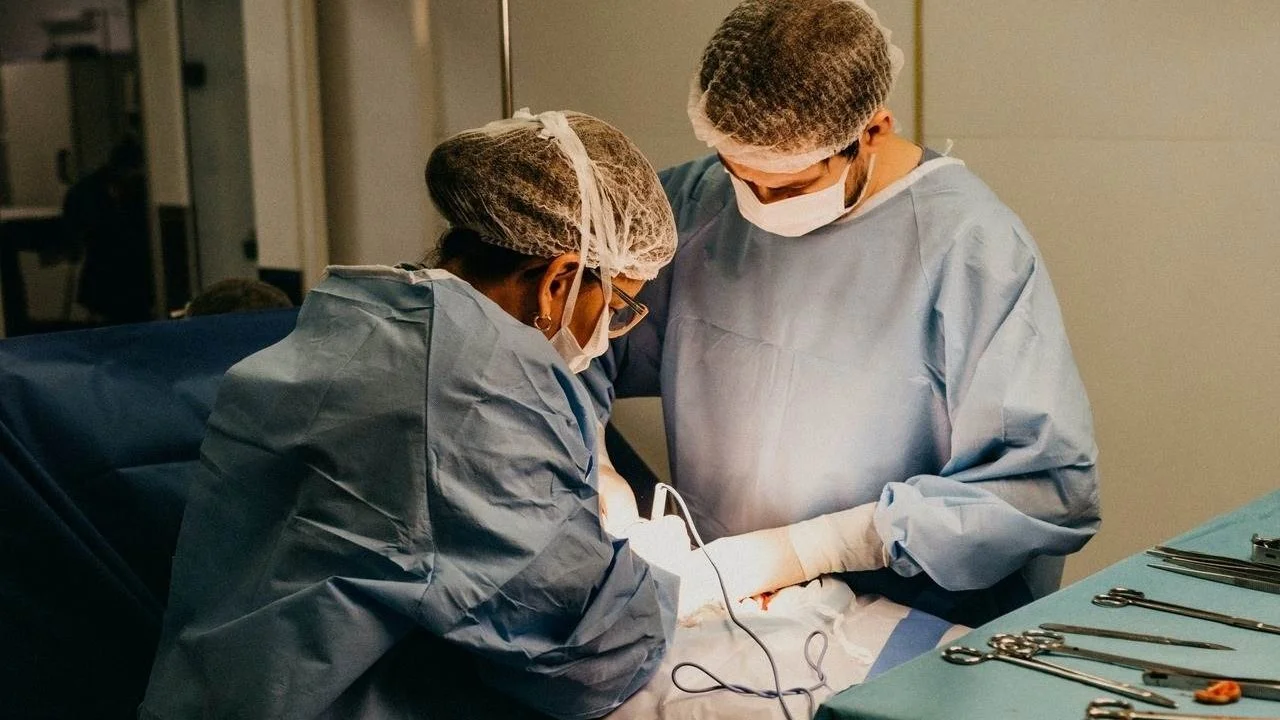
The role of orchidopexy
In persistent undescended testicle, orchidopexy is the most common and in many cases most suitable option. The testicle is moved into the scrotum and fixed there.
If you want a compact and understandable external overview, the NHS page is useful: NHS: Undescended testicle.
A further international patient overview is available at the Mayo Clinic: Undescended testicle (Mayo Clinic).
- The procedure improves positional conditions for ongoing development.
- Associated findings are treated as needed.
- Even if the testicle is palpable, an operation can still be useful later.
A frequent misunderstanding is to think this is only cosmetic. In medical terms it is about function and control.
Hormone therapy: where is it reasonable?
Hormonal treatment is not a standard solution for every child. Some centres use it in selected cases, often not as first-line treatment when surgical indication is clear.
- Benefit depends on the individual findings.
- It does not replace a clear operative indication.
- Risk-benefit assessment is done individually in specialist discussions.
In everyday practice this is mostly a case-by-case decision, not a general protocol.
Aftercare after correction
After surgery, wound healing, pain pattern, and position assessment are central. The next follow-up schedule should be defined clearly.
- Report redness, fever, strong swelling, or strong pain early.
- Recovery is usually uncomplicated with structured review.
- Long-term, monitoring position and development remains relevant.
Even after successful correction, follow-up is not an unpleasant chore but a core part of risk management.
Myths many parents hear too often
- It is always a permanent problem that must be operated on. Not every finding is surgical, but every finding needs monitoring.
- A later-detected case is automatically worse. Later is often not ideal, but not automatically hopeless.
- Ultrasound can decide everything. Clinical examination is still the core of interpretation.
- Everything is solved after successful surgery. Long-term monitoring remains sensible.
What helps in daily life for parents?
- Set a follow-up plan with dates and document what changes each time.
- Prepare questions rather than improvising during appointments.
- If there is acute pain, marked swelling, or fever, do not wait.
- Do not try to manually reposition the testicle without medical instruction.
Conclusion
Undescended testicle is a matter for structured course monitoring rather than a rapid reaction. Clear observation in early months and timely specialist decisions reduce unnecessary uncertainty and support safety in the next step.
Further reading
If you want to deepen context on similar urological topics, these posts can help with interpretation.