Condom sizes: which fits, how to measure, and whether sizes are the same worldwide
The right condom size is not a luxury but a safety factor. Too tight can cause pressure and be more likely to break; too loose can slip or slide off. This guide gives you a simple measuring method, clear fit signs and common mistakes so you can quickly find a size that feels secure and comfortable.


Why fit matters?
A condom should sit securely without constricting. Too loose means a higher risk of slipping or sliding off. Too tight often causes pressure, reduced sensation and increased friction, which stresses the material more. Many failures look like quality problems but in practice are often a combination of fit, friction and small application errors.
The good news is this can be solved systematically. If the size is reasonable and application is correct, condoms become more reliable and comfortable for many people right away.
What on the pack really matters?
The most important size indication is usually a width in millimetres. It is often called the nominal width and describes the width of the condom when laid flat. This number is far more reliable for comparison than labels like Regular, Standard, Large or XL, because such labels are not defined uniformly worldwide.
When you switch between brands or countries, the millimetre indication is your safest anchor. Many products also follow international testing requirements, for example ISO 4074 for natural rubber latex condoms. ISO: ISO 4074 Natural rubber latex male condoms
How to measure correctly without getting tangled up?
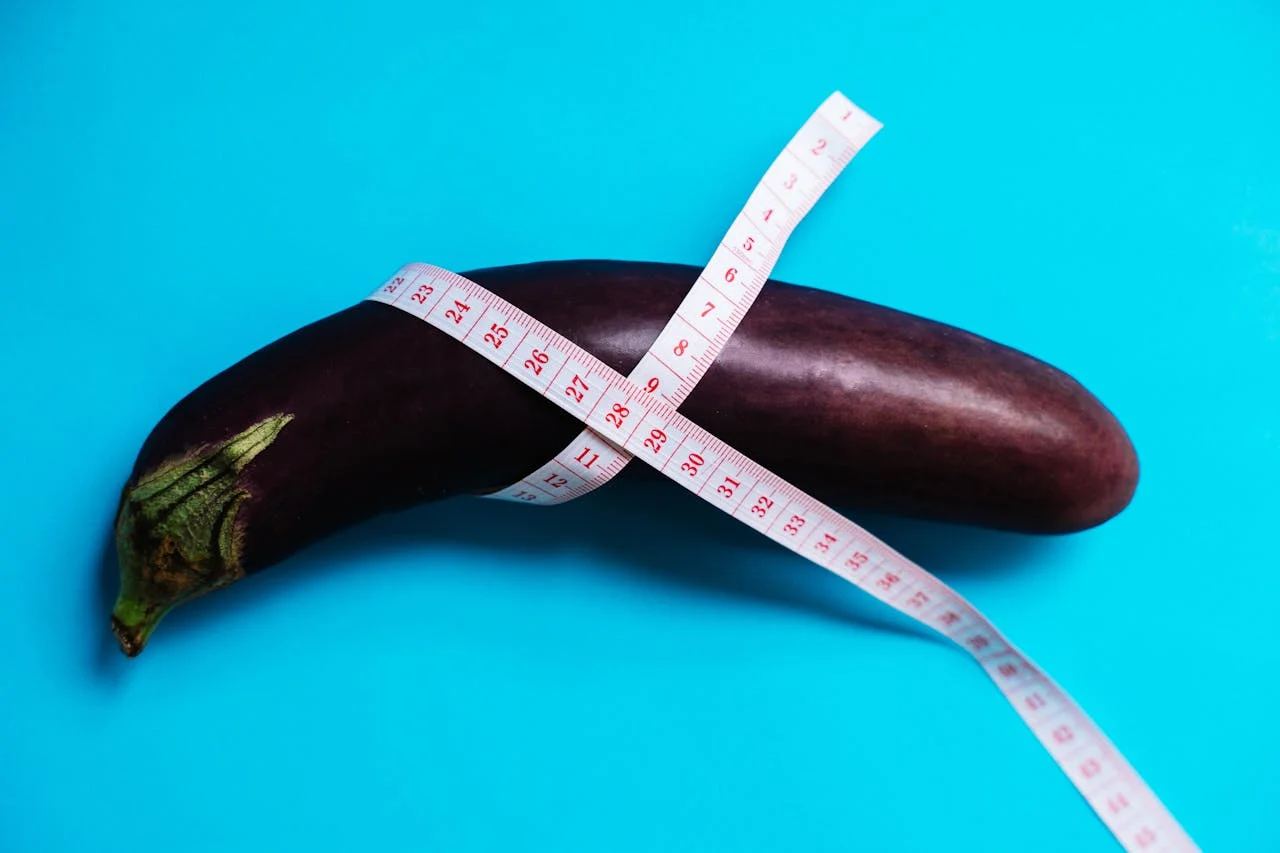
Measure the girth when erect. A flexible tape measure is ideal. If you don't have one, a strip of paper or a piece of string will do: wrap once, mark it, then measure against a ruler.
- Measure at the mid-shaft or at the widest point.
- Measure snugly but not tightly.
- Repeat the measurement on two different days and use the typical value.
Why girth and not length. Condoms are long enough for most people. The decisive factor is whether it sits securely on the shaft and doesn't slip or constrict. Planned Parenthood: What size condom do I need
Nominal width: the simple starting point for the correct width
You don't need a complicated formula. The millimetre width on the pack roughly corresponds to half your measured girth, because the indication describes the width when the condom is laid flat.
- Starting point: girth divided by two
- Example: girth 104 mm gives a starting width of about 52 mm
- Example: girth 112 mm gives a starting width of about 56 mm
This is a practical approximation, not a millimetre-precise guarantee. Shape, material and erection variation also matter. That's why the next step is always to check fit signs and, if needed, try an adjacent width.
Size overview that really helps in practice
Many guides stick to narrow, medium and wide. In practice, smaller steps are often more useful. The classification below is a guideline. It does not replace measuring, but helps you start quickly.
- 45 to 47 mm: very narrow, often suitable for girth around 90 to 94 mm
- 48 to 50 mm: narrow, often suitable for girth around 96 to 100 mm
- 51 to 53 mm: medium, often suitable for girth around 102 to 106 mm
- 54 to 56 mm: medium to wide, often suitable for girth around 108 to 112 mm
- 57 to 60 mm: wide, often suitable for girth around 114 to 120 mm
- 61 mm and above: very wide, often suitable for girth from about 122 mm
If you fall between two widths, that's normal. Practice decides: if it slips, favour the smaller; if it pinches or numbs, favour the larger.
How a condom should fit?
A properly fitting condom can be rolled down to the base without struggle. It does not roll back on its own, shift forward with movement or feel loose on the shaft. It should not look wrinkled nor like a tight ring that constricts everything.
If you are unsure whether your fit issue is size or application, a quick check with a reputable instruction helps. The basics are similar everywhere: pinch the tip, roll down to the base, put it on before contact and hold the rim when withdrawing. CDC: Condom Use
Nominal width explained visually: what the millimetre number means
The millimetre width seems abstract until you see it. The number refers to the width of the condom when laid flat. The image here shows exactly that. It's not a diameter on the body but a pack indication you can use to compare products.
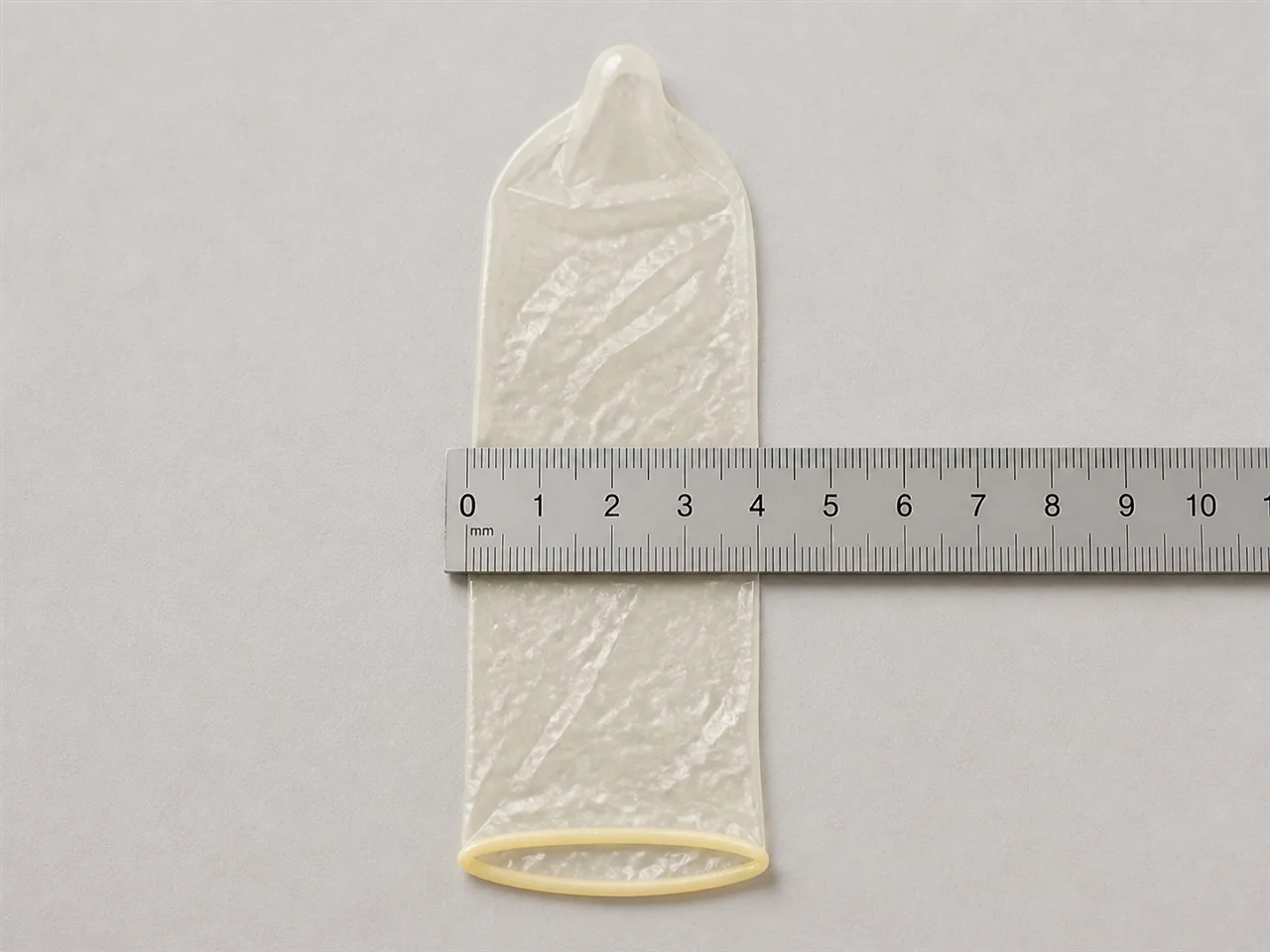
You don't have to measure condoms yourself. The image only explains why girth divided by two makes sense as a starting point and why the number on the pack is so helpful.
Typical problems and what they usually mean
The condom slips, shifts or forms wrinkles
This often indicates a width that is too large or erection fluctuations. If it also isn't rolled down to the base, the risk of slipping increases. If this happens repeatedly, trying a smaller width is often the best first test.
The condom feels constricting or causes numbness
That often indicates a width that is too small or too much friction. Typical signs are pressure, numbness, difficulty rolling down or a quicker loss of erection. A larger width can often immediately improve comfort.
Condoms break repeatedly
Repeated breaking is rarely just bad luck. Common causes are a too-tight fit, air in the tip, insufficient lubrication, using the wrong lubricant with latex or damage when opening. Major health resources list these points very consistently. WHO: Condoms
The most common application errors
- Putting it on too late, after first contact
- Not pinching the tip, creating an air bubble
- Rolling down only halfway instead of to the base
- Opening with nails, teeth or sharp edges
- Using two condoms at once, which increases friction
A robust rule: put it on before contact, pinch the tip, roll it fully down, and hold the rim when withdrawing. CDC: Condom Use
Lubricant and material: the underestimated factor
Friction is one of the most common reasons for discomfort, anxiety and failures. condom-compatible lubricant can significantly improve comfort and safety, especially for longer sessions, dryness or sensitive mucous membranes.
Compatibility is important. For latex, oil-based products are often noted to weaken latex. Water- or silicone-based options are regarded as compatible in many guides. NHS: Condoms
If you often notice irritation, material can also play a role. Non-latex alternatives can be useful for latex sensitivity, but fit remains the primary lever.
Are condom sizes the same worldwide?
Partly. Many products follow similar testing standards, but in everyday use confusion arises from labels like Regular or XL because they are not defined globally. Assortments also vary by market and manufacturers rarely provide a simple mapping of which XL label corresponds to which millimetre width.
A small travel anecdote many know: in some countries shelves show only a narrow range of millimetre widths, while in others a wider selection is normal. That is often interpreted as a body issue, but in practice it's usually a range offered by retailers. Retailers stock what sells there, and many brands keep labels vague because a generic label sells better than a specific number.
- When abroad, look for the millimetre figure first, not XL.
- If no millimetre figure is present, comparison is difficult.
- When in doubt, test two adjacent widths instead of interpreting a label.
Storage and shelf life
Even the right condom can cause problems if stored poorly. Heat, pressure and friction in a wallet or car can stress the material. Check the expiry date, ensure the packaging is intact and store condoms in a cool, dry place where possible. WHO: Condoms
Myths and facts about condom sizes and fit
- Myth: Condom length is decisive. Fact: For most people girth is more important because the width determines fit on the shaft and condoms are usually long enough.
- Myth: XL is the same everywhere. Fact: Labels like Regular, Standard, Large or XL are not globally standardised; the millimetre figure is the more reliable comparison.
- Myth: If a condom slips, more lubricant will fix it. Fact: Lubricant helps with friction, but slipping is often a width or application issue.
- Myth: If a condom breaks, the brand is bad. Fact: Common causes are too-tight fit, air in the tip, insufficient lubrication or the wrong lubricant for latex.
- Myth: Two condoms are twice as safe. Fact: Two on top of each other increase friction and can raise the risk of tearing.
- Myth: You can put a condom on just before orgasm. Fact: Reliable guidance emphasises putting it on before contact and using it correctly.
- Myth: Difficult rolling is normal. Fact: Hard-to-roll and constriction often indicate a width that is too small.
The core points on application, materials and errors are very similar across major health resources, which is a good sign for robust basics. CDC: Condom Use WHO: Condoms
If you want to find the right size quickly
Measure your girth, divide by two and use that width as a starting point. If it slips, try one width smaller. If it pinches or causes numbness, try one width larger. Pay attention to correct application and use condom-compatible lubricant if needed. In practice this is often faster and more reliable than switching brands blindly.
Conclusion
You find the right condom size most reliably by girth and the millimetre width on the pack, not by Regular or XL. Measure once carefully, start with girth divided by two as the width and try an adjacent width if needed — it will usually feel noticeably safer and more comfortable quickly.
Read more
These articles help you compare fit, tearing risk, latex-free options, and nominal width more clearly.