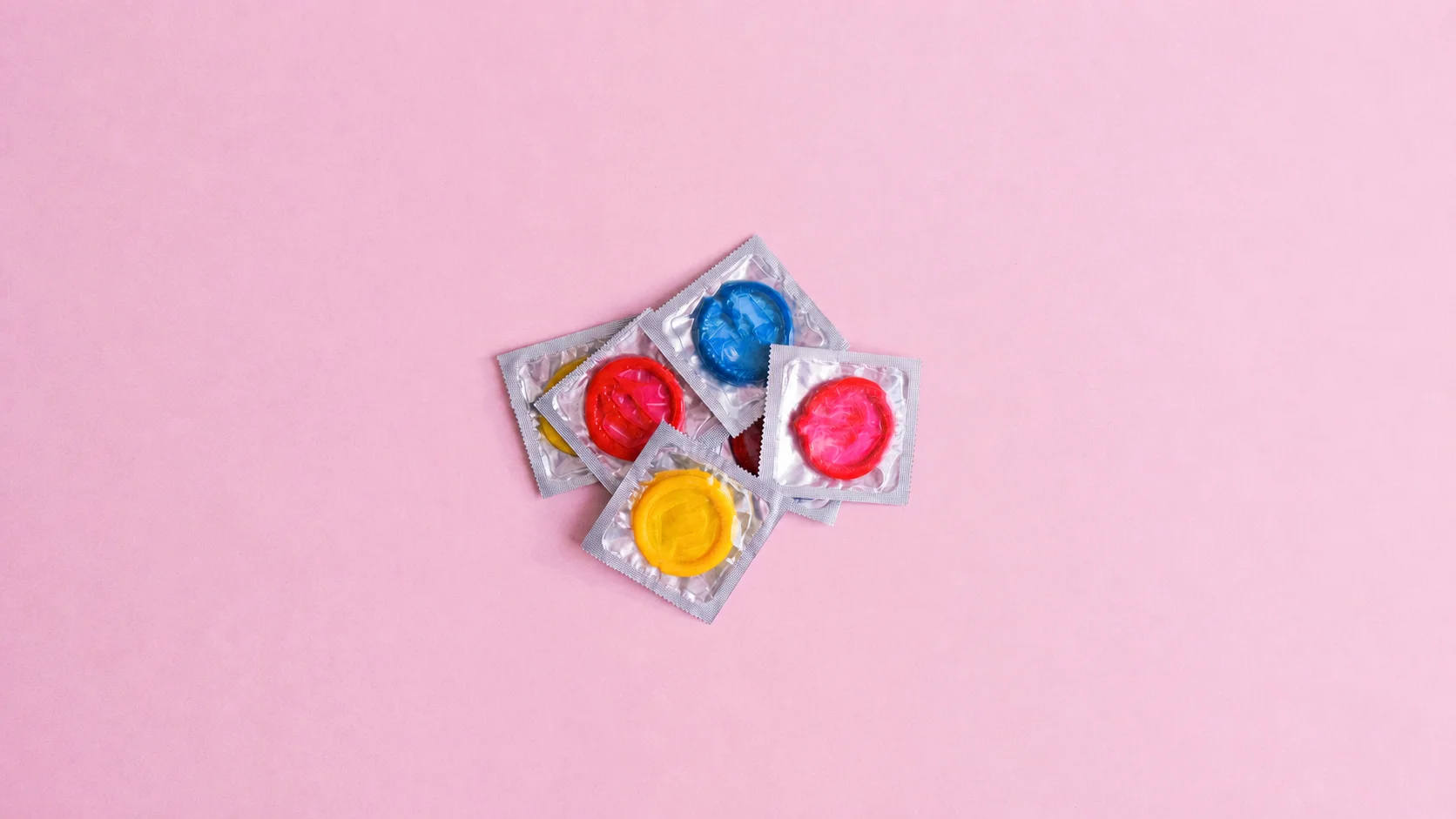
How to use a condom correctly: a step-by-step guide
A condom works best when you put it on before the first contact, leave room at the tip, roll it all the way down, and remove it carefully afterward. The steps are simple, but the small details decide safety, comfort, and whether it stays in place.


What matters first?
A condom works best when three things line up: the right size, the right timing, and the right handling. The WHO and the CDC both stress that condoms should be put on before contact, rolled down correctly, and removed safely after sex. WHO: Condoms CDC: Preventing HIV with Condoms
If you remember only one rule, make it this: the condom needs to be on before any direct genital contact happens, not only at the last minute.
At first it can feel a bit awkward. That is normal. After two or three tries, the routine gets much easier.
How to put a condom on correctly?
- Check the expiration date and the package. If the wrapper is damaged, puffed up, or badly creased, use a different condom.
- Open the packet carefully. Teeth, scissors, or sharp fingernails are not a good idea.
- Place the condom on the erect glans and make sure the rollable side is facing outward.
- Pinch the tip gently so the air comes out and there is room for ejaculate.
- Roll the condom down fully with the other hand until it reaches the base.
- Use lubricant if needed, but only one that matches the condom material.
- After ejaculation, hold the rim of the condom, pull out while still erect, and throw the condom in the trash.
If you want a short official version, the CDC lays out the same steps in very similar terms. CDC: Preventing HIV with Condoms
The most common mistakes
- Putting it on too late, meaning after the first contact.
- Not pinching the tip, which leaves too little space.
- Not rolling it all the way down to the base.
- Putting it on the wrong way round and then turning it over to keep going.
- Not holding the rim after ejaculation.
- Using two condoms at once, even though that creates more friction and usually more risk.
- Using oil-based lubricant with latex.
- Keeping the condom in a wallet, in a car, or in other hot places.
Most failures are not a mysterious product defect. They are usually fit or handling problems. That is why the basics matter so much.
Which lubricant works best?
Lubricant can make condoms safer and more comfortable because it reduces friction. The WHO recommends water- or silicone-based lubricant, and the CDC notes that oil-based products can weaken latex. WHO: Condoms CDC: Preventing HIV with Condoms
If you are using latex, stick with water- or silicone-based lube. If burning or itching happens often, the material may also play a role. More on that is in latex-free condoms.
For longer or drier situations, lubricant is especially useful because it can lower the risk of tearing or slipping. That is often not a sign that you are doing something wrong. It is more often a sign that friction is simply too high.
What to look for with size and fit?
A condom should fit securely without squeezing. Too loose means more risk of slipping, too tight means more pressure, less sensation, and more friction. If something feels off, size is the first thing to check. See also condom size.
A simple check helps: it should roll down to the base without a fight, should not keep riding up, and should feel steady on the shaft. If it feels like a tight ring or starts to wrinkle, that is a warning sign.
What to do if something goes wrong?
If the condom tears, slips off, or was put on incorrectly, pause and do not react on autopilot. More calm often saves more time than frantic guessing. For the next steps after a failure, see condom broke or slipped off.
If pregnancy is possible, emergency contraception may matter. If you are worried about an STI, chlamydia is a sensible next step, because tests and symptoms are often underestimated there.
Important: condoms do not protect perfectly against everything, but when used correctly and consistently they greatly reduce the risk of many sexually transmitted infections and unwanted pregnancy.
The five steps at a glance
- Put it on before the first contact.
- Pinch the tip and let the air out.
- Roll it fully down to the base.
- Use the right lubricant if needed.
- Hold the rim after sex and throw it away right away.
If you keep these five points in mind, the routine in real life will already be very solid.
One detail that surprises many people
Most condom problems do not start with the brand. They start with the situation: not enough time, too much friction, or a condom that was handled badly before it was even put on. That is why a condom suddenly works much better when you change just one thing, such as the size, the lube, or the moment you put it on.
That is useful because you do not have to relearn everything at once. In practice, one small correction is often enough to turn an awkward feeling into a reliable routine.
A small practical tip
If you have the condom, the lubricant, and a trash bag ready ahead of time, the whole process feels more relaxed. Not because it is complicated, but because you do not have to search for anything at the critical moment.
That one small difference often makes the whole thing feel more confident and more comfortable, especially the first or second time.
Myths and facts
- Myth: You should only put a condom on right at the end. Fact: It needs to be on before the first contact.
- Myth: If I do not pinch the tip, it does not matter. Fact: Air at the tip increases the risk of tearing.
- Myth: Two condoms are twice as safe. Fact: Two layers create more friction and can actually raise the risk.
- Myth: Oil-based lubricant is always better. Fact: With latex, it can weaken the material.
- Myth: Putting it on the wrong way and flipping it is fine. Fact: In that case, it is better to use a new condom.
- Myth: If it does not feel perfect, something is wrong. Fact: With the right size and a bit of practice, it usually gets much better very quickly.
Conclusion
Using a condom correctly is mostly about the order: put it on first, leave room at the tip, roll it all the way down, use the right lubricant if needed, and remove it cleanly after sex. When the size and technique are right, uncertainty quickly turns into routine.
Keep reading
If you want a bit more depth after the basics, these posts help with fit, material, breakage, and emergency contraception.