Questions to ask before private sperm donation
Before choosing a sperm donor, ask about motivation, health records, previous donations and future contact. Use this checklist to prepare the discussion and work out whether the answers and expectations fit your plans.

At a glance
- Clarify motivation, health records, previous donations and the donor's future role before making a commitment.
- Semen analysis and infection screening answer different questions; ask a clinician to interpret the results.
- Keep a note of unanswered questions and stop if there is pressure about sex, timing or the method.
Using the checklist
With private sperm donation, it helps to plan the discussion beforehand. Decide what you need to know, which boundaries matter and which answers need supporting records.
If you are just getting started, How do I ask someone to be my sperm donor? can help. Further reading: Private sperm donation: Which health documentation should you see before donation?
The aim is to finish the conversation with a sound basis for your decision.
Why good questions matter
Regulated programmes provide screening, counselling and documentation. For private donation, use the conversation to establish which checks are complete and where you still need medical or legal advice.
Targeted questions help you to:
- understand the donor's motivation
- assess health, fertility and possible risks more realistically
- clarify future contact and responsibilities early
- distinguish reliable donors from risky offers
The sooner you speak openly, the smaller the risk that a good impression later turns into a conflict.
Before the first conversation
First decide what role you want the donor to have: occasional contact, co-parenting or very little involvement. Little contact should not be confused with leaving a child without information about their origins.
This decision matters because otherwise you can end up talking past each other. If you are still unsure about the basic direction, that is fine, but it is worth taking a calm look at your own expectations before you move on.
- Write down what is non-negotiable and what would simply be a bonus.
- Think through which topics must be settled before the first attempt.
- Allow enough time so you do not agree under pressure.
- Make a note of the signals that would make you step away.
Motivation, values and boundaries
Start by asking about motivation. People can want to be sperm donors for very different reasons, and those reasons often shape how they later handle responsibility, closeness and agreements.
Ask about topics like these:
- Why do you want to be a sperm donor?
- What matters to you most about sperm donation?
- How do you feel about single parents, LGBTQ+ families and co-parenting?
- What would be a clear no for you?
- How do you handle changing expectations later on?
If someone dismisses your caution, pressures you or makes light of your boundaries, that is a clear warning sign.
Health and family history
Asking about health does not mean you distrust the donor. It is part of choosing responsibly. Professional programmes usually assess donors for infections, fertility and other medical factors and review their family medical history before using their sperm.
In conversation, you should at least clarify:
- When was your last semen analysis, and what did the results show?
- What current or past illnesses do you have?
- Which infection test results can you provide?
- Are there serious illnesses or known genetic conditions in your family?
- Do you take medication, smoke or regularly use alcohol or other substances?
A semen analysis is not an infection test. Check what was tested, when samples were taken and whether relevant circumstances have changed. A clinician should review the records; screening cannot rule out every risk. ASRM guidance on donor assessment, from the US
Day-to-day life, personality and background
Even if the donor will not be part of everyday family life, your child may one day want to know who this person is. That is why it helps to learn about their background, personality and values.
Useful questions include:
- What does your day-to-day life look like?
- What do you do for work?
- Which interests or hobbies matter to you?
- Which traits describe you best?
- Which parts of your background or family history might matter to a child later on?
You are not looking for a perfect biography. You want a coherent picture that you can later explain honestly to your child.
Role, contact and documentation
The donor's role after the birth deserves particular attention. Discuss both the relationship and practical details: sharing updates, respecting boundaries, staying in touch and handling changes over time.
It helps to clarify early:
- How will the child be able to access your identity and relevant background information?
- How often would contact realistically make sense?
- What role do you imagine after the donation?
- How should we handle messages, photos or updates?
- What should be written down?
Putting expectations in writing is useful, but it does not automatically settle legal parenthood or child maintenance. Get advice on your circumstances before the first donation.
Having a useful conversation
A good conversation with a sperm donor feels calm, clear and respectful. You do not have to interrogate anyone, but you should have enough structure so that nothing important gets lost.
It often helps if you:
- start with easier topics and then move to health and expectations
- ask open questions so the answers are not just yes or no
- do not try to settle everything in one meeting
- make short notes during or after the conversation
- slow down deliberately if you feel pressure or evasiveness
The calmer you stay, the more clearly you will see how the other person handles responsibility, boundaries and uncertainty.
Questions for the conversation
If you want to prepare for a conversation or video call, you can go through this list step by step. The questions are intentionally open, so the donor can answer in more detail instead of reacting with just yes or no.
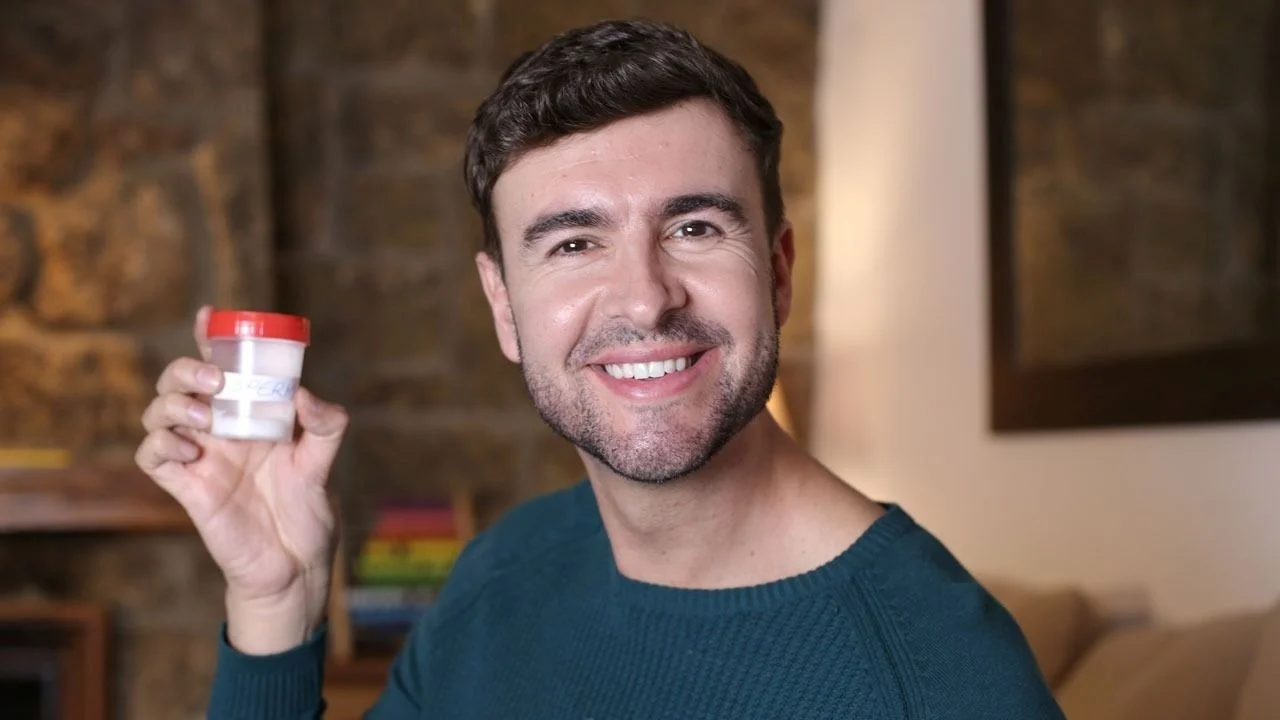
- Why do you want to be a sperm donor?
- What experience do you have with sperm donation or with your own children?
- What first made you consider being a donor?
- How do you see your role after the birth?
- How much contact would feel right for you later on?
- How old are you, and have you had a recent semen analysis or medical assessment?
- How would you describe your physical health?
- Have you had any operations, chronic illnesses or long-term treatments?
- Which infection test results can you provide?
- Which illnesses occur more often in your family?
- Are there any known genetic conditions in your family?
- Do you take medication regularly?
- Do you smoke or use alcohol or other substances regularly?
- What does your day-to-day life look like?
- What matters most to you in life?
- How many families have you helped, and how many children from those donations are you aware of?
- Which insemination methods would you accept, and which would you not?
- How flexible are you when it comes to ovulation days and appointments?
- How do you want to handle meetings in public or private places?
- Are you willing to put important agreements in writing?
- What should a child later be allowed to know about you?
- How would you react if later questions or contact requests came up?
- What would you expect from us in return?
- Is there anything else we have not talked about yet?
If answers stay evasive, conflict with one another or create pressure, that is usually a good moment to keep looking rather than hoping it will all work out later.
What to check afterwards
Take time to review the first conversation before agreeing to proceed. Read your notes when you have a quiet moment, compare the answers and consider whether the overall picture is consistent.
Helpful questions to ask yourself afterwards:
- Were the answers consistent?
- Did we understand the role and contact in the same way?
- Were medical questions answered openly?
- Did the person respect my boundaries and the pace I was comfortable with?
- Did the contact still feel right after a second look?
Separate what is confirmed, what is still unanswered and what does not fit. A pleasant meeting cannot make up for a missing result. You do not need proof of wrongdoing to decide against a contact.
Warning signs when choosing a donor
A good questionnaire only works if you take warning signs seriously. Be especially careful if someone pushes too fast, blocks medical questions or refuses to respect agreed boundaries.
Typical warning signs are:
- the donor only wants to talk about very intimate meetings
- the donor refuses to provide recent health records
- answers about past donations or children remain vague
- your boundaries are brushed aside
- pressure is applied about time, place or method
- details about work, home or life situation keep changing
- you are asked to agree to things you had already ruled out
- there are contradictions between chat, profile and the in-person conversation
- the person reacts irritably as soon as you ask about documentation or tests
If something does not feel right, you do not need perfect proof. It is enough that you do not feel safe.
When to get professional advice
Some questions can be resolved in conversation, while others need professional advice. That is especially helpful if medical findings are unclear, there are genetic risks in the family or you have already had several unsuccessful attempts.
Professional support can also help if you and a possible partner have different ideas about the donor's role, contact or responsibility. In that case, it is often better to clarify your expectations early, before they lead to conflict.
In private sperm donation, professional counselling can take a lot of pressure out of the process. It does not replace your decision, but it helps you see risks more clearly.
For country-specific background, read our guides to sperm donation in Germany, the United States, Indonesia and the Philippines.
Conclusion
The best questions to ask a sperm donor are the ones that give you clarity before you become emotionally committed. If you check motivation, health, everyday life, boundaries and the future role carefully, you will be better placed to decide whether this person is the right donor for you.
Further reading
If you want to go deeper after the first conversation, these posts help with choosing a donor, safety and agreeing on roles.