How to Measure Your Penis: Length, Girth, and Stretched Penile Length
The right method depends on the question. A repeatable erect measurement is useful for personal comparison, girth matters most for condom fit, and clinicians often measure stretched length while the penis is flaccid. This guide explains the differences without turning measurement into a competition.

Why there is no single penis measurement
Someone choosing a condom needs a different number from a doctor evaluating a possible micropenis. Documenting a new curve requires a different approach again from comparing your size with an average. A measurement becomes useful only after you know which question it is meant to answer.
Research is less consistent than many guides suggest. A systematic review found different states, starting points, and instruments across 70 studies. About 60 percent used stretched length, while only a little over one quarter used an erect measurement. Even clinical studies are therefore not automatically comparable. 2021 review of measurement methods
Four measurements answer four different questions
- Flaccid length
- Easy to take but highly variable. Temperature, stress, and blood flow can visibly change it.
- Stretched flaccid length
- The stretched penile length, or SPL, commonly used in clinical care. It provides a more standardised approximation and is compared with age-specific reference values.
- Erect length
- Usually more intuitive for personal context and sexual function, but affected by erection quality and the starting point.
- Erect girth
- More practical than length when choosing condom fit or describing width.
None of these is best for every purpose. Problems begin when a flaccid home measurement is compared with an erect study value or a skin-based measurement with a bone-pressed one.
How to measure erect length step by step
For a repeatable home measurement, use a rigid ruler, a full erection, and a stable starting point. Do not measure if you are in pain or suspect an injury.
- Stand upright and place the ruler along the top of the penis.
- Start at the pubic bone and gently press into the fat pad.
- Measure in a straight line to the tip of the glans.
- Do not count foreskin that extends beyond the glans.
- Repeat two or three times under similar conditions and record the average.
Pressing at the pubic bone is not an attempt to create the largest possible number. It makes the starting point less dependent on skin and body fat. You can use a visible-skin measurement to track your own change, but only compare it with measurements taken the same way.
Why a full erection matters for comparison
Erections are not identical every day. Sleep, stress, alcohol, medications, mood, and performance pressure affect firmness and fullness. Comparing a partly erect measurement with a previous maximum measures current erection quality more than anatomical change.
If erections become noticeably weaker for several weeks, repeated measuring is not the best diagnostic tool. Blood pressure, medications, metabolic health, emotional context, and possible vascular disease may all matter. Understanding erectile dysfunction addresses that question more directly.
How to measure girth accurately
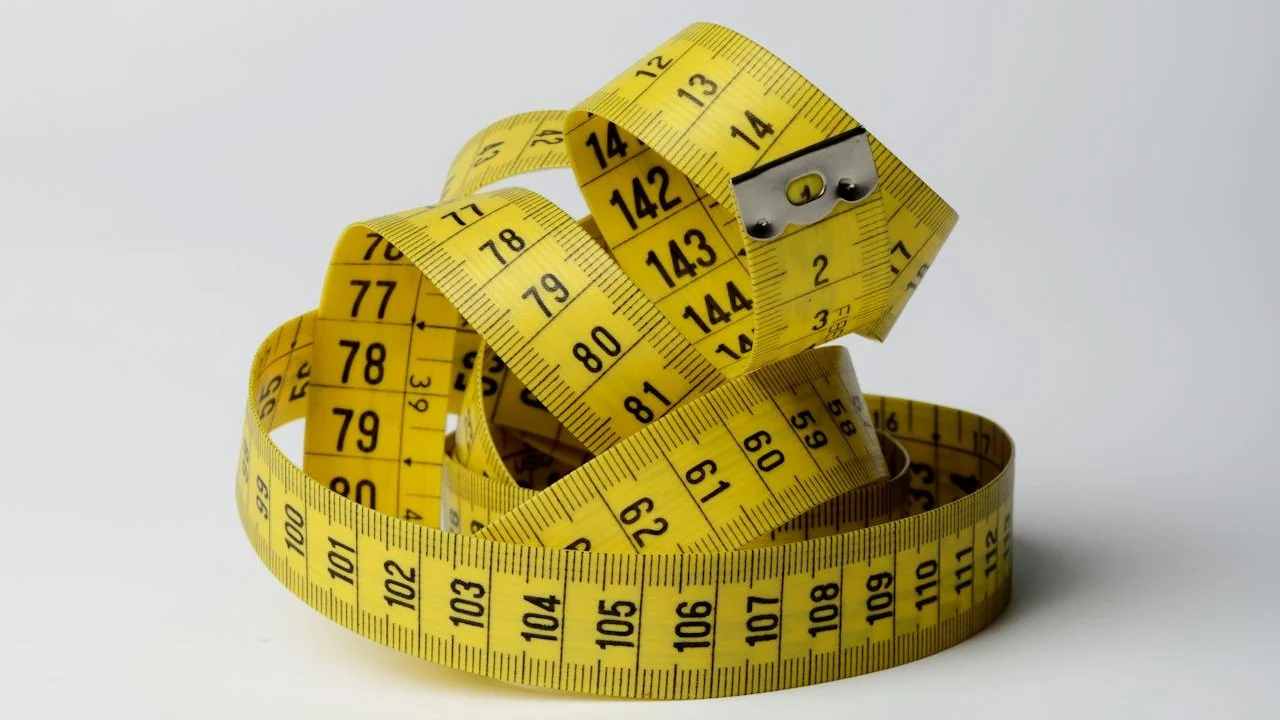
Use a flexible measuring tape or a nonstretch string. During a full erection, wrap it around the widest part of the shaft. It should touch the skin without compressing tissue. If you use string, mark the overlap and then measure that length against a ruler.
Some studies measure at mid-shaft and others at several points. The widest point is useful in daily life when the goal is condom fit. The important part is using the same location each time. Nominal width on the package is not simply half the body's circumference; see how to choose the right condom size for a practical explanation.
Why flaccid length is rarely the best answer
A flaccid measurement is quick but easily disturbed. Cold can make the penis contract visibly, while warmth can make it hang more loosely. Exercise, anxiety, and activation of the sympathetic nervous system also change the state. Measurements can vary considerably in the same person without any anatomical change.
Flaccid length can be documented in a standardised examination. It is usually less informative for comparing yourself with other men or assessing sexual function. Spontaneous changing-room comparisons are especially misleading because temperature, perspective, and erection response are all unknown.
What stretched penile length means clinically
To measure stretched penile length, or SPL, the flaccid penis is gently extended to resistance and measured from the pubic bone to the tip of the glans. The examiner compresses the fat pad without causing pain. This method is used for developmental questions, a possible micropenis, preoperative measurements, and research.
SPL is particularly practical in infants and children because an erect measurement is neither reliably scheduled nor appropriate for a routine examination. The result is compared with age-specific reference data. An adult table or a private photo cannot replace that context.
The European Association of Urology identifies SPL as the minimum clinical measurement. Depending on the reason for evaluation, flaccid and erect measurements may also be useful or required before surgery. The guideline also notes that there is no complete international consensus on every detail. EAU guideline on penile size
A micropenis diagnosis is not based on one universal adult number from the internet. It uses SPL in relation to age-specific reference data and the complete clinical picture. In children and adolescents, experienced health professionals should take this measurement.
SPL and erect length are related but not identical
Stretched length is often said to be practically the same as erect length. The averages may be similar, but the two can differ substantially in an individual man. In a study of 201 men with a medically induced erection, the stretched measurement underestimated erect length by an average of 2.64 cm, or just over 21 percent. Results also differed between examiners. Habous et al. 2015
That finding is not a universal conversion formula. It shows that tissue extensibility, technique, and the examiner all matter. Calculating an exact erect length from your SPL with a fixed formula promises more precision than the method can provide.
Where the 450-gram traction figure comes from
Some research groups tried to standardize stretching force by using spring scales. An older study described a critical force around 450 g at which further length gain began to level off. That experimental setup became an oversimplified online rule that everyone must pull with exactly 450 g. Study on predicting erect length
This is not a safe home standard. Research protocols use different forces, and measurement in children raises additional considerations. A current review describes the 450-g technique as one of several methods, not a universal requirement. Review of standardised SPL measurement
For personal orientation, stretch gently to resistance without a weight, sudden movement, or pain. If you need a genuinely standardised clinical measurement, have a professional take it rather than attaching a spring scale to sensitive tissue.
The force used for a brief measurement is also not the same as medical traction treatment. An extender applies repeated, prolonged loading under a separate treatment plan. The 450 g figure cannot provide a safe device setting or enlargement programme.
The most common measurement errors
- Starting at the skin one time and the pubic bone the next.
- Comparing a partial erection with a full one.
- Including foreskin or changing the endpoint.
- Compressing the fat pad by different amounts.
- Pulling to pain during SPL measurement or changing the force each time.
- Following the curve one time and measuring a straight projection the next.
- Recording only the highest of many measurements.
If you are tracking a change, record the method, state, and date. A single figure rarely says much. When the shape has changed, photos of a full erection from consistent angles are often more useful for a medical appointment than daily millimetre readings.
How do you measure a curved penis?
To measure actual length along the upper surface, use a flexible, nonstretch tape that follows the curve. A rigid ruler instead measures a straight projection. Either can be useful, but they answer different questions. Choose one method and keep it consistent when tracking change.
The curve itself is better assessed with standardised photos from several angles or during a urology examination. An angle app or protractor can offer only a rough home estimate. Diagnosis and treatment do not depend on a self-measured angle alone.
Congenital curvature or Peyronie's disease?
A stable curve present since puberty without a lump or pain may be congenital. Many mild curves are normal variations. Peyronie's disease is an acquired change in the tunica albuginea. Possible signs include a palpable plaque, a new or increasing bend, indentation, shortening, pain, or erection problems.
The EAU distinguishes an active phase, during which pain and shape may still change, from a stable phase. That distinction matters because some procedures should be planned only after the disease is stable. EAU guideline on penile curvature
Do not spend months only measuring a new curve. Early urological evaluation can determine whether it is Peyronie's disease, an injury, or another cause.
What happens at a urology appointment
The evaluation covers the timeline, pain, erection function, and whether intercourse is possible. The clinician feels for plaques and assesses the shape during erection, using either good patient photos or a medically induced erection. Ultrasound may add information in some situations, but it is not automatically needed for every mild curve.
Useful details include when the change began, how it has progressed, pain during erection, erection problems, medications, earlier injuries or surgery, and exactly what no longer works during sex. standardised photos from the same perspectives show change better than shifting daily angles.
Treatment addresses a functional situation, not a picture. Disease phase, pain, erection function, and interference with sex jointly determine whether observation, conservative treatment, or later surgery makes sense. Measurement documents the starting point; it does not replace specialist advice.
When measuring helps and when it magnifies worry
Standardised measurements are especially important when micropenis is suspected, before reconstructive or enlargement procedures, in Peyronie's disease, after injury, and when a real change needs documentation. Home measurements can prepare for those situations but cannot provide the final diagnosis.
Seek prompt care for a sudden severe curve, a popping sound with bruising and swelling, intense pain, an erection lasting several hours, or trouble urinating. Those are not questions for a later comparison measurement.
Outside a medical question, measuring can become a reassurance ritual. Some people repeat it until a preferred number appears, compare many studies, and still feel better only briefly. At that point, the ruler provides no new information and keeps attention fixed on the perceived flaw.
The EAU recommends psychosexual or psychological assessment when size is normal but distress is severe, before considering body-changing treatment. That is not dismissal. It can prevent risky procedures that do not resolve a body-image problem.

What a measurement cannot answer
Length cannot tell you whether an erection is stable, sex will feel good, a person is fertile, or a partner will be satisfied. A penis's shape cannot be reduced to one line either. Girth, the glans, curve, firmness, and mobility all work together in daily life.
A measurement also cannot identify the cause of a change. Shorter visible length can result from a larger fat pad, a weaker erection, scarring, or a different body position. Only the history and examination can distinguish those possibilities.
A medical threshold also requires the correct reference. An adult average does not apply to a child, and a figure from a differently measured study is not a fair comparison. Penis size, averages, and country myths explains these data problems in detail.
Before-and-after measurements in enlargement marketing
Advertisements often use two different conditions: Before treatment, the measurement starts at visible skin or uses an incomplete erection; afterward, it is bone-pressed, stretched harder, or photographed from a more favourable angle. The result looks like a gain even when corresponding anatomical growth has not occurred.
Fair tracking keeps the state, starting point, tool, body position, and erection quality constant. After a girth procedure, measure at the same point on the shaft. Photos need the same distance and angle. Without that information, before-and-after images are closer to marketing than evidence.
Even real changes must be judged over time. Swelling after an injection or operation is not a stable result. Responsible studies report follow-up time, people lost to follow-up, and complications, not only the best early measurement.
Measurement before traction or surgery
Baseline measurements are documented before medical traction or surgery so goals and outcomes can be judged realistically. In Peyronie's disease, this includes curvature, possible indentations, erection firmness, and functional length. For cosmetic requests, clinicians should also determine whether the starting size is normal and whether pronounced size anxiety is present.
The EAU recommends thorough counselling before enlargement procedures. It matters whether a method changes visible flaccid length, erect length, or girth. Advertising often blends those goals together. A procedure may reveal more shaft without lengthening the erectile bodies by the same amount during erection.
Myths and facts about measuring a penis
- Myth: A flaccid measurement is enough for size comparison.
- Fact: Flaccid length varies greatly. Comparison requires a clearly defined state.
- Myth: The starting point does not matter.
- Fact: Measurements from the skin and pubic bone can differ substantially.
- Myth: SPL is always exactly the erect length.
- Fact: The two measurements are related but can differ noticeably in an individual.
- Myth: 450 g is the required stretching force.
- Fact: The figure comes from particular research protocols and is not a home or safety standard.
- Myth: A curve can be assessed with a ruler alone.
- Fact: The timeline, photos, angle, plaque, pain, and function all belong in the assessment.
- Myth: Measuring frequently always makes the result more reliable.
- Fact: A few standardised measurements are enough. Repeated checking often only reinforces worry.
Conclusion
Measure erect length along the top from the pubic bone to the tip of the glans; for condom fit, girth is the key measurement. Stretched penile length is a clinical tool, not a do-it-yourself contest with weights. With a curve, be clear whether you are documenting length, angle, or change over time. A good measurement answers a specific question. Pain, a new change in shape, or developmental concerns belong in professional hands.
Put the measurement in context
Continue with condom fit, reference values, micropenis, and the difference between size and erection function.