Sperm DNA fragmentation: when a DFI test makes sense
Damage to sperm DNA can occur even when a semen analysis is normal. A DNA fragmentation test examines this additional aspect of sperm quality and may help with the assessment of otherwise unexplained recurrent miscarriages, for example. However, it is not a routine test for every man. What matters is what the DFI value actually tells you and what a result would change.

At a glance
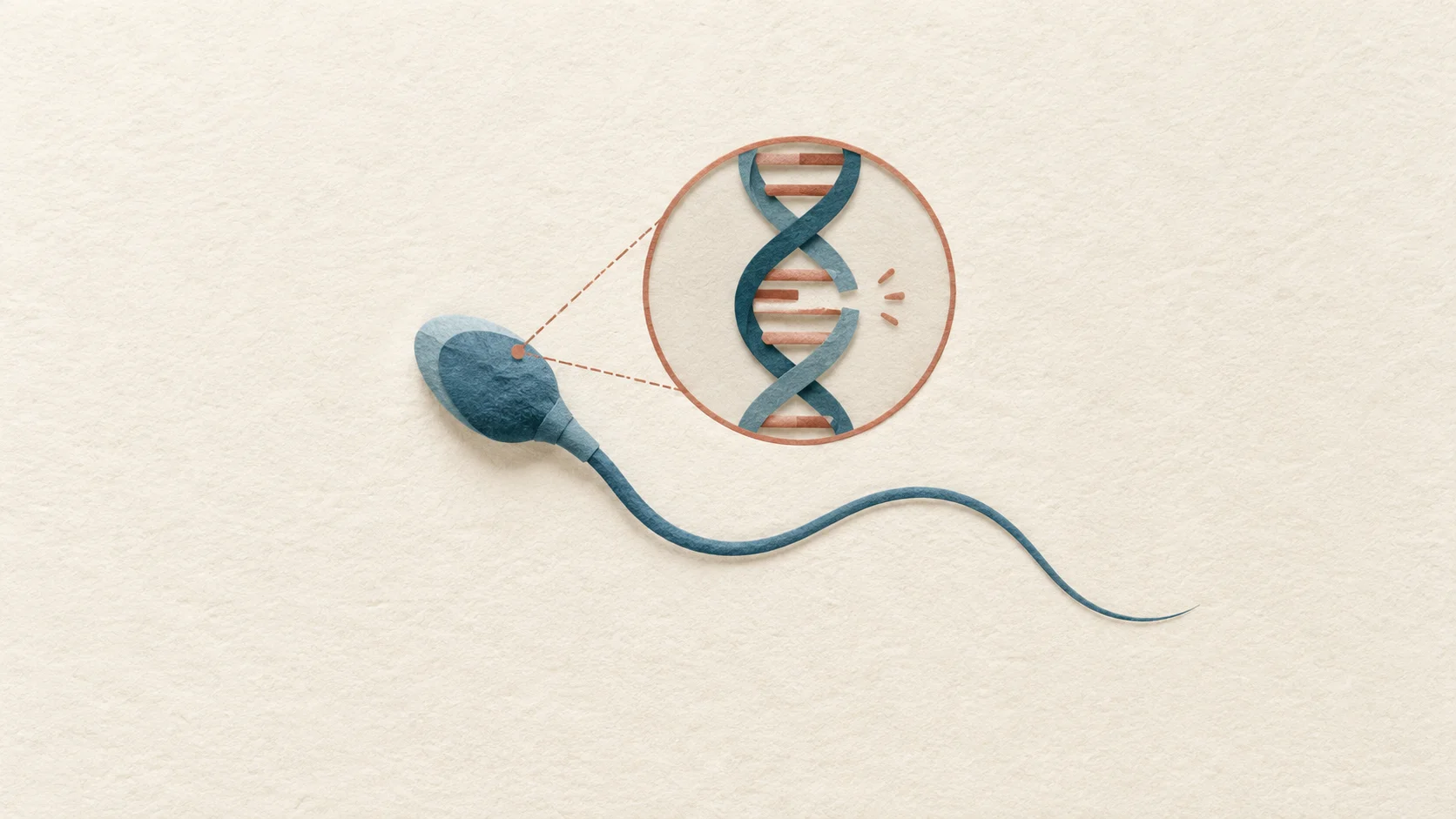
- DNA fragmentation means breaks in the genetic material of sperm cells. It can be elevated even when a semen analysis is normal.
- This additional test may help in cases such as unexplained recurrent miscarriages. An elevated value does not, however, prove a cause.
- The risk rises with age on average. There is no fixed threshold at which DNA suddenly deteriorates at 40.
- Egg cells can also have DNA damage. There is no equivalent routine DFI test for eggs.
What does DNA fragmentation mean?
DNA carries genetic information. DNA fragmentation involves breaks in one or both strands of this molecule. It therefore means damage to the genetic material inside a cell. In the context of fertility, sperm DNA fragmentation, or SDF, refers to this damage in sperm cells.
A strand break is different from an incorrect chromosome count or a particular inherited gene variant. A DNA fragmentation test therefore examines neither the complete genetic makeup nor every possible inherited condition. It answers a narrower question: how well preserved is the DNA in the sperm being tested?
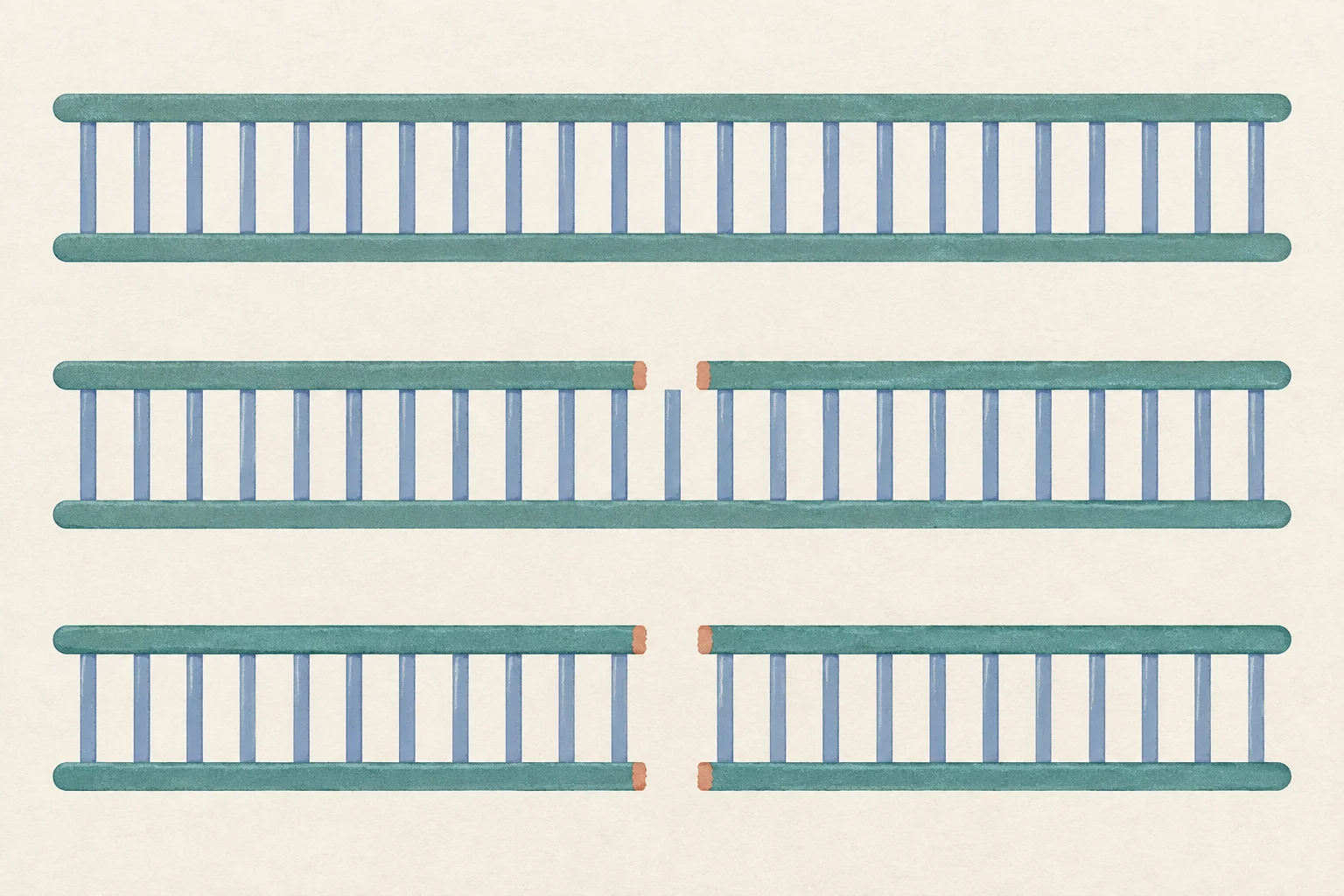
The EAU guideline on male infertility describes DNA strand breaks and the different methods used to examine them. Our article on semen and sperm explains the structure of a sperm cell.
Why a good semen analysis still does not show everything
A semen analysis answers basic questions: are sperm present, how many are there, how do they move and what do they look like? This information remains important for assessment and choosing treatment. Good results are therefore a useful finding.
However, a sperm cell's appearance cannot fully reveal the condition of its DNA. Normal results on a standard semen analysis do not reliably rule out elevated DNA fragmentation. Conversely, a fragmentation test also describes only one aspect of fertility. The AUA/ASRM guideline on male fertility assessment stresses the importance of semen analysis and interpreting it alongside medical history and other findings.
How does sperm DNA become damaged?
One important mechanism is oxidative stress. This occurs when reactive oxygen compounds overwhelm the cell's protective mechanisms and can damage its DNA, among other structures. Mature sperm have only a limited ability to repair this damage themselves.
Possible contributing factors include smoking, inflammation, a varicocele and increasing age. A varicocele means enlarged veins around the testicle; it can affect the environment in which sperm develop. The EAU guideline describes these links. However, an abnormal DFI does not reveal which factor is responsible in your case. It is a reason for targeted assessment, not a diagnosis of the cause.
What does a DFI test measure?
The test involves analyzing a semen sample in a laboratory. Several methods exist, including SCSA, TUNEL, SCD and the Comet assay. They assess DNA damage or properties of chromatin in different ways. Chromatin consists of DNA and the proteins that package it. Results from these methods are therefore not freely interchangeable.
With the SCSA method, the DNA fragmentation index, or DFI, gives the proportion of tested sperm with an abnormal DNA signal. Put simply, a DFI of 25 percent means that this signal falls within the abnormal range in about 25 out of 100 sperm tested. It does not mean that a quarter of the entire genetic material is missing. Nor does it indicate a 25 percent risk of miscarriage. The SCSA laboratory protocol describes how this proportion is determined.
Always interpret the percentage alongside the name of the test and the laboratory's assessment. The EAU guideline gives a threshold of 25 percent for SCSA that is associated with lower pregnancy rates following natural conception or intrauterine insemination. This is a guide for this method and these situations, not a universal boundary between fertile and infertile. Other tests use different interpretations.
When does a DNA fragmentation test make sense?
DNA fragmentation testing is not part of the usual initial assessment of every man trying to conceive. The ASRM patient information on sperm DNA testing also makes this point. A measurable abnormality alone is not enough: it must also be clear how the result could help with counselling or treatment.
In cases of recurrent miscarriages, the male contribution can be examined more specifically. The 2026 ASRM committee opinion lists SDF testing as a possible investigation for otherwise unexplained recurrent pregnancy loss or recurrent loss accompanied by infertility. It also emphasizes that more research is needed to establish whether treating elevated SDF improves pregnancy outcomes.
For unexplained infertility, recommendations differ more clearly: the EAU includes SDF testing in the assessment, including after unsuccessful assisted reproduction. In contrast, the ESHRE guideline on unexplained infertility does not recommend it when semen analysis is normal according to WHO criteria. This difference in assessment should be made clear during counselling.
A clinic that does not routinely offer the test is therefore not automatically overlooking something. Ask for the specific reasoning: what question should the test answer, and what would change if the result were abnormal? An unsuccessful treatment or a single pregnancy loss does not, on its own, prove that DNA damage was the cause.
How to interpret an abnormal result
Before acting on a result, you should know the conditions surrounding the sample. How long had it been since the last ejaculation? Was there any illness or medication use? Was the whole sample collected? The Cambridge IVF patient information asks for details including the abstinence period, illness, medication and incomplete sample collection. Follow your own laboratory's specific instructions for your test.
Comparing two results also requires context. A lower value obtained using a different method is not reliable proof of improvement. For a repeat test, ask about keeping the measurement and sample conditions as comparable as possible.
What changes for men after 40?
On average, elevated DNA fragmentation becomes more common with increasing age. In a 2025 observational study, older male age was associated with poorer DNA integrity. At the same time, the assisted reproduction treatments analyzed showed no statistically clear differences in pregnancy outcomes between the male age groups.
Age therefore describes a risk factor, not your individual result. DNA does not suddenly deteriorate on your 40th birthday. Findings from fertility treatments also cannot simply be applied to every natural pregnancy or sperm donation.
Decisions about further investigations depend on age, medical history and previous results together. You can read more in How old can a sperm donor be?
What does DNA fragmentation mean for sperm donation?
When choosing a sperm donor, you may want health information that is as complete as possible. Clear distinctions help: a semen analysis assesses semen parameters, infection screening checks for transmissible pathogens, and genetic assessment addresses inherited conditions, among other things. An SDF test answers another, limited question.
The 2024 US ASRM recommendations on gamete donation cover medical history, semen quality, infection screening and genetic assessment. They do not list routine DNA fragmentation testing for every sperm donor. These are US professional recommendations, not a statement about all requirements or services available in Germany.
Findings in couples with fertility problems therefore do not justify a blanket recommendation to test every healthy donor as well. If a clinic suggests such a test, it should be able to explain why it makes sense in that situation and what an abnormal result would change.
A low DFI replaces neither infection testing nor a genetic and family history assessment. It does not give a complete picture of a future child's health. In private sperm donation, a single additional result should therefore not displace the rest of the assessment. Our article on health screening records for private sperm donation discusses which documents matter.
Does DNA fragmentation also occur in women?
Yes, DNA strand breaks can also occur in egg cells. DNA damage is not an exclusively male phenomenon. A basic research study involving human eggs and mice showed age-related changes in DNA damage and repair mechanisms. It explains some of the biology but does not establish a suitable routine test for eggs.
These terms are used differently in everyday practice: when a fertility clinic offers a DNA fragmentation test or DFI test, it usually means a sperm test. There is no established equivalent routine test that can determine the DNA quality of your eggs from a blood sample. The UCSF information on ovarian reserve explicitly notes the lack of a direct test for egg quality.
Another distinction concerns chromosomes: as eggs age, the likelihood of an incorrect chromosome count rises. These errors in chromosome distribution are different from a break within a DNA strand. Both concern genetic material, but they should not be treated as the same thing. The ASRM patient information on fertility testing explains the relationship between age, egg quality and chromosome count.
The AMH level does not answer this question either. Together with the number of small follicles seen on ultrasound, it helps estimate ovarian reserve and the expected response to hormonal stimulation. It does not directly measure the genetic quality of individual eggs. The ASRM committee opinion on ovarian reserve explains this. For an accessible overview, see How many eggs does a woman have?
What can an egg repair after fertilization?
An egg has repair mechanisms that can correct some sperm DNA damage after fertilization. If the damage is too extensive, this does not always succeed. The 2026 ASRM committee opinion describes this limited repair capacity.
This helps explain why DFI alone cannot predict a pregnancy's outcome: after fertilization, much depends on what damage is present and whether it can be repaired. Repair cannot be guaranteed for an individual egg, nor can it be inferred from a normal AMH level.
Can elevated DNA fragmentation improve?
An elevated value is not necessarily permanent. Fever, for example, can play a temporary role; smoking or a treatable cause such as a varicocele may also be involved. An andrological or urological assessment should establish which steps make sense and when a repeat test would be informative.
However, lower fragmentation in the laboratory does not yet prove that an intervention leads to more pregnancies or prevents miscarriages. For treatment of elevated SDF in recurrent pregnancy loss, the ASRM considers the evidence for such a benefit insufficient.
This also applies to supplements. In the randomized MOXI trial, the antioxidant combination studied did not improve DNA fragmentation compared with placebo after three months. The larger 2025 SUMMER trial, which analyzed 1,171 men undergoing fertility treatment, found no benefit from the product studied in terms of ongoing pregnancies. These results concern the specific products and groups studied. They do not support a blanket recommendation to treat elevated DFI with vitamins.
A clear plan is more useful to you than a long shopping list: discuss the possible cause, establish a reason for a targeted intervention and agree when its outcome should be reviewed. Do not stop taking medication on your own.
Does ICSI solve the problem of DNA fragmentation?
During ICSI, a single sperm is injected directly into an egg. This can overcome certain barriers to fertilization. However, the injection itself does not repair DNA damage. The ASRM patient information on ICSI explains how the procedure works.
This is another reason to distinguish fertilization from pregnancy outcomes. A 2025 study of 870 ICSI cycles found poorer fertilization and early embryo development with higher SDF, but no statistically clear association with the clinical pregnancy rate. It was a retrospective analysis of selected treatments and cannot reliably predict the result of an individual attempt.
A high DFI therefore does not automatically mean that ICSI is necessary or that a particular additional procedure will help. Ask what problem a proposed treatment is intended to solve and how well its benefit is supported by evidence in your situation.
What to discuss with the clinic before testing
The most important step before an additional test is a conversation about what its result would change. These questions can help:
- What unanswered question from my assessment so far should the test address?
- Which method does the laboratory use, and how is the result interpreted?
- Is there a temporary influence or a treatable cause that should be investigated first?
- What would the next steps be after a normal result and after an abnormal one?
- How much do the test, counselling and any repeat test cost?
If you already have a result, bring the full report, including the method, laboratory interpretation and sample conditions. A well-interpreted DFI can add to the assessment. The aim remains a useful next step towards having a child.
Read more
Further reading on semen analysis, sperm quality, and fertility investigations.