
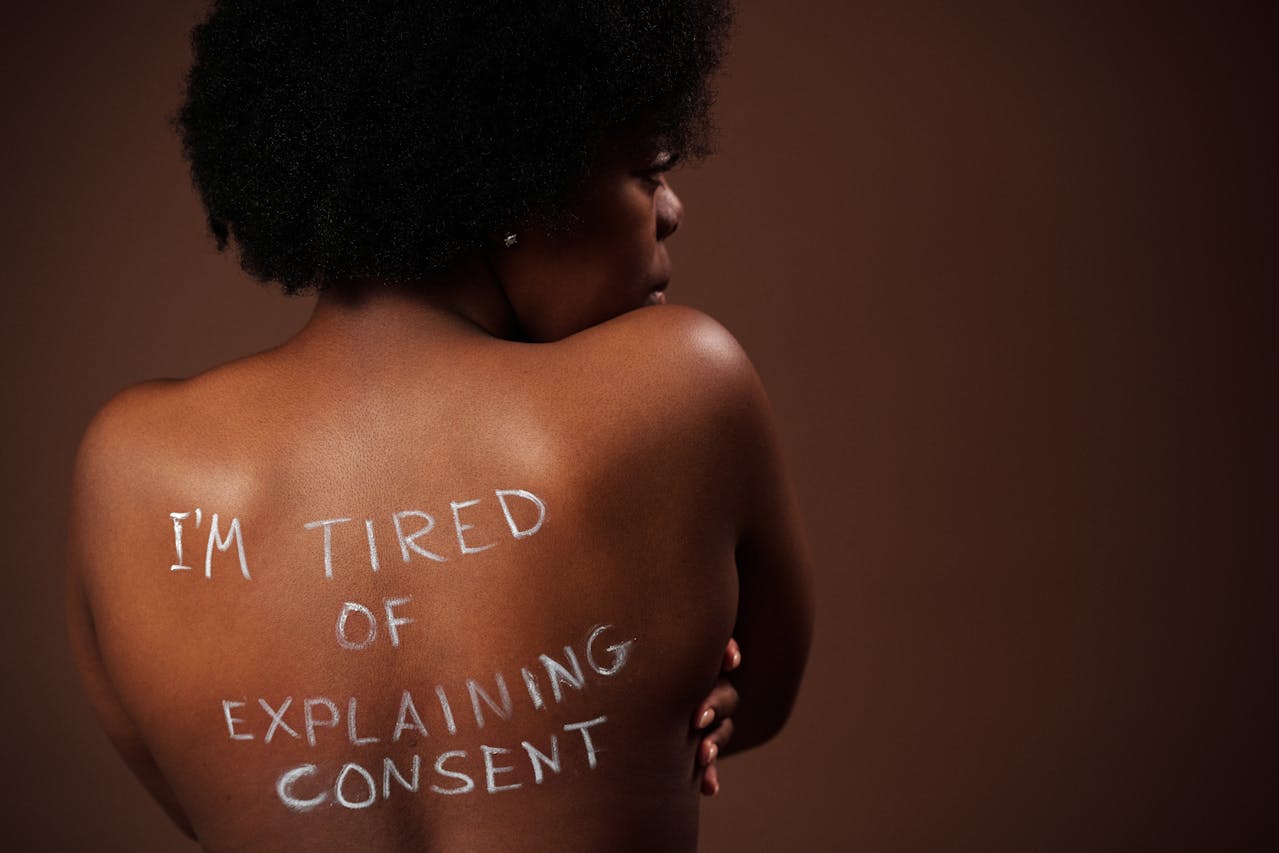
Consent is not a single word
Many people first think of consent as a simple yes or no. In real life, that is often not enough. Agreement depends on pace, situation, the relationship, mood, and whether a person truly feels free.
A yes to a hug is not automatically a yes to kissing. A yes to a meeting is not automatically a yes to physical closeness. Consent is therefore not a one-time stamp, but an ongoing check-in that can change with the situation.
That is why it helps to treat agreement not as a big theory, but as an everyday habit: ask, listen, respond, stop, and sort it out again when needed.
How to spot a real yes?
A real yes does not feel rushed, evasive, or reluctant. It can be calm, short, and plain. What matters is not the packaging, but the freedom behind it.
- The person answers freely and without visible pressure.
- The yes fits the specific situation and not just the general idea.
- The person could say no without fearing consequences.
- Stepping back remains possible, even after prior agreement.
An actual yes needs no coaxing, no proving, and no stage. If agreement only happens because someone gives in, it is not sturdy enough.
Consent is not only about sex
Agreement is an everyday topic. It applies to casual touches, visits, voice notes, shared photos, family questions, work closeness, and conversations where someone has no energy for the topic right now.
- With physical contact, what matters is whether the touch is actually welcome.
- With visits, what matters is whether time, energy, and mood fit right now.
- With messages, what matters is whether someone wants to talk or needs quiet.
- With photos or personal information, what matters is whether the other person wants to share it.
Consent is therefore not only a sexual topic, but a way of behaving with each other. People who recognise that notice boundaries earlier and take withdrawal less personally.
What pressure looks like in everyday life?
Pressure is not always loud. It can be spoken openly or sit quietly in the room. Sometimes it lives in expectations, sometimes in repeated questions, and sometimes in the feeling that you have to be nice to avoid trouble.
Common pressure patterns are:
- asking again and again after a no has already been given
- lines such as just this once, if you really like me
- hurt silence, withdrawal, or a bad mood in response to boundaries
- pushing the pace before someone has even sorted out what they want
- feeling like you should be grateful because something was offered to you
Pressure can also build over time when someone recognises that a no keeps getting argued over. Then a question slowly becomes a test. That is where consent starts to break down.
Uncertainty, silence, and withdrawal
Many people do not say no right away, even though they are already doubting things inside. They go quiet, look away, laugh nervously, or answer only very briefly. That can be a sign of uncertainty, overload, or a wish to keep the situation from escalating.
Silence is therefore not a yes. Nervous laughter is not one either. And withdrawal is often not a game, but a safety signal. If you miss that, you confuse politeness with agreement.
If someone joins in at first and then becomes noticeably quieter, slower, or physically stiff, that is not the moment to push on. The right response is to pause briefly, ask, and give space.
Consent in close relationships and family
Consent is often forgotten in close relationships because people know each other well. That is exactly why it matters. Familiarity does not replace agreement. Even in a long relationship, every step remains voluntary.
This applies to hugs, sex, looking through a phone, visits with family, sharing feelings, and even well-meant advice. Closeness should never become a shortcut where consent is simply assumed.
In good relationships, consent is not distant, it is reassuring. If you can say no freely, you can often say yes more freely too.
Consent in digital spaces
Online also needs agreement. Messages, pictures, voice notes, and location sharing are not automatically available just because someone can reach you. A chat is not a free pass to constant availability.
- No reply is not automatically rejection, but it is not agreement either.
- Photos, intimate content, and screenshots need clear agreement.
- Writing under pressure, late at night, or during conflict can blur boundaries.
- A digital pause is a real boundary.
If you want to answer a message later or not at all, you can. Consent does not end at the app screen.
When power imbalance is involved?
Consent matters especially when people are not on equal footing. That can happen at work, in a care setting, in medical treatment, with age differences, or in an emotionally uneven relationship. The greater the power gap, the more careful you should be.
In such situations, an apparent yes is often not enough because fear of consequences, dependence, or the wish to avoid conflict may be part of the picture. A choice is truly voluntary only if the person could say no without disadvantage.
If you are in the stronger position, it is your responsibility to slow down, ask more clearly, and take evasive signals more seriously than usual.
Consent and physical state
Sometimes agreement is not blocked by opinion, but by a person's state. Tiredness, stress, alcohol, overload, pain, or distraction can make someone seem to go along on the outside while not being free on the inside. Then a yes has been spoken, but it is not necessarily solid.
That is why it makes sense to watch more than words. Someone who seems dazed, absent, highly tense, or clearly overwhelmed needs a pause more than speed. In those moments, consent is not a theory question. It is a question of care.
How to say boundaries without sounding harsh?
Boundaries do not have to sound strict to be clear. Often short, calm sentences work best, because they leave little room for misunderstanding. Simple wording helps in everyday life more than long explanations.
- I do not want that right now.
- I need to slow down a step.
- I want to think about it first.
- Today is not a good fit for me.
- Please stop now.
You do not have to justify a boundary, least of all in the moment you set it. A no does not become stronger if you make it prettier.
What to avoid?
The most common mistakes sound harmless, but they are exactly what breaks consent.
- treating a no as an invitation to negotiate
- pushing for a quick answer
- reading silence or uncertainty as agreement
- taking boundaries personally and turning them into guilt
- creating pressure in a group or in front of other people
If a no hurts, that is human. The boundary still stands. The right answer to a boundary is not more persuasion, but respect.
What matters after a boundary violation?
When consent has been ignored, it is often confusing. Many people first ask whether they read the situation wrong or whether they are being too sensitive. More often, the more important question is: Was my no, my hesitation, or my withdrawal respected?
A helpful first step is to name the situation as plainly as possible. After that, what matters is what you need: distance, a conversation, clear new rules, or support from outside. You do not have to minimise a boundary violation just to keep the relationship going.
If you notice that the situation leaves you uneasy, ashamed, or unsure, take that seriously. You can slow things down, create distance, and ask for help.
Myths and facts about consent
Some myths around agreement create unnecessary pressure.
- Myth: If nobody says no, everything is fine. Fact: consent should not have to be guessed.
- Myth: One yes applies to everything. Fact: consent depends on the situation and can change.
- Myth: Withdrawal means they are only testing you. Fact: withdrawal is often a real safety signal.
- Myth: Boundaries ruin the mood. Fact: clear boundaries often make closeness possible in the first place.
- Myth: In a relationship, you do not need a new yes. Fact: even in relationships, agreement still needs to be current.
Consent does not get more complicated when you take it seriously. It gets clearer.
Keep reading




Conclusion
Consent in everyday life does not mean making every detail sterile. It means staying attentive, noticing pressure, taking withdrawal seriously, and treating boundaries not as a disruption but as part of respect. Thinking this way usually creates not less closeness, but more safety and often more genuine connection.