

The question is common, the diagnosis is rare
Plenty of boys and men go through phases where they think their penis is too small. That does not automatically mean there is a medical problem. In real life the worry often grows out of porn, locker-room comparisons, social media, jokes, and the habit of comparing yourself to outliers instead of average bodies.
There is also a visual trap. You always see your own body from above. That angle can make length look smaller than it looks to someone else. If you also carry more fat around the pubic area or judge yourself while flaccid, the impression can get even more distorted.
So the key question is not whether you had one bad moment in the mirror. It is whether you measured correctly, whether there are actual symptoms, and whether there is any real sign of a developmental or functional problem.
What reliable measurement data actually show?
The best-known systematic review using measurements taken by health professionals included more than 15,000 men. In that review, the average flaccid length was about 9.2 cm, the average stretched flaccid length was 13.2 cm, and the average erect length was 13.1 cm. Average erect circumference was about 11.7 cm, which is a lot less dramatic than internet myths suggest. Veale et al.: systematic review of penis size
The bigger point is variation. Normal does not mean everybody looks almost the same. Some penises look noticeably small while flaccid and grow a lot when erect, while others look larger when flaccid and change less. Because of that, the flaccid state tells you only part of the story.
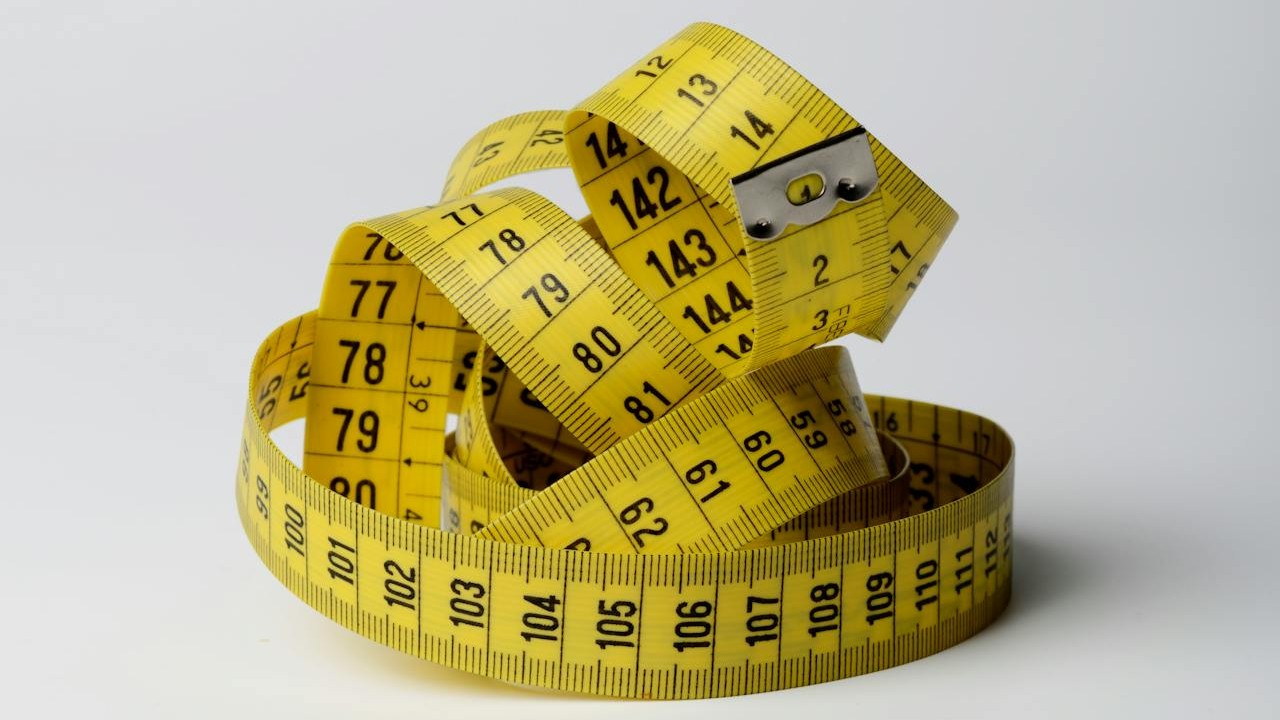
If you want a realistic sense of where you stand, measure properly or start here: How to measure your penis correctly: length, girth, and common mistakes. A badly measured number usually makes anxiety worse instead of settling it.
Why flaccid comparisons are usually misleading?
Flaccid size varies a lot. Cold weather, stress, exercise, fatigue, nerves, and alcohol can all change how things look. If you compare yourself in that state with porn, photos, or a quick glance in a locker room, you are not comparing stable anatomical facts. You are comparing snapshots taken under completely different conditions.
Body shape matters too. A penis can be anatomically normal and still look shorter if more of the shaft is hidden by fat at the pubic area. That does not necessarily mean the actual anatomical length is short, but it does affect visible length in everyday life.
If you keep fixating on flaccid appearance, it helps to ask the question underneath the question: are you worried about real sexual function, or mostly about how you look in the mirror, in photos, or next to other men? That is often the point where ordinary insecurity turns into constant comparison pressure.
When penis size is medically relevant?
The medical term micropenis does not just mean small or below average. It refers to a normally formed penis whose stretched length is clearly below the expected range for age. Doctors do not make that call from internet charts or a vague self-impression. They make it from proper measurement and clinical context. Campbell and Gillis: micropenis, diagnosis, and distinction from anxiety
It is also important to separate micropenis from other situations. A penis that looks hidden because of pubic fat, scarring, inflammation, or a buried-penis pattern is not the same thing. A penis that seems shorter because of new curvature, pain, or scar tissue belongs in a different medical discussion as well.
For adults, that means one thing: feeling small is not the same as meeting diagnostic criteria. If you want the issue explained in more detail, start here: Micropenis: definition, causes, and diagnosis
Why this worry can feel especially intense during puberty?
Puberty is when many people start comparing themselves on purpose. The problem is that development does not happen on the same timeline for everybody. Some boys develop earlier, some later. If you compare yourself in the middle of that process with older teens, porn performers, or edited images, you can end up drawing the wrong conclusion very quickly.
Shame makes it harder to reality-check the fear. A lot of teens ask nobody, search in private, and land on extreme examples instead. That can create the feeling that they are the only one worrying, when the opposite is true.
If you are still developing and other signs of puberty also seem delayed or unusually absent, the best next step is not more panic. It is a medical assessment, because then the issue is not just centimeters but overall development.
What matters during sex and what gets overestimated?
A lot of the worry here is really about rejection, pleasure, and performance pressure rather than anatomy. In real relationships, erection quality, arousal, communication, pacing, touch, comfort, and responsiveness usually matter far more than a small difference in length.
That does not mean size never matters to anyone. People can experience it as pleasant, neutral, unfamiliar, or occasionally uncomfortable. But it is only one factor, and it is rarely the main reason sex feels good or disappointing overall.
Another point that gets missed is that visible length and functional sexual experience are not the same thing. Someone who is present, attentive, and not obsessing over compensating for a supposed flaw often comes across as more confident and more enjoyable than someone focused on one body feature.
If you want a deeper look at how expectations and real-life preferences can diverge, read this next: Do women prefer larger or smaller penises?

When the real problem is body image pressure?
Some men who chase enlargement or constant reassurance are objectively within the normal range. In medical writing, terms like small penis anxiety, small penis syndrome, or penile dysmorphophobia are used to describe a distressing body-image problem rather than a clear anatomical defect. Campbell and Gillis: penile dysmorphophobia and size anxiety
A familiar pattern is repeated measuring, repeated comparisons, avoiding intimacy, watching yourself all the time, and getting only brief relief that never lasts. Once that pattern starts, the next number usually does not solve anything.
You can often see it in daily life. Some men avoid communal showers, delay dating, delete pictures, obsess over how pants fit, or spend sex wondering how they look. Once the thought starts controlling behavior and closeness, it is no longer just a passing insecurity.
- If you measure all the time, the reassurance usually fades fast.
- If you avoid sex, dating, or situations where your body might be seen, that is a warning sign.
- If you stay convinced something is wrong despite a normal evaluation, the body image issue may be bigger than the anatomy issue.
Why porn and social media can distort your baseline?
Today, a lot of size anxiety grows not just from personal experience but from a nonstop stream of images. Social media rewards extremes, shock, and reactions. Porn often features deliberately selected outlier bodies, camera angles that exaggerate size, and a style of presentation that treats size almost like status.
The problem is not just the comparison itself. It is the repetition. If you keep feeding your mind the same exaggerated images, your internal baseline shifts. Normal can start to feel small even though nothing about your own body changed.
If your insecurity spikes after consuming that kind of content, that is not random. In that situation, changing your media intake is not a vague self-help idea. It is a practical way to reduce a distorted frame of reference.
What is realistic about enlargement and what advertising hides?
There are a lot of creams, pills, and devices marketed to men who feel inadequate. Most promise more than the evidence supports. In the urology literature, a recurring point is that many men seeking enlargement are actually normal-sized and need a proper assessment for micropenis and psychological distress before anything else. Campbell and Gillis: conservative and surgical options
Surgery is not a casual fix either. Complications, unclear satisfaction, and limited gains in length all matter. This is not the kind of topic where ad copy or desperation should drive decisions.
If you want the difference between medical reality and marketing promises spelled out, continue here: Penis enlargement: what is actually possible and what advertising promises
When it makes sense to see a urologist or endocrinologist?
Medical evaluation makes sense when the concern is not just about comparison but comes with specific warning signs. That includes a penis that has seemed very small since childhood together with developmental concerns, a new shortening, pain, palpable lumps, marked curvature, persistent erection problems, or a penis that seems to disappear into pubic fat or scar tissue.
- Ongoing concern since puberty plus clearly unusual genital or pubertal development.
- A new change in shape or curvature, especially if it hurts.
- The feeling that length has decreased after inflammation, scarring, or major weight change.
- Psychological distress that is affecting relationships, sex, or self-worth.
If you want to sort out whether the issue is size, measurement, or function, these two pages usually help together: Penis size: averages, range, and perspective and How to measure your penis correctly.
What you can do before you spiral further?
If there are no warning signs, the first useful step is often simple: stop feeding yourself extreme comparisons for a while. Less porn, fewer comparison images, fewer forums full of exaggeration. That will not solve everything, but for many men it lowers the pressure quickly.
After that, use a clear order. Measure correctly. Put the result into context. Then ask whether you are actually trying to solve a size problem, a function problem, or a body-image problem. Those are not the same problem, and they do not need the same answer.
It also matters how you talk to yourself. If your internal commentary is always too small, not enough, embarrassing, or defective, you keep your body under permanent pressure. A realistic view is more helpful than either self-attack or fake reassurance.
- Do not remeasure constantly. Measure once properly if you need to.
- Ask whether sex and erections are actually impaired.
- Talk to someone you trust if shame is driving your behavior.
- See medical evaluation as a shortcut to clarity, not as defeat.
How to talk about this in a relationship?
A lot of people either never bring this up or only mention it once the pressure is already intense. Both make things harder. A calm, direct conversation usually helps more than turning the topic into jokes, self-insults, or tests.
The best moment is not in the middle of a fight and not as a loaded question during sex. It is a quieter moment where you can say that the issue has been getting into your head. That kind of honesty often creates more closeness, not less.
What usually helps most is keeping the focus on your own insecurity rather than asking for a performance review. That shifts the conversation away from judgment and back toward shared reality.
Myths and facts about a supposedly small penis
- Myth: If it looks small when flaccid, it will be too small when erect. Fact: Flaccid size varies a lot and only partly predicts erect size.
- Myth: Porn shows what is typical. Fact: It usually shows selected extremes and exaggerated presentation.
- Myth: A smaller penis automatically means worse sex. Fact: Sexual satisfaction depends on far more than one measurement.
- Myth: If I keep measuring, I will finally feel calm. Fact: Frequent measuring usually keeps comparison anxiety alive.
- Myth: Micropenis is just another word for below average. Fact: It is a rare medical diagnosis with specific criteria.
- Myth: Enlargement advertising offers practical standard solutions. Fact: A lot of it relies on unrealistic expectations and weak evidence.
If you want to understand the topic more clearly



Conclusion
Most men who worry that their penis is too small are not dealing with a medically abnormal size. More often the feeling comes from unfair comparisons, poor measuring habits, and pressure that keeps growing in the mind. If there are no warning signs, honest perspective helps more than another size check. If there are symptoms, developmental concerns, or serious distress, getting checked by a urologist or endocrinologist is the right next step.