LH surge and ovulation tests: identify fertile days reliably
The LH surge is an important timing signal around ovulation and helps you plan fertile days more realistically. In this guide you get a clear explanation of luteinizing hormone, a practical routine for ovulation tests, common pitfalls, and a reliable time window after a positive test.

Basics: what is luteinizing hormone and why does LH rise?
LH stands for luteinizing hormone. It is produced by the pituitary gland and acts like a start signal in the cycle. When a follicle in the ovary matures, LH typically rises sharply for a short time. This LH peak starts processes that trigger ovulation or prepare it immediately.
For trying to conceive, it is helpful to think beyond the ovulation day. The fertile window usually spans several days because sperm can survive in suitable cervical mucus, while the egg is fertilizable for only a limited time. A clear overview of fertility in the cycle is available from the NHS.
At a glance: LH surge, LH peak, and when ovulation is likely
- A positive ovulation test means LH has risen above the threshold. Ovulation often follows soon, but it is not guaranteed.
- For timing, a window is more reliable than a single timestamp: plan for the day the test first turns positive and the day after.
- When people talk about the LH peak, they often mean the highest point of the curve. A test can turn positive earlier once the threshold is crossed.
- If your LH seems to fluctuate or the test is positive for several days, this is often due to multiple LH waves, higher baseline values, or a longer rise. This is more common with irregular cycles and PCOS.
- If you want more than one signal, combine LH with cervical mucus and a confirmation method like basal body temperature or clinical monitoring when needed.
What an ovulation test shows and where the limits are?
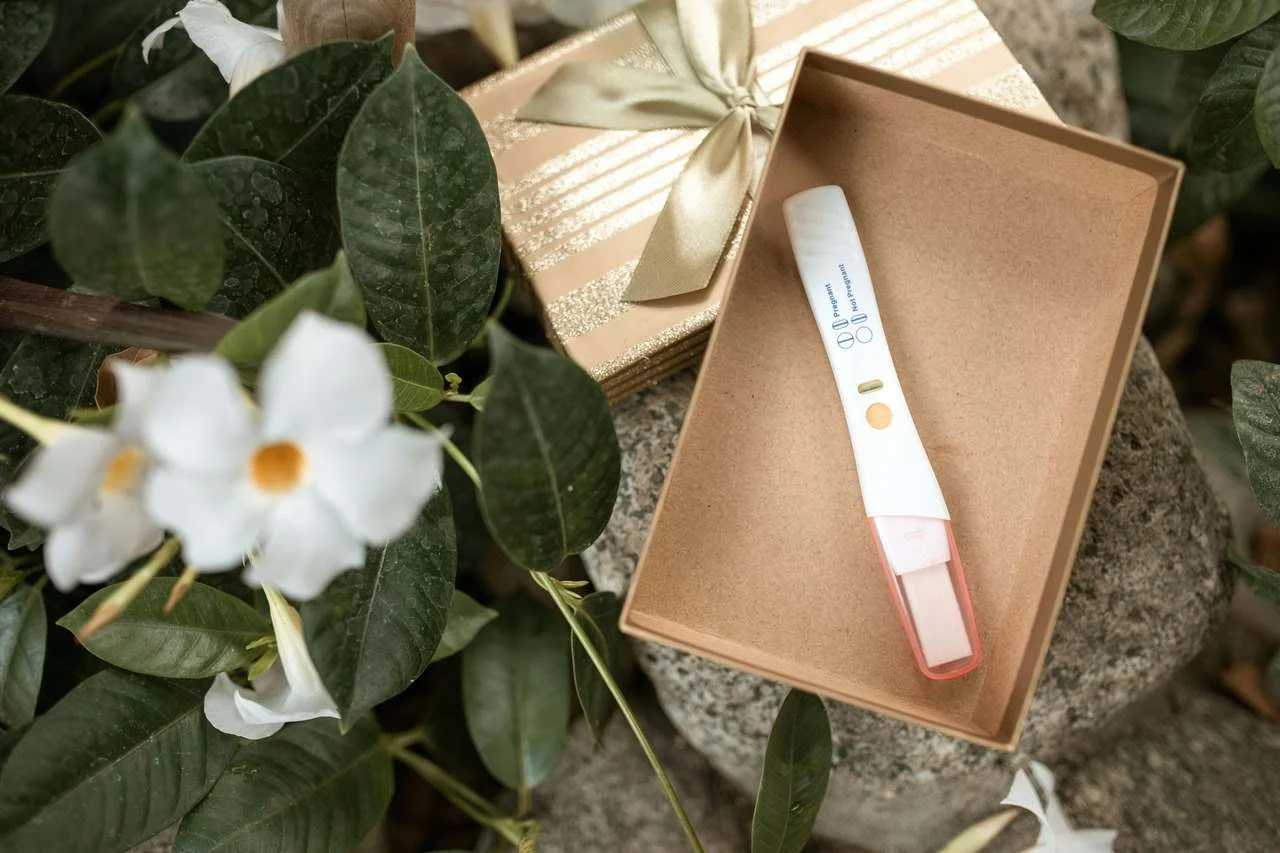
An ovulation test is a urine LH test. It detects whether your LH exceeds a certain threshold and often marks the start of your most fertile phase. That is a big advantage over cycle apps that rely on averages: you get a biological signal, not just a statistical estimate.
The key limitation is important: a positive ovulation test shows a measurable LH rise. It does not prove in every case that ovulation definitely occurred. If you need solid confirmation, progesterone testing in the second half of the cycle or ultrasound monitoring are common options.
A practical explanation of how to use ovulation tests well is available from the Mayo Clinic Health System.
When is an LH test positive and how do you read strips correctly?
With most strip tests, the result is positive when the test line is at least as dark as the control line. The goal is to detect a threshold, not the darkest line. Digital ovulation tests can make reading easier, but they measure the same biological process.
A common pitfall is mixing up the peak and the threshold. The LH peak is the highest point. A test often turns positive earlier because it only checks whether you have crossed the threshold.
In everyday use, the pattern over several days is often more helpful than a single strip. If you document results for a few days, you can see the shift from low to clearly higher and reduce misreads, especially with irregular cycles or a short peak.
How long does an LH peak last and how often should you test?
An LH peak can be very short. Some people only catch it for a few hours, others see it for one to two days. That is why consistent testing in the right window matters. If you suspect a short peak, it can help to test twice per day, for example late afternoon and evening.
Plan your routine to catch a window, not a minute. That reduces pressure and still makes it less likely you miss the rise.
Ovulation after a positive ovulation test: how much time do you really have?
A positive ovulation test usually means ovulation is coming soon. Often the window is roughly 24 to 36 hours, but it can vary. That is why a plan with buffer works better than one exact moment.
The Cleveland Clinic summarizes the timing in a practical way: a positive result typically means you may ovulate soon, often within about 36 hours. Here is the overview: Cleveland Clinic.
When does ovulation happen after an LH peak or a positive test?
For real-life timing, it matters less whether you catch the exact peak and more whether you cover the fertile window. If you test only once per day, the highest point can happen between tests.
Timing that is most robust in real life
- If your ovulation test turns positive today, plan sex or insemination the same day when possible.
- Also plan the next day to make sure you cover the window.
- If it fits your life, one to two days before can also help because fertile days often start earlier than many expect.
A clear explanation of why the days before ovulation matter is available from ACOG.
LH rise and ovulation on the same day
Yes, it can feel or look that way, especially if you test late in the day or if your rise is short. Practically, once the test is positive, it makes sense not to delay and to include the same day.
Ovulation before the LH rise: is that possible?
Ovulation before an LH rise is physiologically unusual. More often, there is a mix-up: you notice early ovulation signs such as stretchy cervical mucus, but the measurable LH rise comes later. Or your testing schedule misses the beginning of the rise. If you want the broader context, also read ovulation.
Using ovulation tests correctly: a routine that works in real life
Starting point: when should you begin testing?
The most common mistake is starting too late. Many people test for only a few days and miss the LH rise. If your cycles are regular, begin several days before expected ovulation. If your cycle varies, use the shortest cycle length from recent months and start earlier rather than later.
Time of day: morning or evening?
Many people get more stable results from late morning to evening than very early in the morning. Even more important than the perfect hour is consistency: test at roughly the same time each day and do not skip days in the likely window.
Dilution: why drinking a lot can blur results
Very large amounts of fluid shortly before testing can dilute urine and make weak lines more likely. You do not need to restrict normal drinking, but extreme dilution makes timing harder. It also helps not to urinate repeatedly right before testing.
Documentation: how to spot your pattern
Note date and time or take a photo. Judge the pattern across several days, not just one moment. If the test is positive, act on your timing plan instead of postponing decisions to tomorrow.
LH curve and LH value: why tables rarely help and what to do instead
Many people look for an LH value table or an ideal LH number for ovulation. The issue is that ovulation tests are usually not lab measurements, but threshold tests. App values and numbers from different brands are rarely comparable, and one number tells you less than your pattern.
How to read your LH curve in a useful way
- Stick with the same brand within a cycle so you can compare trends.
- Focus on the shift from clearly negative to clearly positive, not the darkest line.
- For test series, date and time are more useful than a seemingly exact number.
- If LH seems to fluctuate, it is often due to testing time, urine concentration, or a short peak, not automatically a hormone problem.
If you also use sensors or apps, combining a clear LH signal with a second marker is often the most reliable approach. Overview: ovulation tracking devices.
Common issues: when LH tests stay negative or are always positive
Negative ovulation test despite ovulation signs
Most often the LH peak was missed because it was short, testing started too late, or testing was too infrequent. Diluted urine and reading errors are also common. If you repeatedly do not see a clear peak, testing twice per day in the likely window is often the simplest improvement.
Ovulation test always positive or positive for several days
Several positive days can happen, for example due to multiple LH waves or higher baseline values. This is more common with PCOS or very irregular cycles. In those cases, it helps not to judge LH alone. Add cervical mucus and a confirmation method, or consider medical evaluation if no clear pattern appears across cycles.
LH rise without ovulation: can that happen?
Yes. An LH rise is a signal that the body is trying to initiate ovulation. In some cycles, ovulation does not happen afterward or shifts later. This is more common with stress, very irregular cycles, and PCOS. If it happens repeatedly, a medical evaluation is often more helpful than ever more test strips.
LH rise after ovulation: why is my test positive again later?
Sometimes LH stays slightly elevated, sometimes there is a second small wave, and sometimes the test reacts strongly to normal variation. Another important point: ovulation tests can be confusing in pregnancy because hormones can overlap. If you suspect pregnancy, a pregnancy test is the right method.
LH rise before your period
If LH stands out again shortly before your period, this is often not a second ovulation but measurement noise, a very unsettled cycle, or shifted phases. If it happens regularly or you have symptoms, look at the whole picture: cycle length, bleeding, symptoms, and other markers like basal temperature.
Positive test, but timing does not match your body signs
If tests, cervical mucus, and body signs do not line up over time, that is not proof you are doing something wrong. It is a sign that your pattern is individual or that additional diagnostics could help, especially if you cannot find stable timing.
Special cases: PCOS, breastfeeding, perimenopause, and fertility treatment
There are situations where ovulation tests are more likely to be confusing. With PCOS, baseline LH can be higher or there can be several rises without immediate ovulation. During breastfeeding or after stopping hormonal contraception, the cycle may take time to become stable again. In perimenopause, cycles often become more irregular and LH tests can be less clear.
If you feel your LH is constantly high, the key question is how it was measured. A urine strip is not a lab value. If blood tests show repeatedly unusual results or you also have symptoms and very irregular cycles, it is worth getting a medical interpretation.
If you are in fertility treatment, medication and protocols can change interpretation. In that setting, clinical monitoring is often more useful than a single strip because timing and triggering may be actively managed.
More certainty: combine LH with basal temperature, cervical mucus, and confirmation
Ovulation tests are strong for prediction. For more certainty, combine them with at least one method that confirms afterward. This makes planning more robust, especially with irregular cycles.
Basal body temperature
After ovulation, basal body temperature typically rises slightly and stays higher until your period. This is not a prediction tool, but it helps you recognize patterns across cycles and assess whether ovulation likely occurred.
Cervical mucus
Clear, stretchy cervical mucus is often the first visible sign of the fertile phase. When cervical mucus and an LH rise align, timing is often very stable in real life.
Progesterone and ultrasound
If you need solid confirmation, progesterone testing in the second half of the cycle and ultrasound monitoring are common options. NICE mentions progesterone as an alternative confirmation method and takes a critical view of some self-tests: NICE CG156.
When medical evaluation makes sense?
Medical support is not a failure. It is often the fastest way to get clarity, especially if cycles vary widely, if you repeatedly cannot identify a clear LH rise, or if pregnancy does not happen despite good timing.
- Very irregular cycles or no bleeding for several months
- Possible PCOS, thyroid issues, or elevated prolactin
- Severe pain, fever, or unusual bleeding
- Trying to conceive: under 35 after about 12 months, 35 or older after about 6 months

Legal and regulatory context
Ovulation tests are in vitro diagnostic devices for self-testing. Practically, that means: use them as instructed, interpret them as guidance rather than diagnosis, and combine them with additional signs or medical evaluation when unsure.
For cycle tracking, also remember that cycle data is health data. Decide consciously whether you store test photos, calendar entries, or notes in apps and who you share them with. Rules and protections can vary by country and by where an app stores data.
Myths and facts about LH rise and ovulation tests
- Myth: a positive ovulation test guarantees ovulation. Fact: it shows the LH rise; confirmation is more reliable with progesterone, ultrasound, or a sustained temperature shift.
- Myth: ovulation is always on cycle day 14. Fact: the ovulation day varies widely, even for the same person across cycles.
- Myth: the darker the line, the better the chances. Fact: timing and crossing the threshold matter, not how the line looks.
- Myth: one LH test per cycle is enough. Fact: the peak can be brief, and daily testing in the right window is often necessary.
- Myth: a negative test means no fertile days. Fact: the fertile window can start before a clear peak.
- Myth: several positive days are always a problem. Fact: multiple LH waves or higher baseline values happen; interpretation depends on your pattern and confirmation.
- Myth: cycle apps calculate ovulation reliably. Fact: calculations are estimates; biological markers are often more robust.
- Myth: only the ovulation day matters. Fact: the days before can be just as important because sperm can survive in fertile mucus.
- Myth: an ovulation test can replace a pregnancy test. Fact: pregnancy testing requires a pregnancy test.
- Myth: perfect timing automatically leads to pregnancy. Fact: many factors matter; realistic expectations protect you from unnecessary pressure.
Conclusion
The LH rise is a strong timing signal for fertile days. If you use ovulation tests consistently, start early enough, track the pattern, and plan sex or insemination on the day the test first turns positive and the day after, a strip becomes a real plan. If results stay unclear, combine LH with cervical mucus and basal temperature and consider medical support instead of getting stuck in endless testing.
Keep reading
Here are four articles that help with timing, body signs, and common questions about the cycle.