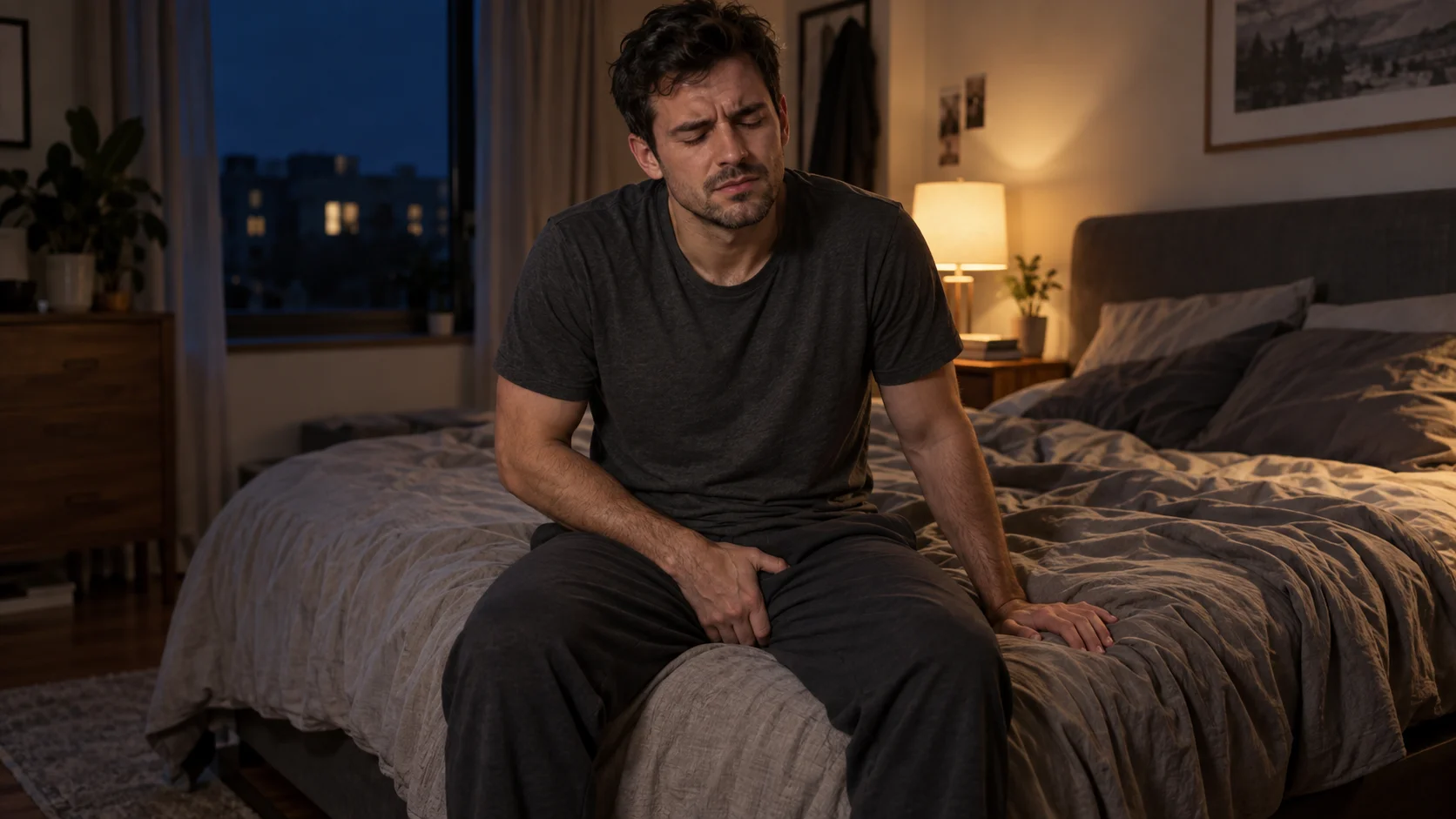
Testicular torsion: symptoms, time window, and what to do immediately
Testicular torsion is an emergency: the testicle twists on the spermatic cord and blood flow can be cut off quickly. You’ll learn which symptoms are typical, why self-checks are risky, and what diagnosis and treatment usually look like.

Testicular torsion in 30 seconds
In testicular torsion, the testicle rotates around the spermatic cord. That cord contains blood vessels and the vas deferens. If the twist pinches off blood flow, ischemia can occur and testicular tissue can be injured within a few hours.
The simplest rule is this: sudden one-sided testicular pain is an emergency until a clinician has safely ruled torsion out.
A systematic review on children and young people with acute testicular pain summarizes diagnostics and why time matters. Lewis et al., BJU Int 2025, PubMed
Symptoms: common warning signs
Many people feel the pain suddenly and clearly. It often affects only one side. Some notice pain in the groin or lower abdomen first and only later realize the scrotum is involved.
- Sudden severe pain in one testicle or the scrotum
- Swelling, firmness, or marked tenderness
- Nausea or vomiting
- Unusual position: the affected testicle sits higher or seems twisted
- Feeling faint, cold sweat
Not every sign is present every time. Torsion can still be possible even without obvious redness or major swelling.
The time window: why faster is better
With true torsion, time is the decisive factor. The chance of saving the testicle decreases as the interruption of blood flow lasts longer. The systematic review above describes this link and also why emergency workflows prioritize speed. Lewis et al., BJU Int 2025, PubMed
Many sources mention a particularly critical window of a few hours and often the rough six-hour mark. That is not a guarantee or a countdown, but a warning: waiting worsens the starting position.
What you should do right now?
If your symptoms fit possible torsion, getting evaluated in an emergency department is the right move. The goal is not to guess a diagnosis at home. The goal is to rule torsion out quickly or treat it immediately. In the US, go straight to the ER. If you cannot get there safely, call 911.
- Go straight to the ER, especially with sudden severe one-sided pain.
- Write down when the pain started and whether it eased at any point.
- Get help if you can’t walk well, feel faint, or are alone.
- Do not try to untwist or squeeze the testicle yourself.
If you notice you’re minimizing symptoms because of embarrassment, remember the simple rule: this is about blood flow, not awkwardness.
What typically happens in the emergency department?
Evaluation usually starts with a few focused questions: onset time, pain pattern, nausea or vomiting, prior similar episodes, and whether there was any injury. Then comes an exam. What matters is the overall picture.
Often, a Doppler ultrasound is used to assess blood flow. The review reports overall good diagnostic performance, and also underlines a key point: ultrasound should not create dangerous delays when clinical suspicion is high. Lewis et al., BJU Int 2025, PubMed
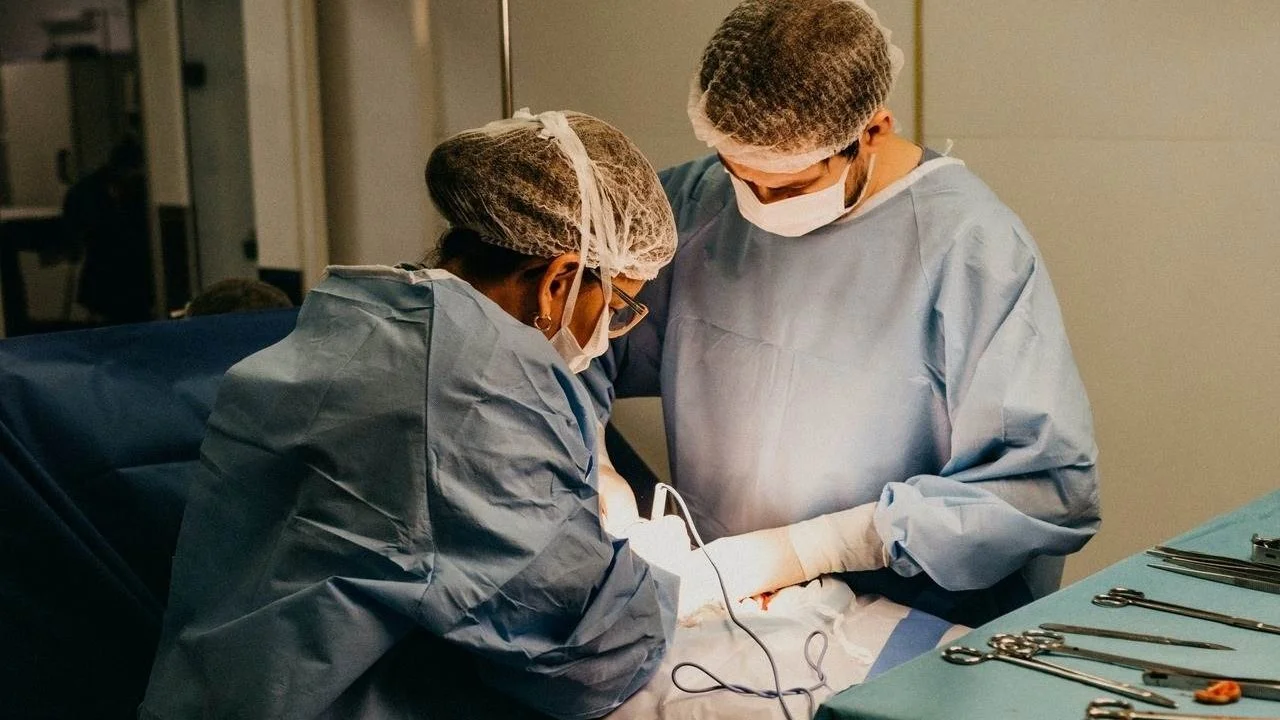
If torsion seems likely, clinicians may move quickly to surgical exploration. That can sound intense, but it’s the direct path to restoring blood flow in time.
Why self-checks are not reliable?
Online you’ll find sure signs and self-tests. The problem is not that every detail is always wrong. The problem is that no single sign is reliable enough to rule torsion out safely.
- Pain can fluctuate. Feeling better for a short time is not guaranteed reassurance.
- Visible swelling does not always happen immediately.
- The cremasteric reflex may be absent, but it is not reliable enough to carry the diagnosis on its own. An evidence summary highlights that a present reflex cannot reliably rule torsion out. Edwards and Ferguson, Emerg Med J 2025, PubMed
If you have repeated attacks where pain suddenly appears and then disappears, that matters. This pattern can fit intermittent torsion and should be evaluated by urology.
Treatment: surgery and fixation
The standard treatment is surgical detorsion with fixation, also called orchiopexy. The testicle is untwisted, blood flow is assessed, and the testicle is fixed in place to reduce the risk of twisting again.
Often, the other side is fixed in the same operation because the anatomical predisposition for torsion is frequently present on both sides.
That rapid surgical care is a core principle is also reflected in evidence syntheses on acute testicular pain pathways. Lewis et al., BJU Int 2025, PubMed
In some situations, experienced teams may attempt manual detorsion before surgery to buy time. Even if that works, surgery to fix the testicle is usually still advised because recurrence risk is hard to predict. Qi et al., Front Pediatr 2024, PubMed
What matters after torsion?
After surgery, the focus is healing and follow-up. That includes checkups and clear rules about rest, especially until pain and swelling have reliably improved. New or worsening symptoms later on are a reason to seek re-evaluation.
If a testicle has to be removed, one healthy remaining testicle can often maintain hormone production and fertility. But that is not a reason to accept risk. The goal is always to save the testicle when possible.
One more important message: very rarely, torsion can recur even after fixation. A systematic review describes recurrent torsion after orchiopexy and why sudden testicular pain should still be taken seriously. van Welie et al., ANZ J Surg 2022, PubMed
What else it could be?
Acute scrotal pain has several possible causes. These include infections, injuries, a hernia, or torsion of small appendages near the testicle. From the outside, it can feel similar.
That’s why the key distinction is not whether you think you know the cause. The key distinction is whether it could be time-critical. Sudden severe one-sided pain follows the emergency rule.
If you’re looking for patterns that more often fit other urologic symptoms, these articles can help you orient: Blood in urine, Blood in semen, and Pain after sex.
A concise German-language patient overview is also available from a university clinic: Uniklinikum Erlangen: Hodentorsion.
Myths and facts
- Myth: If I can still walk, it’s not an emergency. Fact: Blood flow can be critical even when pain is still tolerable.
- Myth: If the pain eases, it’s over. Fact: Pain patterns are not reliable, especially with intermittent torsion.
- Myth: Ultrasound is always a guaranteed no. Fact: Ultrasound is very helpful, but when in doubt, the overall picture matters.
- Myth: Self-checks save time. Fact: They cost time and can falsely reassure you.
- Myth: The cremasteric reflex is the safe test. Fact: An absent reflex is common, but a present reflex cannot reliably rule torsion out. Edwards and Ferguson, Emerg Med J 2025, PubMed
- Myth: After fixation, it can’t happen again. Fact: Rarely, torsion can recur after orchiopexy, so sudden one-sided pain still matters. van Welie et al., ANZ J Surg 2022, PubMed
- Myth: If pain keeps coming and going, it’s harmless. Fact: Intermittent patterns should be assessed because recurrence risk isn’t predictable. Qi et al., Front Pediatr 2024, PubMed
Conclusion
Sudden one-sided testicular pain is not something to wait out. Testicular torsion is rare, but it is time-critical. If it turns out not to be torsion, that’s good news. The right decision was still to rule the dangerous option out early.
Keep reading
If you want better orientation for urologic symptoms, these posts can help with causes, red flags, and sensible next steps.