Taste of Semen: What Is Normal and What Can Affect It
Semen can taste salty, slightly bitter, or sometimes a little sweet. There is no single normal taste, and there is no solid evidence that pineapple juice has a reliable effect. Here’s what can affect how you perceive the taste, what you can do if the taste bothers you, and what matters for your health if you swallow semen.

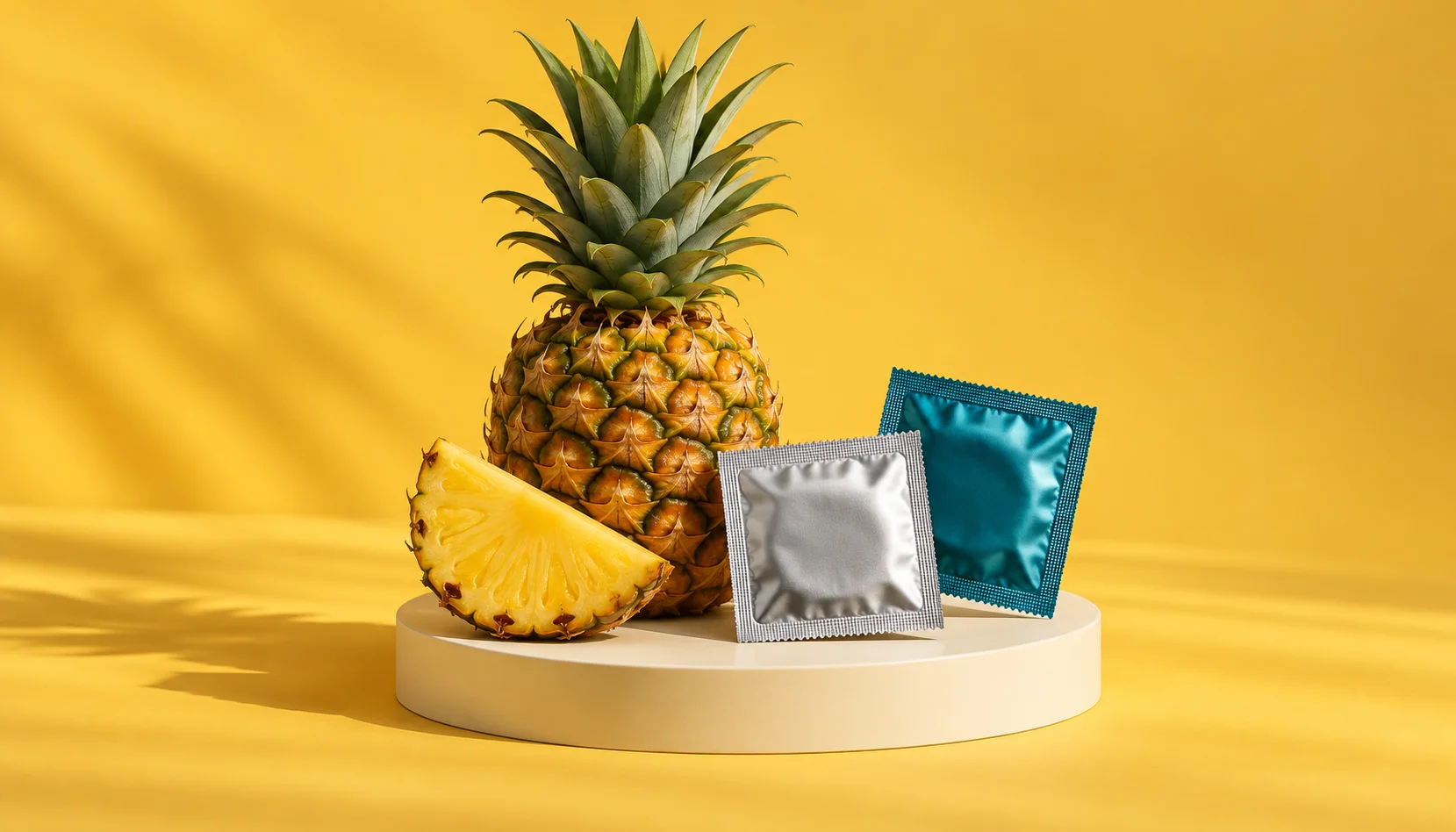
What does semen normally taste like?
Salty, slightly bitter, sometimes mineral-like, metallic, or a little sweet: people describe the taste of semen in many different ways. There is no single normal taste. Even from the same person, semen can taste different from one time to the next.
A strong taste by itself does not mean someone is sick, eating poorly, or unhygienic. The reverse is also true: a mild taste does not prove someone is free of infections. And you do not have to like the taste. A preference is not a judgment about the other person’s body.
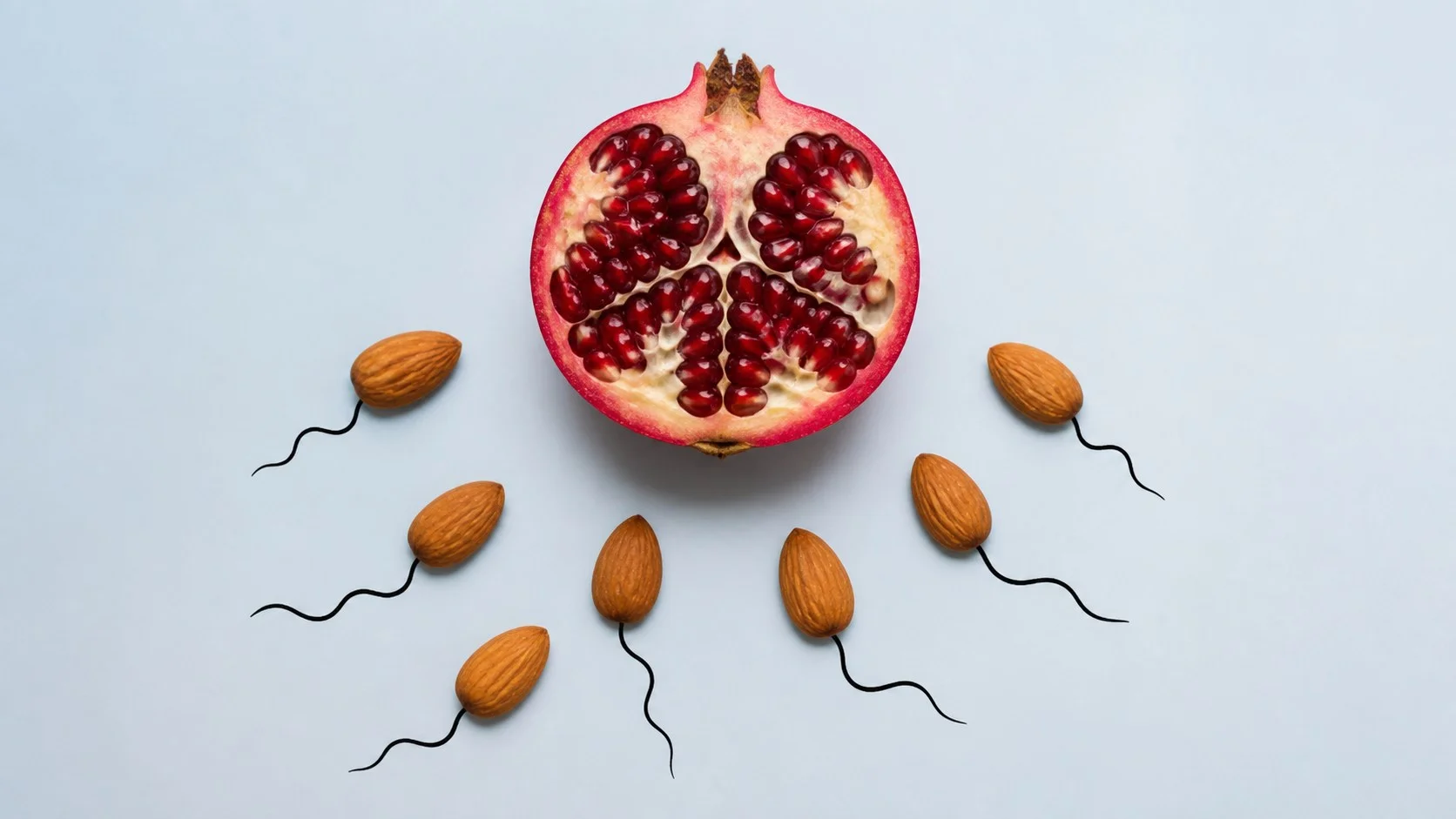
What is semen made of — and what are you tasting?
Semen and sperm cells are not the same thing. Sperm cells are the reproductive cells; most of the ejaculate is fluid from the seminal vesicles and the prostate. It contains water, fructose, proteins, minerals, and other substances. The Cleveland Clinic explains the composition of semen and what these parts do.
Even so, you cannot simply predict the taste from the composition. Fructose, for example, does not mean semen has to taste sweet. During oral sex, saliva, the taste already in your mouth, skin, sweat, and possibly condoms or lubricant also come into play. Understanding semen explains the basics of composition and sperm quality.
Why does semen taste bitter, salty, or metallic?
A bitter, salty, or metallic taste cannot be traced to one clear cause. So pay attention mainly to whether the taste is just unfamiliar or whether new symptoms appear along with it.
- Bitter or salty
- Both are common descriptions. You cannot use either one to identify a specific food, a nutrient deficiency, or an infection.
- Metallic
- The taste already in your mouth may also be involved. Visible pink, red, or brown discoloration is different: it can point to blood. More on that under blood in semen.
- Sour or sharp
- That impression is not a diagnosis. Burning, pain, discharge, sores, or a clearly new unpleasant odor are additional reasons to have the change checked.
- Sweetish or mild
- That, too, is a personal perception. A pleasant taste does not say anything reliable about fertility or whether someone is free of infections.
If you have questions about smell, color, or clumps, Curious questions about semen can help. It also covers black light, supposed everyday miracles, and whether semen can ever run out.
Why semen can suddenly taste different
How something tastes also depends on smell and on how it feels in your mouth. A stuffy nose, a meal, a dry mouth, or products that were used can change the impression. The NIDCD explains how closely taste and smell work together.
If many things suddenly taste bitter or metallic, it is also worth considering dental problems, an infection, or medications you recently started taking. That does not prove the ejaculate itself has changed. You can discuss a lasting change in your sense of taste with a doctor or dentist; do not stop prescribed medications on your own.
Improving the taste of semen: what can you do?
Anyone who wants to improve the taste quickly runs into tips about foods, juices, and supplements. Coffee is said to make semen bitter, celery to make it milder, and certain capsules to make it sweeter. There is no reliable basis for promises like these. A longer break between ejaculations also does not let you predict a specific taste.
Eating a balanced diet and drinking enough fluids make sense in everyday life. Excessive water intake or a juice cleanse is not necessary for that. Smoking and heavy alcohol use matter for other health reasons; see alcohol, nicotine, cannabis, and sperm cells for more on those effects. That does not mean these changes will reliably affect the taste.
Sometimes sweat or residue on the skin is what bothers someone. Gentle washing with water can remove these, but it does not change the composition of semen. Do not use scented products to improve taste. The NHS guidance on caring for the glans and foreskin recommends gentle cleaning and warns against irritating products.
If the taste bothers you, a condom suitable for oral sex can help avoid direct contact. Flavored condoms may also be an option, as long as you both tolerate them. You can also avoid ejaculation in the mouth. What matters is what you both feel comfortable with.
Pineapple and semen: does pineapple juice make it taste sweeter?
Pineapple juice is the best-known tip for semen taste. The promise sounds simple: drink it beforehand, and semen will taste sweeter later. But a reliable effect in humans has not been shown by solid clinical studies.
Diet affects many body processes. That does not automatically mean it has a proven effect on taste. In personal reports, it is hard to separate the role of expectations, other foods, drinks, or changes in hygiene. Studies on sperm quality also answer a different question than studies on taste.
You can eat pineapple if you like it. But there is no specific juice amount or waiting time that can be recommended from the evidence. Two hours before, every day, or for several days are not scientifically supported recipes. Pineapple also does not replace protection during oral sex.

Swallowing semen: is it healthy or unhealthy?
Whether you want to swallow semen is your own decision. For most healthy adults, seminal fluid itself is not harmful when swallowed: it travels through the esophagus into the stomach and is processed in the digestive tract. A pleasant taste, however, does not tell you whether infections can be transmitted during oral sex.
No special health benefit has been proven. Semen does contain proteins, sugars, and other components, but in the small amounts released during ejaculation, they make no meaningful contribution to nutrition. Swallowing semen is neither a useful source of protein nor a way to improve your health.
The health risks are mainly connected to the sexual contact itself. Sexually transmitted infections, or STIs, can be passed on during oral sex; allergic reactions are rare but possible. Planned Parenthood explains what matters when swallowing semen and protecting against infection.
Swallowing or spitting: does it make a difference?
You can spit out semen if you do not want to swallow it. That can matter for personal preference; as protection after the fact, spitting is not reliable. If semen has already been in the mouth, contact with the lining of the mouth has already happened. Some STIs can also be transmitted even without ejaculation.
Rinsing with water can ease an unpleasant aftertaste. It does not undo the contact and does not replace protection or appropriate testing. Mouthwash, high-proof alcohol, and especially forceful toothbrushing are not ways to safely disinfect your mouth after sexual contact. Practical guidance is available from the NHS Open Doors service on oral sex.
Can you get pregnant if you swallow semen?
No. There is no route from the mouth and digestive tract to the uterus. Swallowing alone cannot cause pregnancy.
Fresh semen that also reaches the vaginal opening or the vagina is a different situation, for example through direct contact or via hands. Then the issue is that contact, not swallowing.
Semen in the mouth: which STIs are possible?
During oral sex, infections such as gonorrhea, chlamydia, syphilis, herpes, and HPV can be transmitted. Depending on the pathogen, body fluids, mucous membrane contact, or skin changes may play a role. Contact without ejaculation is therefore not automatically risk-free. LIEBESLEBEN explains the different routes of transmission.
Infections can be passed from the genital area to the mouth or throat, and also in the other direction. Some cause no noticeable symptoms. A healthy appearance, an unremarkable smell, and a normal taste are therefore not enough to rule out an infection.
HIV is assessed differently from many other STIs: the CDC rates the HIV risk from oral sex as low to none. That is not an all-clear for every pathogen. If you are unsure, the whole contact matters, including whether unprotected anal or vaginal sex also took place.
The article STIs from oral sex on a penis explains in more detail which symptoms can occur on the penis or in the throat.
How to make contact safer
Using a condom during oral sex can help you avoid direct contact with semen and lower the risk of many STIs. It should be used from the beginning of contact, not only shortly before ejaculation. You can find information on suitable protection options from LIEBESLEBEN on sex practices and protection.
Pause if there are open sores, bleeding, blisters, or pain in the mouth or genital area. Normal dental care remains important; however, forceful brushing or flossing immediately beforehand is not an extra protective measure, especially if it makes the gums bleed.
With new or different sexual partners, clear agreements about protection and appropriate testing can help. Vaccines are also available against certain STIs, especially HPV and hepatitis B. You can ask a doctor’s office whether your vaccinations are complete and whether catching up would make sense. LIEBESLEBEN’s guide to STI vaccinations provides an overview.
Nausea, burning, or semen allergy: what could be behind it?
The texture can trigger a gag reflex, and the taste can cause nausea. Neither automatically means there is an infection. Brief scratchiness after mechanical irritation is also possible. Stop if it becomes unpleasant. You do not have to get used to it or keep trying to see whether it is better this time.
Recurring burning, itching, swelling, or hives after contact should be checked. Besides friction, latex, and products that were used, a rare hypersensitivity to proteins in seminal fluid is possible. A systematic review on seminal plasma allergy describes reactions that are local and reactions that affect the whole body.
If there is shortness of breath, swelling of the tongue or throat, circulation problems, or rapidly worsening symptoms, immediate help is needed: call 112 in Germany; elsewhere, call the local emergency number. These can be signs of a severe allergic reaction, as described in the NHS information on anaphylaxis. Do not test a suspected allergy yourself by having contact again.
Sore throat after oral sex: when does an exam or STI test make sense?
One symptom alone does not prove an STI. Still, severe, lasting, or recurring sore throat, pain when swallowing, patches, fever, or new sores should be checked. The same applies to discharge, burning when urinating, or pain during ejaculation. The NHS overview of STIs describes typical symptoms.
Even without symptoms, medical advice can make sense if someone you had sexual contact with has been diagnosed with an STI or if you are unsure after unprotected contact. Say clearly that oral sex was involved: depending on what needs to be checked, a throat swab may be needed. A urine test alone does not automatically check every contact site. The CDC guideline on gonorrhea diagnosis explains the different sample types.
Which tests can provide useful results, and when to take them, depends on the pathogen and how long ago the contact happened. If you have symptoms, you can be examined right away. For an initial overview, Do I have an STI? and the article on the rapid HIV test can help. An HIV test does not test for other STIs.
You do not like the taste or do not want to swallow?
That is enough of a reason. You can like oral sex and still find semen in your mouth unpleasant. Maybe the taste bothers you, maybe the texture, or maybe the idea of swallowing. You do not have to justify that.
If possible, talk beforehand about whether ejaculation is wanted and where. A condom, no ejaculation in the mouth, or a different sexual activity can often make the situation feel better. A boundary does not need a medical reason and may change, even if something was okay before.
Talk about your own experience instead of putting down the other person’s body. If you are worried about how you taste, a calm conversation is more helpful than constantly checking how your semen tastes. No one has to create a perfect taste. For expectations and uncertainty around the practice, the article Blowjob can also help.

Conclusion
Semen can taste different in different situations without there being an illness behind it. There is no reliable evidence that pineapple or a specific diet makes semen sweeter. If the taste bothers you, clear agreements and a type of contact you feel comfortable with can help. For most healthy adults, swallowing itself is not a problem; possible STIs still matter. New or lasting symptoms should be checked.
More questions about semen
Curious everyday questions, medical basics, infections during blowjobs, and blood in semen: these related articles go deeper.