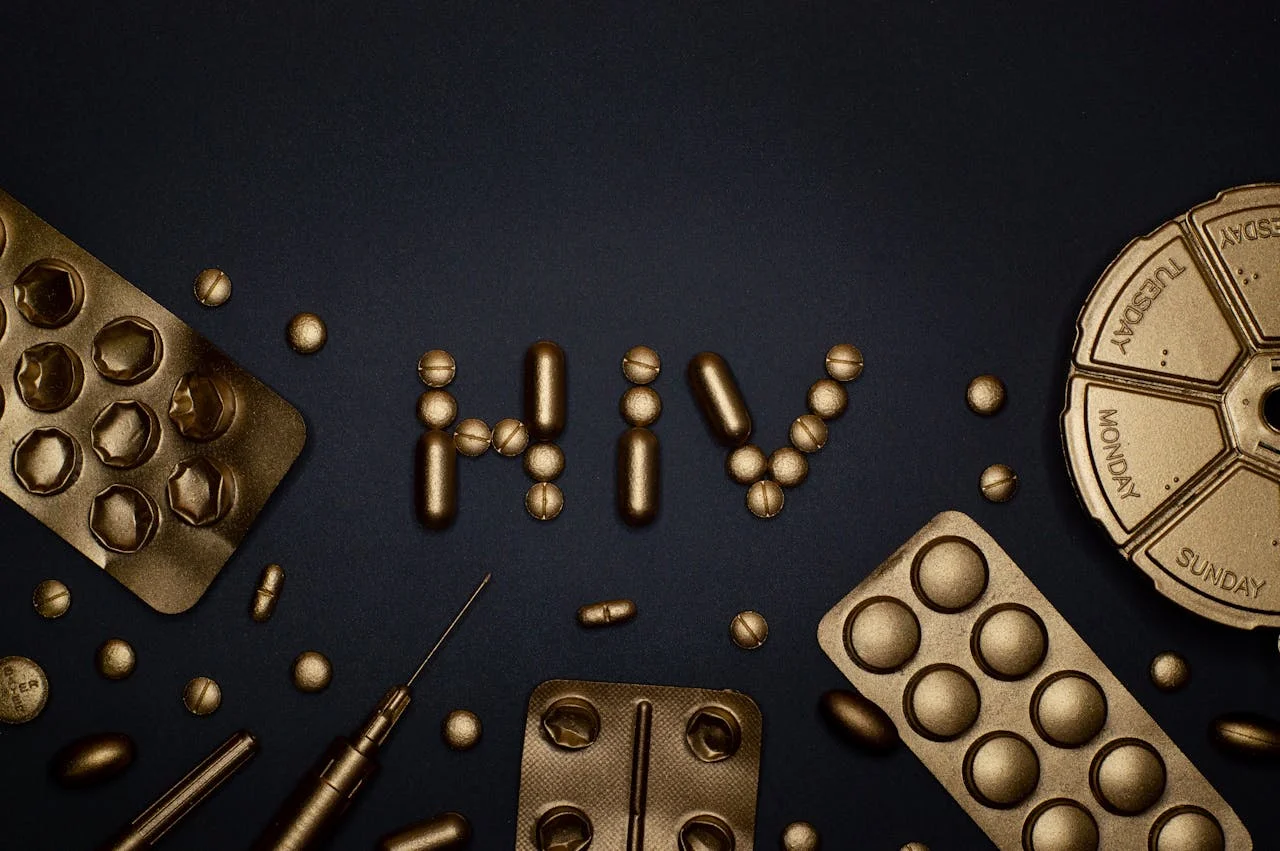
PrEP for HIV: effectiveness, how to take it, side effects, testing, and cost
PrEP can reduce HIV risk very substantially when the dosing plan, testing, and medical follow-up are aligned. Here you will learn who may benefit from PrEP, how daily and event-driven use work, which side effects are realistic, and what matters for prescriptions, follow-up, and cost.


PrEP in brief: what it is and what it is not
PrEP stands for pre-exposure prophylaxis. It means taking specific HIV medicines before possible risk situations so HIV cannot establish itself. The WHO has listed PrEP for years as an important part of HIV prevention. WHO: Pre-exposure prophylaxis
The key distinction matters: PrEP protects against HIV, but not against chlamydia, gonorrhoea, syphilis, or other sexually transmitted infections. If you are generally unsure how to assess symptoms or risk contacts, Do I have an STI? can help you sort that out.
Who may benefit from PrEP?
PrEP is not an identity issue. It is a risk decision. It may make sense when there are repeated situations with meaningful HIV risk and other strategies alone are not reliable enough in everyday life.
- anal or vaginal sex without dependable barrier protection
- recurrent sexual contact with partners whose HIV status or treatment situation is unclear
- frequent new partners or periods with many encounters
- sex work when protection is not always fully under your control
- shared injection equipment or other relevant risks connected to drug use
- repeated need for PEP after condom accidents or similar situations
Modern guidelines take a pragmatic approach here. PrEP should not be restricted more than necessary. It should also be available to people who reasonably judge that they are likely to benefit from it. That direction matches where care is moving internationally.
How effective PrEP really is?
The main question is usually how well PrEP actually works. The short answer is: very well, when it is used correctly. The CDC says PrEP can reduce HIV risk from sex by about 99 per cent when it is taken as prescribed. CDC: PrEP
The crucial point is not a single percentage but adherence. PrEP does not protect by magic. It protects when adequate drug levels are present at the right time. If someone frequently skips doses or chooses an unsuitable dosing pattern, protection falls off.
Real-world data from Germany fit that picture as well. A five-year Hamburg cohort reported no HIV cases during active PrEP use, while bacterial STIs still occurred often. That is a realistic reminder of what PrEP does very well and what it does not do. PubMed: Five-Year German PrEP cohort
Which forms of PrEP exist?
In everyday practice, daily oral PrEP with tenofovir and emtricitabine remains the established standard. Internationally, some countries now also use other oral options or long-acting approaches.
Daily oral PrEP
One tablet a day is the classic model. It is the easiest to plan, the best studied for most people, and the standard when risk is not only occasional or when different exposure types are relevant.
Event-driven PrEP
So-called 2-1-1 or on-demand PrEP is not taken every day. It is taken around particular sexual encounters. It is much less forgiving than daily dosing, so it does not suit every person or every situation.
Other options internationally
Current guidelines outside Germany also mention newer oral regimens and long-acting injection options. Whether those are actually available to you depends heavily on country, approval status, and coverage. For your own care, do not rely on headlines alone. Ask the clinician or service that would prescribe it.
2-1-1 PrEP: useful, but only in clearly limited scenarios
Precision matters here. Event-driven PrEP is not just a cheaper or lighter version of daily PrEP. It is only well established for certain people and certain exposure types.
The 2025 Canadian guideline clearly recommends 2-1-1 for cis men and trans women when HIV risk is connected to sex with cis men. For vaginal sex and for risks related to injection drug use, 2-1-1 is not a standard option. That is exactly why this decision belongs in medical counselling, not self-experimentation.
If you need something that works in ordinary life without calculations and timing stress, daily PrEP is often the more resilient choice.
When PrEP starts to work?
The answer depends on the dosing mode and the type of exposure. The CDC cites about seven days to reach maximum protection for receptive anal sex with daily oral PrEP, and about 21 days for receptive vaginal sex and for risks linked to injection drug use. CDC: Talk PrEP Together
For other constellations, the evidence is less direct. In practice, that means not working with forum rules of thumb. Start PrEP in a way that avoids a gap before full protection is in place. That is why PrEP should not be started at the very last minute before an expected risk event.
Starting PrEP: which tests you need first
PrEP should not be started casually or on guesswork. Before beginning, it has to be clear that there is no existing HIV infection. Good official guidance keeps repeating this point because PrEP is not treatment for established HIV. A clear overview is in the CDC clinical guidance. CDC HIV Nexus: Clinical Guidance for PrEP
- an HIV test before starting
- checking for symptoms of a possible acute HIV infection
- kidney function, depending on the regimen being considered
- hepatitis B status, because some PrEP medicines also act against hepatitis B
- testing for other STIs at the relevant body sites
- depending on the situation, a pregnancy test and other baseline lab work
If you are under time pressure after a very recent risk event, PrEP is not automatically the right tool. When possible exposure happened within the last 72 hours, the real question is more likely PEP after a condom break or another risk situation.
How to get PrEP through local care?
In practice, PrEP usually begins with counselling, HIV testing, baseline lab work, and a prescription from a qualified clinician or service. The exact path can vary, but the basic structure is consistent: evaluate risk, rule out HIV, choose the right regimen, and set up follow-up visits.
If you are not sure where to begin, check what is available in India through sexual health clinics, infectious disease specialists, or other experienced doctors in your city. Costs, availability, and follow-up arrangements can vary, so local confirmation matters before you start.
Which follow-up checks belong with ongoing PrEP?
PrEP is not about vaguely getting checked once in a while. It works best inside a structured medical framework. In practical terms, that usually means HIV testing at set intervals, STI screening matched to risk, and kidney monitoring for TDF-based PrEP.
The RKI FAQ and the German-Austrian guideline both emphasize that PrEP belongs in a structured care model with ongoing follow-up. RKI: FAQ on HIV PrEP AWMF: S2k guideline on HIV PrEP
- regular HIV testing
- STI tests, often at multiple body sites rather than urine alone
- kidney monitoring, especially for older adults or people with pre-existing conditions
- counselling about side effects, adherence, and pauses
If you want more detail specifically on HIV testing strategy, HIV self-test, rapid test, and lab test is a useful companion read.
PrEP side effects: what is realistic and what is mostly myth
The honest answer is neither minimizing nor dramatic: most people tolerate oral PrEP well, especially after the start-up phase. Typical early issues are mild nausea, headaches, or stomach upset in the first days or weeks.
Long term, the main concerns are less about everyday discomfort and more about two topics: kidneys and, with some regimens, bone metabolism. That is why follow-up visits are not just paperwork. They are part of the safety plan.
The German cohort from Hamburg found overall stable kidney values under TDF and FTC. That does not mean follow-up is optional. It means PrEP is often manageable when regimen choice and monitoring are done properly. PubMed: German PrEP cohort
Drug interactions, kidneys, and hepatitis B
To many people, PrEP sounds like just one pill. Medically, the picture is wider. Pre-existing conditions, other medicines, and hepatitis B can all affect which option fits best. The CDC especially recommends paying attention to kidney function and hepatitis B status. CDC HIV Nexus: Clinical Guidance for PrEP
- medicines that may stress the kidneys should be discussed openly
- with chronic hepatitis B, both regimen choice and stopping PrEP require extra care
- if new symptoms or new medicines come up, it is better to check back than improvise
The most common real-world mistake is not a rare interaction. It is that important information never gets mentioned during the visit.
PrEP without condoms: what is protected and what is not
Many people want a direct answer here: is sex without condoms safe if you are on PrEP? For HIV, PrEP can be highly protective when used correctly. For other STIs, it does not provide that protection. So PrEP is not an all-purpose solution. It is a targeted HIV prevention strategy.
The German cohort shows that tension clearly: strong protection against HIV, but continued STI burden. That is why topics like chlamydia, gonorrhoea, and syphilis still matter in day-to-day PrEP care.
If condoms do not fit your real life very well, PrEP can still be a very sensible step. The decision just needs to be honest: HIV protection, yes. STI protection, no.
PrEP in relationships and U=U
In committed relationships, PrEP is often not only about casual sex but also about serodifferent couples. A second prevention concept matters here: U=U. When a person living with HIV is on effective treatment and has a durably undetectable viral load, HIV is not sexually transmitted. HIV.gov: Viral suppression and U=U
PrEP can still have a role in these relationships, for example during the period before viral suppression is stable, when the treatment situation is uncertain, or simply as an additional layer of reassurance. Then the question is less about rigid right or wrong and more about an informed joint decision.
PrEP when trying to conceive, during pregnancy, and while breastfeeding
This topic matters in counselling even if many summaries only mention it briefly. The CDC notes that oral PrEP with tenofovir and emtricitabine can also be an option during periods of trying to conceive, pregnancy, and breastfeeding when meaningful HIV risk continues. CDC HIV Nexus: PrEP in pregnancy and breastfeeding
What matters here is not do-it-yourself research but choosing the right regimen and having follow-up through a clinician with experience in HIV prevention and pregnancy. In some situations PrEP is very sensible. In others, the partner's treatment situation or another protection strategy may already be enough.
PrEP cost: what you should clarify early
Costs can differ substantially depending on city, clinic, insurance status, and how care is organised. What matters is the indication, the prescribing pathway, the medication itself, and the follow-up testing that goes with it.
If you need clarity, ask early at the clinic or doctor's office that would prescribe PrEP. In India, access and pricing can vary by setting, so it is worth clarifying the practical and financial part before you start.
Pausing PrEP, missed doses, and restarting
Many people do not only want to know how to start. They also want to know what happens if they miss pills, stop for a while, or restart later. That is exactly where the most dangerous half-truths show up. Whether protection is still present or needs to be rebuilt depends on the regimen, the exposure type, and the length of the interruption.
- do not switch back and forth between daily dosing and 2-1-1 on your own
- if several doses were missed, contact the prescribing service
- before a planned pause, clarify how protection tapers off
- after a longer break, do not assume full protection comes back immediately
If there was already a concrete exposure and PrEP was not taken correctly, the right next step may be urgent PEP evaluation rather than simply carrying on.
Myths and facts about PrEP
- Myth: PrEP protects against all STIs. Fact: PrEP specifically protects against HIV, not against chlamydia, gonorrhoea, syphilis, or other STIs.
- Myth: If you take PrEP, you no longer need testing. Fact: Testing and follow-up are a core part of safe PrEP use.
- Myth: 2-1-1 is just a cheaper option for everyone. Fact: Event-driven PrEP is only well established for certain people and exposure types.
- Myth: PrEP automatically harms the kidneys. Fact: Most people tolerate PrEP well. Kidney checks are there to catch problems early if they arise.
- Myth: PrEP and PEP are the same thing. Fact: PrEP is taken before risk. PEP is an urgent intervention after possible exposure.
- Myth: Taking PrEP automatically means sex without condoms. Fact: PrEP does not replace a broader STI strategy. It adds focused HIV protection.
When to seek medical help quickly?
Do not wait for the next routine appointment if you had a recent risk event, develop flu-like symptoms after possible HIV exposure, or had a clear dosing mistake plus a risk event while on PrEP.
- possible HIV exposure within 72 hours
- fever, rash, swollen lymph nodes, or marked symptoms after a risk event
- new relevant kidney problems or abnormal lab results
- pregnancy or trying to conceive when prevention needs to be adjusted
- repeated STI diagnoses if the current prevention strategy no longer fits
Conclusion
PrEP is one of the most effective HIV prevention strategies available when the right dosing pattern is chosen, HIV is clearly ruled out before starting, and follow-up checks are taken seriously. What matters most are realistic selection, regular testing, and an honest view of which risks PrEP covers and which it does not.
Keep reading
If you want to go deeper after PrEP into testing, risk assessment, and common STI questions, these are the most useful next reads.