Penis Size: The Average, Normal Range, and Country Myths
How large is the average penis, when is it genuinely small, and are country rankings accurate? Research based on measured data offers better answers than porn or online forums. It shows a wide normal range, but no reliable ranking by country or ethnicity. This article connects the numbers to the question many people are really asking: Do I need to worry about my size?


Why penis size is never just a number
Someone searching for the average penis size rarely wants a statistics lesson. There is usually a more personal question underneath: Am I normal, is my size enough for sex, and do other men look different? The internet answers with rankings, extreme examples, and supposedly exact figures for each country. Because those numbers look so definite, they can make insecurity worse.
A useful answer starts differently. It separates measured reference data from self-reports, an average from a diagnosis, and a person's background from their individual anatomy. That approach does not produce a dramatic world ranking, but it does produce a much more helpful conclusion: The normal range is broad, and most men who worry about their size do not have a medically abnormal measurement.
What a widely used measurement review found
A 2015 systematic review analysed data from 15,521 men who were measured by health professionals. The pooled averages were 9.16 cm for flaccid length, 13.24 cm for stretched flaccid length, 13.12 cm for erect length, and 11.66 cm for erect girth. These figures remain a commonly used reference. Veale et al. 2015
The large total sample can obscure an important limitation: Only 692 erect-length measurements and 381 erect-girth measurements were available. There was far more data for the flaccid and stretched states. That does not make the review worthless, but it explains why the second decimal place is not a personal truth.
The study's nomograms also show the width of the distribution. About 95 percent of erect lengths fell roughly between 10.0 and 16.5 cm. A measurement below the average is therefore not automatically unusual, much less a diagnosis. Conversely, an above-average measurement says nothing about sexual skill or fertility.
Average, normal, and medically abnormal are different things
An average is the mathematical midpoint of a studied group. Normal describes a wider range that includes many healthy people. A size becomes medically noteworthy only in relation to standardised thresholds, age, and the complete clinical picture.
This distinction prevents a common mistake. Someone measures 12 cm, reads that 13.1 cm is the average, and treats the 1.1 cm difference as a deficiency. That is not medically meaningful. An average is not a minimum requirement. People fall on both sides of the average in height, foot length, and penis size without being ill.
The term micropenis does not simply mean smaller than average. It is a rare diagnosis based on stretched penile length, age-appropriate reference data, and otherwise normally formed male genitalia. A quick measurement at home cannot replace that evaluation.
Why flaccid comparisons are especially misleading
Flaccid size visibly changes with cold, stress, exercise, fatigue, alcohol, and blood flow. Some penises look smaller while flaccid and gain more length during an erection; others look larger while flaccid and change less. A quick glance in a changing room therefore says very little about erect size.
Perspective is misleading too. You usually see your own penis from above and at close range, which makes it look shorter. A prominent fat pad over the pubic bone can also conceal part of the shaft even though its anatomical length has not changed. Weight changes can therefore alter visible length without creating or removing penile tissue.
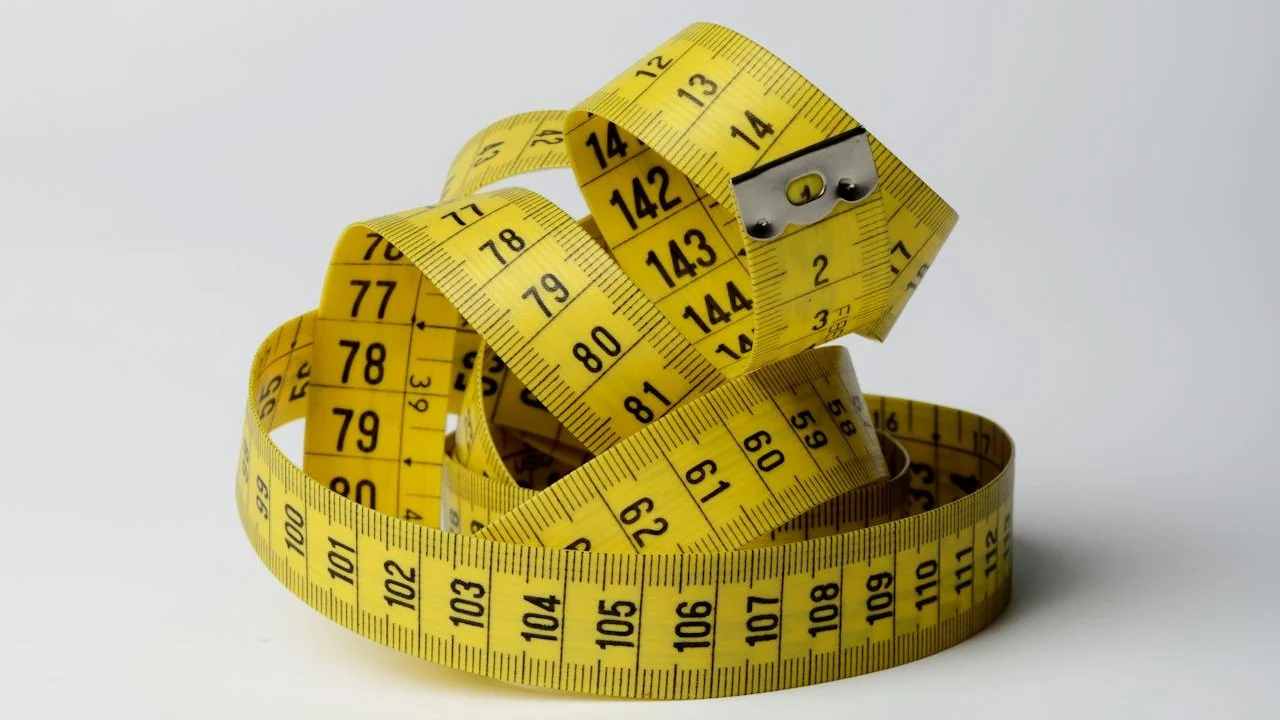
If you genuinely need a number, use a fixed protocol rather than comparing yourself with photos. How to measure your penis accurately explains erect length, girth, and the clinical stretched measurement separately.
Measurement methods can mix up several different questions
A review of methods used in 70 studies found striking inconsistency. Some studies measured flaccid length, others stretched length, and only a smaller group measured during erection. Some investigators started at the skin and others at the pubic bone; some compressed the fat pad and others did not. The method used to produce an erection and the person taking the measurement also varied. 2021 systematic review of measurement methods
The European Association of Urology identifies stretched penile length as the minimum clinical measurement, while also noting that the field lacks complete standardisation. Flaccid and erect measurements may also be useful for some treatments. One clinical number can therefore be compared fairly with another only when the state and starting point are known. EAU guideline
Why a reliable country ranking is not possible
A trustworthy world ranking would require every country to study a large, randomly selected population sample with the same protocol. The data would need to document age, body composition, and recruitment clearly and use the same measurement state. No such worldwide study exists.
Instead, many figures come from individual urology clinics, cities, occupational groups, or volunteer studies. Placing those studies side by side compares methods as much as bodies. A skin-to-tip measurement from one clinic cannot fairly compete with a bone-pressed measurement from another country.
- A country is not its study sample
- One clinic in one city does not represent every region or social group in a country.
- A country is not an ethnicity
- Migration, family history, and mixed populations cannot be forced into a meaningful national body category.
- A number is not its method
- Two similarly labelled measurements may have been taken differently and may describe different things.
- An average is not an individual man
- Even when a real group difference exists, the individual distributions overlap substantially.
What regional research can still contribute
A meta-analysis published in 2025 combined 33 studies involving 36,883 men and grouped the data by World Health Organization region. Across the included studies, average erect length was 13.84 cm and average erect girth was 11.91 cm. Those two estimates were based on 5,669 and 5,168 measurements respectively, far more than in the older review but still only part of the total sample. Mostafaei et al. 2025
The newer average being different from 13.12 cm does not mean penises grew after 2015. Different included studies, protocols, and samples can shift a pooled estimate. That is precisely why an average is a reference, not a centimetre threshold for one person's body.
The analysis found regional differences in some flaccid and stretched measurements. Regional differences in erect length and erect girth, however, were not statistically significant. The authors also noted that variation within a region is probably greater than variation between regions.
The data gap matters most. There were not enough high-quality studies for Africa or Southeast Asia. Those are exactly the regions for which online rankings often express the greatest certainty. Good science makes the gap visible instead of filling it with copied numbers.
Regional research remains valuable for improving measurement methods and developing appropriate clinical reference data. It becomes misleading when heterogeneous studies are turned into a hierarchy of countries or groups of people.
Africa and Asia: What the stereotypes get wrong
The claim that African men are inherently very large and Asian men inherently very small is one of the most persistent sexual stereotypes. The current regional analysis notes that commonly circulated online ranges of 15 to 17.6 cm for Africa and below 12 cm for Asia do not have an adequate evidentiary basis.
This does not claim that every population must have exactly the same average. It is a statement about the quality of the evidence. A few clinical cohorts, stories, or personal experiences cannot describe a large and diverse population. Knowing a few men from Kenya, Germany, or Thailand means knowing people, not a representative sample.
Ethnicity is also defined inconsistently in these studies and is often only a secondary variable. Appearance, nationality, and self-identification get mixed together. That is too crude for individual prediction and of little clinical use.
What one German study actually says about Germany
An often-cited study in Essen examined 111 men and found an average erect length of 14.18 cm. That is a published measurement, but it is not a German national average. The participants were not a representative sample drawn from every region and population group. Schneider et al. 2001
The same problem applies to many other country figures. A responsible article may cite such a study, but it must also describe the sample. It should not project the Essen figure onto all of Germany and then compare it with a clinic group measured differently in another country.
Why condom sizes are not an anatomy census
Manufacturers offer different nominal widths because bodies and fit vary. Their product ranges cannot be used to calculate a national average. Product selection, distribution, brand strategy, and regional availability all shape which sizes are sold. A product catalogue is not a random measurement study.
The practical message is still useful for an individual man: Erect girth often matters more than length when choosing a condom. If fit is a problem, measure and select an appropriate nominal width rather than drawing conclusions about ancestry or normality from the package. See how to choose the right condom size for details.
Why porn and social media shift the reference point
Pornography does not show a random selection of bodies. Performers are selected, camera angles emphasize proportions, and unusually striking scenes receive more attention. Social media amplifies the same effect: Extremes, jokes, and rankings are shared more often than ordinary bodies.
In interviews with men after penis-enlargement surgery, participants identified pornography, comparison with peers, and ridicule as influences on their sense of what was normal. That does not prove media causes every insecurity, but it shows how a distorted reference point can make medically normal measurements feel inadequate. Sharp and Oates 2019
If the worry regularly intensifies after porn, forums, or ranking videos, stepping away from them is not a superficial suggestion. It removes a source that repeatedly restarts the internal comparison.

When you still feel too small after a normal measurement
Many men hope an accurate number will end their insecurity for good. Sometimes it helps. Sometimes it starts a search for a more favourable angle, a different average, or reassurance from a partner. Relief lasts briefly and the next comparison begins.
Clinical literature uses terms such as small penis anxiety and penile dysmorphophobia when intense worry persists despite normal measurements and begins to shape daily life. Possible signs include repeated measuring, avoiding dating, saunas, or sex, constant self-monitoring, and believing other people will immediately notice the perceived flaw. Review of size anxiety and dysmorphophobia
The distress is not imaginary just because the anatomy is normal. Psychotherapy or sexual-medicine support is often more useful at that point than an enlargement procedure. The goal is not to dismiss the concern, but to interrupt the cycle of checking and shame.
Comparison is especially unfair during puberty
Puberty does not progress at the same pace for everyone. Comparing your body in the middle of development with older teenagers, adults, or porn performers means comparing different developmental stages. Testicular growth, body hair, voice, and height also change on different timelines.
If puberty appears markedly delayed overall, the testicles remain very small, or other developmental differences are present, evaluation by a paediatric endocrinologist is appropriate. The question then concerns the whole pattern, not a ranking. Without those warning signs, giving development time and putting it in context is usually more sensible than repeated measuring.
What size actually means during sex
Size can be noticeable and can form part of an individual preference. It is only one factor alongside arousal, erection quality, pace, angle, lubrication, attention, and communication. A larger penis guarantees neither pleasure nor orgasm, and a smaller one prevents neither.
The question of whether women prefer length or girth has been studied in small samples in different ways and is discussed in detail in Do women prefer larger penises? For the practical fit of length and girth, see Longer or thicker penis.
Fertility is not a size contest either. Normal differences in length and girth do not determine sperm production or whether pregnancy occurs. Penis size, sex, and fertility separates this myth from the factors that actually matter when trying to conceive.
How to talk with a partner about the insecurity
Asking only whether you are large enough can push your partner into the role of examiner. A conversation outside the bedroom is usually more useful. You can say that size comparisons make you insecure, then ask specifically which kinds of touch, angles, or movements feel good. The subject becomes shared sexuality rather than a grade for your body.
You can take positive feedback seriously without requesting it repeatedly. If every response still sounds like hidden criticism despite honest conversations, another measurement is unlikely to provide the next useful answer. A sex therapist or psychotherapist may help take the pressure of comparison out of the relationship.
Can an adult penis still grow?
After puberty is complete, a normally developed penis does not continue growing because of diet, supplements, or a particular exercise. Three changes are often mistaken for growth: A better erection can reveal more of the existing length and girth, weight loss can uncover a concealed part of the shaft, and a pump can temporarily change blood filling. None of those automatically creates new permanent tissue.
Treating erectile dysfunction can substantially improve sexual function and visible fullness. That is medically useful, but it is not anatomical enlargement. Reducing a fat pad over the pubic bone can likewise change visible length without making the penis itself longer.
Penis-enlargement methods: A reality check
- Traction devices
- Medical extenders can produce modest length gains in selected situations when used consistently for months. Studies are heterogeneous, the daily burden is substantial, and the effects are far smaller than many ads suggest.
- Vacuum pumps
- They temporarily draw blood into the penis and are used mainly for erectile dysfunction or in certain rehabilitation settings. A large permanent size increase in healthy men is not well supported.
- Jelqing and aggressive stretching
- Good evidence of reliable benefit is lacking. Bruising, injury to blood vessels or tissue, pain, and scarring are possible.
- Pills, creams, and powders
- There is no convincing evidence that they permanently enlarge a normally developed adult penis. Undeclared drugs have also repeatedly been found in supplements sold for sexual performance. The risk is not only a lack of benefit, but an unknown dose with possible interactions. Analysis of FDA warnings about undeclared ingredients
- Pelvic-floor exercises
- They may support erection control or pelvic-floor function in some situations, but they do not lengthen the erectile tissue.

The EAU takes a cautious view of conservative and surgical methods and recommends accurate measurement and evaluation for size anxiety or dysmorphophobia before treatment. EAU guideline on size abnormalities and enlargement
Surgery and injections are not an easy shortcut
Depending on the technique, procedures may change visible length, girth, or the angle of the flaccid penis. Examples include cutting the suspensory ligament, procedures involving the pubic fat pad, and girth augmentation. Some alter visible length more than functional erect length.
Possible consequences include scarring, infection, asymmetry, nodules, instability, changes in sensation, erection problems, and disappointment with the result. Fillers or fat grafting can add girth but may become uneven or require further procedures. Responsible counselling therefore covers durability, complications, and realistic goals, not just possible centimetres.
The situation is different with reconstructive conditions, a buried penis, or a functionally important deformity. Surgery may be medically justified in those cases. That is not the same as cosmetic optimisation of a normal finding.
How to recognise an unreliable enlargement offer
- Guaranteed centimetres without a standardised baseline measurement.
- Before-and-after photos without traceable studies or complication rates.
- Time pressure, discounts, or claims that normal measurements require treatment.
- No clear distinction between visible length, erect length, and girth.
- No questions about erection function, body image, medications, or medical conditions.
- Downplaying surgery, fillers, or unapproved substances.
A trustworthy first consultation may end with no physical treatment being recommended. Someone who turns every insecurity immediately into a paid procedure is not offering neutral advice.
When a medical examination makes sense
Seek an evaluation if the size concern comes with developmental differences, testicular problems, new shortening, a palpable hard area, pain, a marked new curve, or persistent erection problems. A penis that appears concealed by a fat pad or skin also needs to be distinguished from a true micropenis.
Severe emotional distress is a valid reason too. A good assessment considers the measurement, function, and body image together. It does not begin by selling a treatment. Anyone promising creams, pills, injections, or surgery without measuring properly and discussing expectations is not a trustworthy first point of care.
Myths and facts about penis size
- Myth: Below average means too small.
- Fact: The average is not a lower limit. A wide normal distribution lies both below and above it.
- Myth: Small while flaccid means small while erect.
- Fact: Flaccid size varies greatly and only partly predicts how much a penis changes during erection.
- Myth: Country lists show biological facts.
- Fact: They usually combine different measurement methods and nonrepresentative samples.
- Myth: A man's background reveals his size.
- Fact: Individual distributions overlap substantially; background is not a reliable personal predictor.
- Myth: Porn shows what is normal.
- Fact: Selection, perspective, and staging overemphasize unusual bodies.
- Myth: Measuring often creates certainty.
- Fact: When size anxiety is present, repeated checking can reinforce the comparison cycle.
- Myth: A larger penis makes someone more fertile.
- Fact: Sperm production, ejaculation, timing, and reproductive health matter more than normal size differences.
Conclusion
Reliable measurement data provides an average and a wide normal range. It does not define a minimum acceptable size or a person's worth, and it cannot produce a trustworthy ranking by country or ethnicity. If you feel too small, measure accurately first and then ask whether there is any functional or developmental problem. Very often, the underlying problem is not the body but an unfair reference point.
More useful than another ranking
These articles cover accurate measurement, medical context, and what size actually means in a sex life.