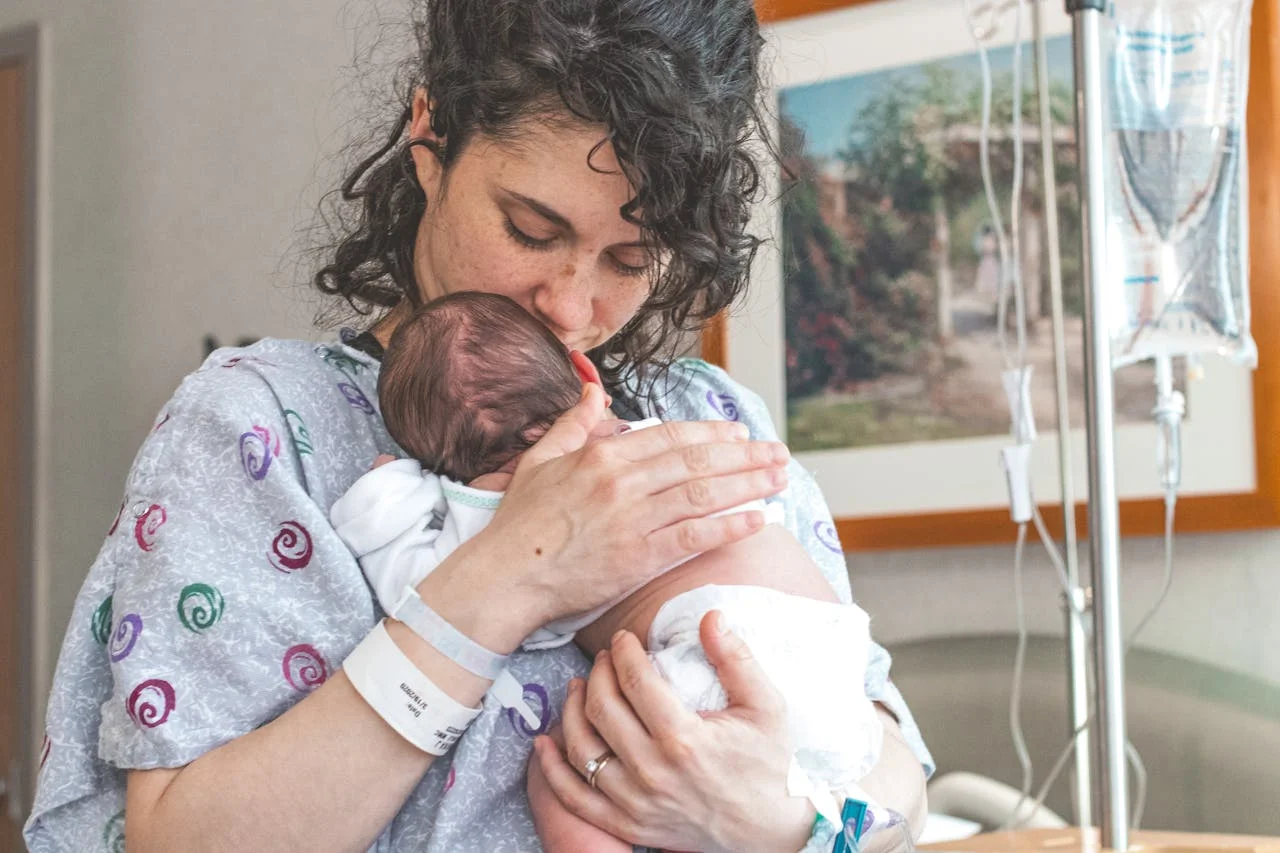
Loneliness during pregnancy: why it happens and what really helps
Loneliness during pregnancy can feel confusing, especially because people around you often expect happiness, excitement, and closeness. In reality, many people experience the opposite: more withdrawal, more overthinking, and less support. That is not a personal failure. It is often the result of change, strain, limited practical help, or relationships that are not giving much steadiness right now.


The most important points in 60 seconds
- Loneliness during pregnancy is not the same as being alone and does not automatically mean a mental health disorder.
- It often develops because of physical strain, emotional ambivalence, relationship stress, major life changes, or too little support.
- If withdrawal, emptiness, anxiety, or overwhelm keep increasing over weeks, it should be addressed early.
- What usually helps most is concrete connection and concrete relief, not trying to manage everything more tightly.
- Seek urgent help if you no longer feel safe or if thoughts of self-harm appear.
Why loneliness during pregnancy can feel so painful?
Pregnancy does not change only the body. It often changes relationships, roles, daily routine, emotional capacity, and the way you speak to yourself internally. Things that once felt manageable can suddenly feel heavy. At the same time, there is often social pressure to experience this phase as naturally happy, close, and fulfilling.
That pressure can slowly turn into shame. If you feel overwhelmed, misunderstood, or emotionally alone, it can begin to feel as if you are somehow handling pregnancy badly. In reality, loneliness during this period is often a very understandable response to overload, uncertainty, and not having enough support around you.
The WHO describes mental health challenges during pregnancy and after birth as an important health issue and highlights the value of early support. WHO: Maternal mental health
Loneliness is not the same as being alone
You can live with a partner, be in touch with people, answer messages, and still feel cut off internally. Loneliness is not only about having too few people nearby. It is often about feeling unseen or unsupported in what is really happening inside you.
During pregnancy that can happen very quickly. Some thoughts are hard to say aloud: fear of loss, shame about mixed feelings, anxiety about the body, doubts about coping, or frustration that other people seem to see the pregnancy but not you.
Why this feeling develops so easily right now?
Usually there is not one single reason. More often, several things come together and reinforce one another.
- Sleep disruption, nausea, pain, or exhaustion can make emotions feel more exposed.
- Your sense of identity may shift faster than the people around you can adjust.
- Conversations may suddenly revolve around logistics, tests, and expectations.
- Social media can create the impression that everyone else is handling this period better.
- Mixed feelings are often less accepted socially than simple happiness.
If you are already carrying a lot on your own, ordinary pregnancy stress can quickly turn into the feeling that you are emotionally on your own as well.
Who is especially likely to feel lonely?
Loneliness is not a personality problem. It becomes more likely when support is thin and the burden is high. People often describe it in situations like these:
- you are in a solo pregnancy or your partner is emotionally difficult to reach
- you have moved, have little local support, or live far from people you trust
- the pregnancy followed fertility treatment, loss, or a long period of trying to conceive
- you are also dealing with financial pressure, conflict, work stress, or insecure housing
- you already know anxiety, depression, trauma, or strong perfectionism from earlier parts of life
Even one of these factors can be enough. Your feelings do not have to look dramatic to deserve attention and care.
How loneliness often shows up in daily life?
Sometimes it does not sound like a direct statement such as I feel lonely. More often it shows up in quieter patterns.
- you answer less even though what you actually want is contact
- after appointments or social contact, you still come home feeling emptier instead of steadier
- you feel misunderstood in conversations or somehow not emotionally included
- you keep functioning on the outside and then drop internally once things become quiet
- you feel ashamed of emotions that do not match the image of a happy pregnancy
This quieter version often remains invisible for a long time because it does not look dramatic and is easily written off as normal moodiness.
When it may be more than loneliness?
Loneliness does not automatically mean depression or an anxiety disorder. But it can be an early warning sign that you are no longer being supported well enough. ACOG outlines common signs of depression during pregnancy and recommends addressing symptoms early. ACOG: Depression during pregnancy
When something has been settling in for more than two weeks or is clearly getting worse, it makes sense to involve professional support.
- persistent sadness, inner emptiness, or frequent crying without real relief
- marked loss of interest, withdrawal, and less connection to things that usually help
- strong anxiety, panic, repetitive worrying, or a constant sense of alarm
- guilt, self-criticism, or the feeling that you are already failing
- sleep or appetite changes that do not feel explained by physical pregnancy symptoms alone
What usually helps more than just forcing yourself through?
Many people respond to loneliness by trying to become even more organised, useful, grateful, or emotionally low-maintenance. That usually deepens the isolation. What helps more is a plan that makes connection and relief specific.
1. Ask specifically instead of generally
People are more likely to help when they know exactly what is needed. A sentence like Let me know if you need anything sounds kind, but often changes very little.
- Can you call me once a week.
- Can you come with me to this appointment.
- Can we go for a walk every Sunday.
2. Build a small stable support circle
You do not need a huge network. Two dependable people and one professional contact can matter more than ten casual connections.
3. Look for belonging, not perfect emotional closeness
For some people, a class, support group, or regular community space feels easier than a deep one-to-one conversation. Connection does not have to be intense to count. If you are navigating a solo pregnancy, the article Getting pregnant as a single person can also help you think more realistically about support.
4. Reduce comparison pressure intentionally
If certain content regularly makes you feel smaller, wrong, or alone, stepping back is not overreacting. It is self-protection. You do not have to be informed, productive, grateful, and perfectly put together all at once.
If you are in a relationship and still feel alone
This is where a lot of shame can grow. Many people think I should not feel lonely because I am not physically alone. But physical presence and emotional support are not the same thing. A relationship can look functional from the outside and still feel empty on the inside.
It often helps to describe the feeling as an observation instead of an accusation. Not You are never there, but I am noticing how alone I feel in what is happening inside me. Then follow it with a clear request: ten minutes every evening without phones, coming along to prenatal appointments, or a regular weekly check-in. If you keep getting stuck in the same conflict, speaking with a professional together can help relieve some of the pressure.
How to bring this up with a midwife, doctor, or therapist?
You do not need perfect wording. It is enough to describe the state clearly. For example:
- I have been feeling very alone for a few weeks and it seems to be getting worse.
- I am still functioning, but internally I keep withdrawing more.
- I am not sure whether this is still normal stress or whether I need help.
NICE recommends early, structured assessment of mental health symptoms during pregnancy and after birth instead of waiting until things become unmanageable. NICE: Antenatal and postnatal mental health
Getting professional help early is preventive care, not weakness
Early support matters during pregnancy. The NHS describes mental health concerns during pregnancy and after birth as something worth discussing openly and treating when needed. NHS: Mental health in pregnancy and after birth
Possible first entry points include a midwife, gynaecology clinic, family doctor, counsellor, or a perinatal mental health service. In India, the exact pathway depends a lot on where you live and whether you are using private or public care. You do not need to know in advance which form of support will turn out to be best. The first useful step is often simply not carrying it alone any longer.
What still matters after the baby is born?
Loneliness does not automatically disappear once the baby arrives. For some people it becomes even stronger because sleep loss, isolation, and a new routine create more pressure. If you already feel under-supported during pregnancy, it is smart to plan support for the weeks after birth early.
Helpful next reads may include Postpartum recovery and, if emotional strain continues, postpartum depression.
Myths and facts
- Myth: If you feel lonely during pregnancy, you are not grateful enough. Fact: Loneliness and anticipation can exist at the same time.
- Myth: Loneliness automatically means depression. Fact: Not automatically, but it can be a warning sign.
- Myth: If I am strong enough, I should be able to manage this by myself. Fact: Connection and support are often more effective than being harder on yourself.
- Myth: You cannot feel lonely if you are in a relationship. Fact: Emotional isolation can be very real inside a partnership.
- Myth: Help only makes sense once things fully fall apart. Fact: Speaking up early often prevents exactly that.
Conclusion
Loneliness during pregnancy is not a sign of weakness and not proof that something is wrong with you. Most of the time it shows that you need more support, more relief, or more honest companionship. That is why the most important step is not to force yourself to cope better, but to make connection concrete and take help seriously early.
Keep reading
These articles can help if you need more support, more orientation, and a more realistic picture of pregnancy and the time after birth.