Stretch marks after pregnancy: causes, what to expect, and what actually helps
Stretch marks are changes in the middle layer of the skin and are very common after pregnancy, but for many they still feel personal. They often appear exactly where the body changed the most, which can feel like a constant reminder. This article explains what stretch marks are medically, how they typically change over time, what is worth doing day to day, and when professional treatments can realistically help.

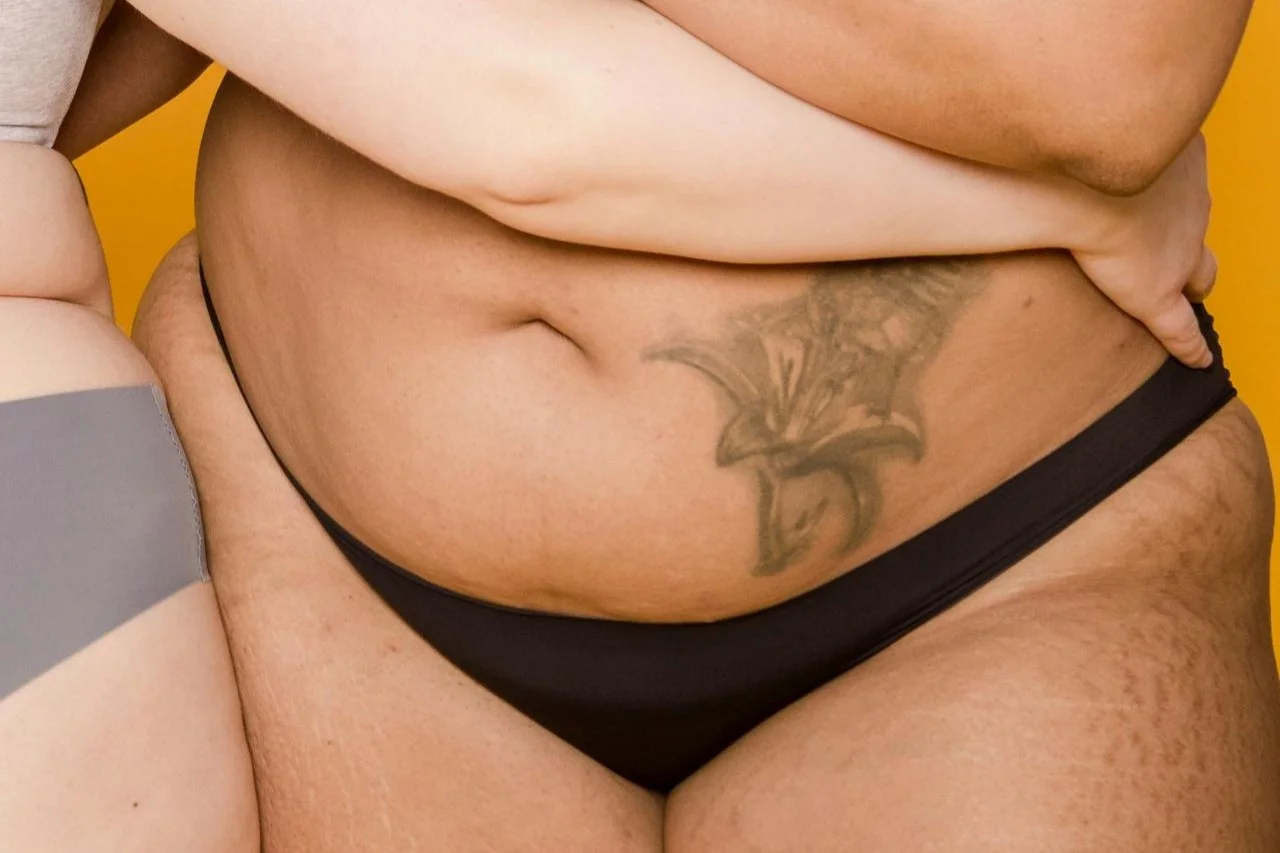
The essentials in 60 seconds
- Stretch marks are changes in the middle layer of the skin. In dermatology they are called striae.
- They are especially common in pregnancy because skin and connective tissue are under sustained stress and genetics play a big role.
- Newer marks often look red, purple, or darker. Many fade and become lighter over time.
- Skincare can reduce dryness and itching, but it cannot reliably prevent or erase stretch marks.
- Dermatology treatments can improve appearance, but they require time, multiple sessions, and realistic expectations.
What stretch marks are, medically?
Stretch marks are not superficial scratches. They form when skin is stretched strongly or quickly and deeper structures are stressed, not just the surface. That is why striae can look like lines or bands and can vary a lot in colour and contrast depending on the stage.
The most important context: stretch marks are common and usually harmless. They can still feel distressing because they are visible and often show up on areas that get a lot of attention during and after pregnancy.
A clear overview is available on DermNet. DermNet: Stretch marks
Why they are so common after pregnancy?
During pregnancy, skin stretches over months, sometimes quickly. At the same time, hormones and connective tissue changes influence how resilient and elastic skin behaves. And predisposition matters a lot.
That point is worth saying out loud: it is not only about doing it right. Stretch marks can appear even with consistent skincare, and some people get few even with major stretching.
The NHS summarizes common causes and situations clearly. NHS: Stretch marks
Where stretch marks typically show up?
In pregnancy, stretch marks often appear where skin and tissue change the most. After birth, they are often most noticeable as visible lines or as lighter streaks.
- Abdomen
- Breasts
- Hips and buttocks
- Thighs
Depending on your skin tone, early marks may look red, purple, or brownish and later often become very light. If you are unsure whether something is truly a stretch mark, a dermatology review can be helpful.
Red, purple, white: how stretch marks change
New stretch marks often look red, purple, or darker than the surrounding skin. This is an early stage where blood flow and inflammation signals are more visible. Over time, many marks fade and become lighter, sometimes looking silvery, whitish, or like fine lines in the tissue.
What you can take from this
- Newer marks often change faster than older, very light marks.
- Even without treatment, the look often becomes less noticeable over months.
- Treatments usually aim for less contrast and smoother texture, not perfect invisibility.
Preventing stretch marks: what is realistic
Many people want a clear answer and ideally a cream that prevents stretch marks entirely. The evidence is sobering. A Cochrane review found no high-quality evidence that specific topical preparations reliably prevent stretch marks during pregnancy. Cochrane: Topical preparations and stretch marks
That does not mean skincare is useless. It can reduce dryness and itch and improve comfort. It simply means: if stretch marks appear, it is not proof you failed.
What is actually worth doing day to day?
If you want a plan that helps without false promises, keep it simple: soothe skin, reduce irritation, avoid unnecessary contrast, and give the process time.
Practical steps
- Use gentle, well-tolerated skincare, especially if your skin feels dry or itchy.
- Keep showers low-irritation and avoid harsh products if your skin is sensitive.
- Use sunscreen on affected areas because sun can make contrast more visible.
- If you want to track change, take photos in comparable light and distance.
If it itches or feels tight
- Cool, damp compresses can help in the short term.
- Avoid scratching; gentle pressure or cooling is often better.
- If itching is severe or a rash appears, get it checked.
What often disappoints
- Expensive creams that promise to remove stretch marks completely.
- Before-and-after photos without comparable lighting, timing, and skin condition.
- Lots of friction and harsh scrubs when your skin is already irritated.
Short-term covering: if you want it to look calmer
Sometimes the issue is not the marks themselves, but the contrast, for example in summer or in certain lighting. In that case, short-term covering can help without committing to a procedure.
- Self-tanner can reduce the contrast between marks and surrounding skin.
- Camouflage make-up can be useful for photos or special occasions.
- Patch test new products first if your skin is currently sensitive.
Which treatments can truly help?
If you want more than comfort care, set a realistic goal: striae are structural skin changes. The goal is usually visible improvement, not complete removal. What makes sense depends on your skin type, the stage, the location, and what you can realistically do in your daily life.
Topical options
Some ingredients are discussed in studies and reviews, including retinoids such as tretinoin. These are not for use in pregnancy and should be discussed individually after birth, especially if you are breastfeeding or have sensitive skin. Review: Topical tretinoin, J Clin Med 2025
Device-based procedures
Dermatology reviews describe different lasers, microneedling, and combinations. Often multiple sessions are needed, and potential side effects like irritation or pigment changes should be discussed up front. Review: Therapeutic modalities of striae, 2022
How to make a good decision
- Ask about the goal: less contrast, less depth, overall calmer texture.
- Ask about effort: number of sessions, downtime, aftercare, sunscreen.
- Ask about risks: irritation, pigment changes, scarring risk, especially with sensitive or darker skin.
If stretch marks affect you emotionally
Stretch marks are not just a skin topic. They often represent a phase where your body does not feel like before, while expectations and comparisons are everywhere. If you notice you are only criticising yourself in the mirror, comparing constantly, or feeling uncomfortable in clothes, it is valid to seek support.
Sometimes one sentence can reduce pressure: your body does not have to return quickly to how it was before to be healthy. If mood, drive, or sleep shift significantly, it can also help to look at topics like postpartum depression. And if other visible changes confuse you, the article on linea nigra can help you put them into context.
When it makes sense to get checked?
Stretch marks are usually normal in pregnancy. A medical check can be helpful if skin changes appear very suddenly, become unusually wide and dark, or if factors like corticosteroid use play a role.
Also, if skin itches intensely, burns, becomes inflamed, or you notice other concerning symptoms, getting it checked can prevent missing a different skin condition and writing it off as a normal postpartum issue.
Myths and facts
- Myth: Stretch marks mean you did something wrong. Fact: genetics, stretching, and hormones play a major role.
- Myth: One specific cream prevents stretch marks reliably. Fact: evidence for reliable prevention with topical products is limited.
- Myth: Stretch marks disappear with exercise or weight loss. Fact: exercise can improve body comfort, but the marks themselves often remain visible.
- Myth: Sun makes stretch marks less noticeable. Fact: sun can increase contrast and stress skin; sunscreen is often the better choice.
- Myth: Laser or microneedling removes stretch marks completely. Fact: treatments can improve appearance, but results vary and are rarely perfectly invisible.
- Myth: Stretch marks are dangerous. Fact: they are usually harmless, but unusual sudden or severe changes should be checked.
Conclusion
Stretch marks after pregnancy are common, usually harmless, and often change over months. Skincare and sunscreen can improve comfort and reduce contrast, and dermatology treatments can improve appearance in some cases, but complete removal is rarely realistic. If changes are unusually sudden or severe, or if the topic is weighing heavily on you, medical clarification or support is worth considering.
Read next
More on skin and body changes during pregnancy and after delivery.