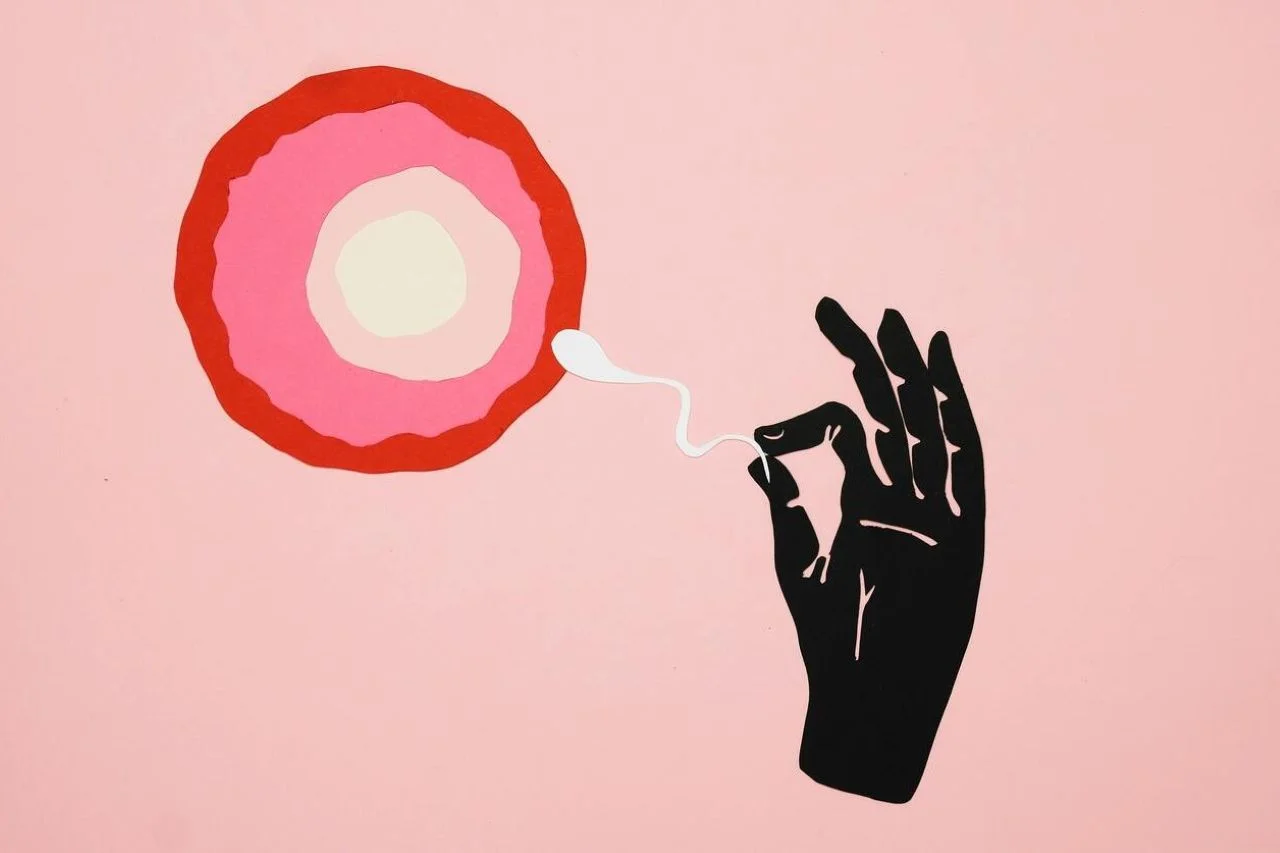
Azoospermia: When no sperm are seen in semen
Azoospermia means that no sperm are detectable in the ejaculate. It is a serious finding on semen analysis, but it is not a complete diagnosis. The key question is whether sperm production is affected or whether there is a blockage, because the next steps depend on that.


What azoospermia means medically
Azoospermia literally means no sperm in the ejaculate. Medically, it is first and foremost a description of a laboratory finding, not a finished explanation of the cause. That is why the result always has to be interpreted in context.
It is also important to distinguish it from cryptozoospermia. In that situation, only a very small number of sperm are detectable, often only after a concentrated examination of the pellet. That is clinically different from true azoospermia and can change the next options.
Why the distinction between obstructive and non-obstructive matters
In obstructive azoospermia, sperm are produced but do not reach the ejaculate because of a blockage. That can happen after inflammation, surgery, a vasectomy, or a congenital variation such as absent vas deferens.
In non-obstructive azoospermia, the problem lies in sperm production itself. The key question then is whether there are still small areas of spermatogenesis in the testis or whether a hormonal or genetic cause is behind it.
The distinction decides whether reconstruction, hormonal treatment, targeted sperm retrieval, or another approach makes sense. The EAU and AUA/ASRM guidelines emphasise exactly this early classification.
How azoospermia is reliably confirmed
One semen analysis is often not enough. For a secure diagnosis, at least two separate semen samples are usually examined, and the laboratory also checks the pellet after centrifugation so that rare sperm are not missed.
The sample collection itself matters too. Incomplete collection, long transport times, or delayed processing can distort the result. Good pre-analytical handling matters just as much as microscopy.
The laboratory literature emphasises these steps because they help distinguish severe oligozoospermia, cryptozoospermia, and true azoospermia.
Possible signs in everyday life
Azoospermia is often discovered only when a couple is trying to conceive and the semen analysis comes back abnormal. In everyday life, there are often no clear symptoms, which is exactly why the finding can be easy to miss.
Some people do report clues that help guide the work-up. These include a very low ejaculate volume, previous surgery in the groin, testicles, or pelvis, a history of undescended testis, recurrent infections, pain in the scrotum, or signs of hormone deficiency such as reduced libido or fewer morning erections.
These clues do not prove azoospermia, but they help clinicians judge whether an obstructive or a non-obstructive cause is more likely.
Common causes
The causes can be grouped by mechanism. That makes the work-up easier to follow.
- Blockage or outflow problem, for example after a vasectomy, inflammation, injury, or congenital absence of the vas deferens
- Impaired sperm production in the testis, for example due to genetic causes, testicular damage, cryptorchidism, or other forms of primary testicular failure
- Hormonal disorders, especially hypogonadotropic hypogonadism or another disturbance of the signalling axis between the brain and the testes
- Problems with ejaculation, for example retrograde ejaculation, where semen flows into the bladder
In non-obstructive azoospermia, genetic factors, testicular damage, and mumps orchitis are among the important causes. In obstructive forms, anatomical variations or previous procedures can also play a major role.
Which investigations are typically part of the work-up?
The work-up is stepwise and has a clear goal: narrow down the cause and define realistic options. Guidelines and recent reviews repeat the same core steps.
- Targeted history with prior surgeries, infections, medicines, testicular development, and how long the couple has been trying to conceive
- Physical examination with testicular volume, palpation of the vas deferens, and assessment of possible varicoceles
- Hormone profile with FSH, LH, and testosterone, with free or bioavailable values, prolactin, and estradiol added if needed
- Genetic testing in the right context, usually karyotype and Y chromosome microdeletion analysis, and CFTR testing if the vas deferens is absent
- Imaging as indicated, such as scrotal ultrasound or, in selected cases, transrectal ultrasound
The EAU guideline on male infertility and the AUA/ASRM guidance emphasise early differentiation through history, examination, hormones, and genetics.
What blood tests and testicular findings often mean
The hormone profile does not make the diagnosis on its own, but it helps place the case. A raised FSH often points to impaired sperm production in the testis, while normal hormone values do not rule out azoospermia.
Low testosterone can suggest a central hormonal disorder, especially if LH and FSH do not rise appropriately. In that situation, the key question is whether there is a treatable hormonal cause.
Testicular size also helps with classification. Small testes are more often seen with non-obstructive causes, but normal size does not exclude it. Inhibin B can be useful as an additional marker, but recent reviews do not consider it a reliable replacement for the overall assessment.
Treatment and options
Treatment depends entirely on the cause. Azoospermia is therefore not a single disease, but a finding with different causes and options.
If it is obstructive
In a blockage, surgical reconstruction may be possible depending on the cause. If that is not sensible or not enough, sperm can be retrieved from the epididymis or testis so that sperm are available for ICSI or IVF.
If it is non-obstructive
The key question here is whether focal sperm production is still present in the testis. A commonly used procedure is microdissection testicular sperm extraction, or microTESE. Current data also show that there is no universal gold-standard solution for every situation, and that the simplest safe method should not be ruled out across the board.
For selected patients, other procedures such as cTESE or a mapping-based approach may also make sense. The decision depends on the clinic, experience, and the individual starting point.
When there is a treatable hormonal cause, especially hypogonadotropic hypogonadism, targeted hormone treatment can sometimes restart sperm production partially. Exogenous testosterone is not suitable for that, because it can suppress the body's own production.
If no sperm can be retrieved
If no sperm are available despite the work-up and possible procedures, that is a heavy result, but it does not end every path to parenthood. Depending on the situation, donor sperm, adoption, or a child-free life may be considered. Honest counselling matters here: no false hope, but also no unnecessary sense of finality.
What genetics means for chances and inheritance
Genetic findings are not rare in azoospermia and they change counselling considerably. That is why karyotype and Y chromosome microdeletion testing are part of the standard work-up in many cases, especially when a non-obstructive cause is possible.
With complete AZFa or AZFb deletions, the chance of successful sperm retrieval is very low, so an operative search is usually not worthwhile. With an AZFc deletion, by contrast, the chance of finding sperm is often realistic enough to discuss a trial.
Even in Klinefelter syndrome, microdissection sperm retrieval can be successful in selected cases. Careful genetic counselling is important, because inheritance and future family planning have to be considered too.
Varicocele and azoospermia
A varicocele is common in infertile men, but its significance in azoospermia is not always clear. The current literature describes its clinical relevance in non-obstructive azoospermia as uncertain and recommends an individual, shared decision.
In some cases, varicocele treatment can help make sperm detectable in the ejaculate again or improve the chance of later sperm retrieval. However, a subclinical varicocele should not be treated routinely.
The issue matters because not every abnormal vein pattern is automatically the main reason for the azoospermia. It belongs in the full work-up, not in a quick decision.
Psychological strain and partnership
A finding like azoospermia affects many people not only medically but emotionally too. Shame, withdrawal, anger, or a sense of having failed are common. That is understandable, but medically it is not helpful, because the finding does not describe personal fault.
For couples, it is important to discuss the next steps together and as concretely as possible. When people know the facts, the open questions, and the timeline, the situation often feels less chaotic.
This is also where counselling with urology, reproductive medicine, and, if needed, psychological support can reduce the pressure quite a lot. Not every path has to be decided immediately, but every path needs a clear sequence.
Typical mistakes and misunderstandings
- Drawing conclusions too early after just one semen analysis
- Using testosterone as self-medication, which can suppress the body's own sperm production
- Not clearly classifying the case as obstructive vs non-obstructive, even though everything depends on that
- Unclear communication about whether genetic causes have been ruled out, confirmed, or are still open
- Unrealistic expectations of quick solutions, even though work-up and decisions take time
Hygiene, testing and safety
Azoospermia is not the same as an infection and in many cases is not caused by behaviour. Even so, inflammation or infection can play a role, which is why a factual work-up is worthwhile.
If there are sexual risks or new sexual contacts, STI testing and protection belong in a responsible plan. That protects both sides and helps prevent treatable causes from being missed.
Myths and facts
- Myth: Azoospermia always means biological parenthood is impossible. Fact: With obstructive causes or sperm retrieval, there may still be paths depending on the cause and findings.
- Myth: If no sperm are in the ejaculate, none are produced. Fact: In obstructive azoospermia, sperm may be produced but not make it out.
- Myth: A normal sex life rules out azoospermia. Fact: Libido, erections, and ejaculate volume say little about sperm presence.
- Myth: It is mostly due to stress. Fact: Stress may add strain but rarely explains azoospermia as the main cause; genetic, hormonal, or obstructive factors are often relevant.
- Myth: Supplements fix the problem. Fact: Azoospermia needs structured work-up; supplements do not replace diagnosis or causal therapy.
- Myth: If microTESE does not work, the clinic was bad. Fact: In some causes the chance of sperm retrieval is limited, and prognosis depends strongly on genetics and testicular tissue.
- Myth: Normal hormone values rule the problem out. Fact: True azoospermia can still be present with unremarkable hormone values.
Costs and practical planning
Costs vary widely because azoospermia can lead to very different pathways. For some people, diagnostics and targeted treatment are enough; for others, surgical steps and assisted reproduction come into play.
In practice, it helps to think in stages: confirm the finding, clarify the mechanism, answer the genetic and hormonal questions, then weigh the options. That keeps decisions manageable, even when they are emotionally difficult.
The timeline matters too. If a repeat semen analysis, genetic counselling, or a surgical step is planned, coordination needs to be clean. A calm plan is usually better than a rushed one-off decision.
Legal and regulatory context
Treatments such as sperm retrieval, cryopreservation, IVF and ICSI, as well as donor sperm use, are regulated differently around the world. That affects access rules, documentation requirements, storage periods, counselling, and the legal definition of parenthood.
International rules can differ a lot, especially for donor sperm, cross-border treatment, and the question of which information will later be available to the child. In practice, it makes sense to learn the local rules before making decisions and to document findings and consent carefully.
These notes are general guidance only and not legal advice.
When specialist consultation is especially important
A specialist consultation is always worthwhile when azoospermia is being considered. It becomes especially important if there is pain, testicular changes, very low ejaculate volume, hormonal abnormalities, or genetic questions.
Couples should also plan the next steps together. That makes it easier to discuss diagnostics, possible procedures, and the time frame in a realistic and calm way.
If there is already a known genetic burden, a history of undescended testis, or a previous operation, it is better not to wait for an incidental finding. A targeted assessment is usually the better route.
Conclusion
Azoospermia is a serious finding, but it is not yet the final word on what is possible. When the cause is carefully classified as obstructive or non-obstructive, the next steps can be planned in a medically sensible and realistic way.
These articles give further context on diagnosis, male infertility, and the next steps in fertility care.