

Why some men think their penis is too big?
Most discussions about penis size act as if only being too small could ever be a problem. In everyday life, though, some men worry about going too deep, avoiding certain positions, or constantly checking a partner's reaction. That is not irrational. It is often a mix of experience, insecurity, and wanting to be careful.
A common pattern is that sex is possible overall, but certain moments become uncomfortable. That quickly leads to one conclusion: my penis is too big. The explanation feels straightforward, but it is often too narrow. The same partner may tolerate deep sex well on one day and feel pain with similar depth on another.
What studies on penis size actually show?
The best reference point comes from measurements taken in a standardized way by medical professionals. A 2025 systematic review and meta-analysis covering 36,883 participants found an average erect length of about 13.8 centimetres and an average erect girth of about 11.9 centimetres. The numbers vary, but extreme values are much less common than porn or internet comparisons make them seem. PubMed: meta-analysis on penile length and girth
For everyday sex, the more important point is this: size alone does not explain whether sex feels good, neutral, or painful. Length, girth, firmness, penetration depth, angle, and timing relative to arousal all work together. That is why the same penis can be completely fine in one situation and uncomfortable in another.
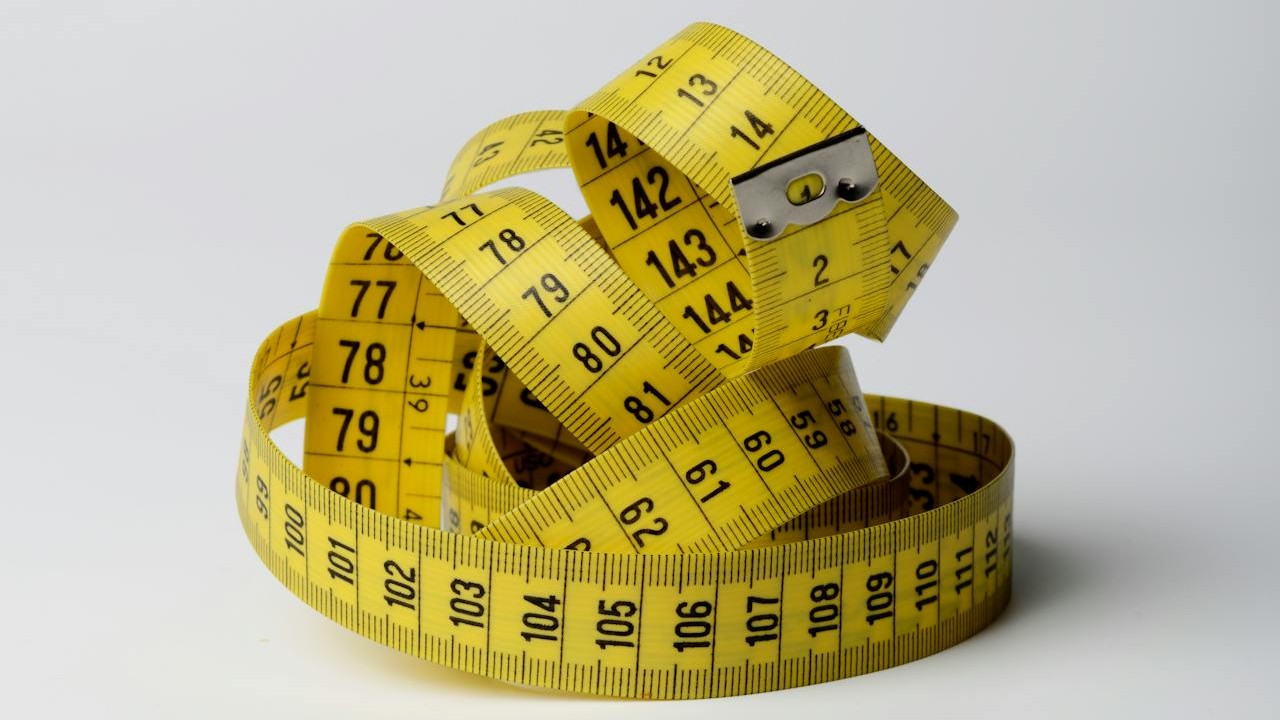
If you want to put your own size into perspective, it often helps to start with the right way to measure instead of relying on subjective comparisons.
For the larger picture, this overview of realistic size ranges is usually more helpful than any single number.
When size can actually matter during sex?
A larger penis is more likely to matter when penetration is deep, arousal is limited, lubrication is poor, or the angle is awkward. Greater girth can also create pressure or burning at the vaginal opening more quickly, especially when the pelvic floor is tense. That does not automatically mean penetration is not workable. It usually means adjustment matters more.
- Depth can vary a lot from one position to another.
- Pace often changes the sensation more than length alone.
- Low arousal or dryness can make the same movement feel painful sooner.
- Fear of pain increases muscle tension and often increases pressure as well.
So the key question is not just how big is it. It is also when, how deep, how fast, and under what conditions penetration is happening.
Why pain is usually not just about length?
Pain during sex is medically a broad topic. Depending on whether the pain is near the entrance, more superficial, deep in the pelvis, or mainly after sex, different causes may be involved. In addition to low lubrication or poor timing, possibilities include vaginismus, vulvodynia, hormone-related dryness, scar tissue, infections, or endometriosis.
That is why focusing only on penis size often sends people in the wrong direction. If you assume length is the whole problem, you may miss the actual trigger. Some couples spend a long time adjusting technique when the real issue is a pain condition, a very tense pelvic floor, or a gynecological problem that also needs attention.
If pain starts right at the entrance or the body seems to shut down, the main issue is often not depth but protective tension. In those cases, the article on vaginismus can help clarify the difference.
Deep pain is different from pain at the entrance
Many couples group different types of pain together. That makes good solutions harder. Burning, rubbing, or the feeling that entry itself is difficult points more toward problems at the opening or in the pelvic floor. Deep pain or the feeling of hitting something has a different pattern and usually needs different adjustments.
In practice, it helps to look closely: does it hurt immediately or only with greater depth? Is the pain sharp, burning, pressure-like, or more like a tightening reaction? Does it happen only in certain positions or almost every time? Those details often tell you more than the question of whether a penis is generally too big.

What helps most in real life?
The good news is that many problems improve a lot without drastic measures. A systematic review of physical therapy interventions for dyspareunia suggests that treatment focused on pain regulation and the pelvic floor can improve pain and quality of life in particular. PubMed: systematic review on dyspareunia and physical therapy
Translated into everyday life, that usually means less guessing and better adjustment.
- Give arousal more time before penetration starts at all.
- Use lubricant early and generously, not only once things already feel uncomfortable.
- Choose positions where the partner can control depth and pace well.
- For deep pain, reduce penetration depth, change angles, and slow down.
- For pain at the entrance, do not force penetration and take protective tension seriously.
- Agree on clear stop signals so nobody has to guess in the moment.
Many couples feel real relief once the focus shifts away from enduring discomfort and toward coordination.
Which positions are often easier to control?
If depth is the main issue, the answer is usually not a complicated trick. It is a position that offers better control. What matters is that the partner can influence pelvic angle, distance, and pace, and that the angle can be changed quickly if needed.
- Positions with the partner on top often give the best control over depth and rhythm.
- Side-lying positions often reduce maximum depth automatically.
- Positions with a strongly tilted pelvis or a lot of backward pull are more likely to create deep impact.
- A pillow under the pelvis can help in some situations or increase depth in others. That is why testing with clear feedback matters.
The goal is not one perfect position. The goal is a movement pattern that stays comfortable and repeatable.
When the worry in your head becomes bigger than the anatomy?
Some men adjust in a reasonable way. Others end up in constant alarm mode. Then sex starts revolving around whether something might go wrong again. That tension changes the experience even before it is clear whether there is a real physical problem.
Common results are over-caution, withdrawal, constant checking, or trying to control sex almost completely. That can make closeness harder even when both partners want to feel relaxed. If that loop develops, an open conversation can help, and sometimes sexual health counselling or couples therapy can help too. At that point, the issue is less about centimetres and more about safety and communication.
If you also tend to worry that you may be at the other extreme, the article on being too small helps put typical self-doubt into perspective.
If the question is about the rare medical diagnosis itself, micropenis is the better reference point.
When medical evaluation makes sense?
Evaluation makes sense if pain keeps happening despite good arousal, lubrication, and practical adjustments, or if penetration is regularly possible only with clear distress. That matters especially if the problem is new, getting worse, or happening together with other symptoms.
- pain at the entrance or even with light touch
- deep pain that happens almost regardless of position or pace
- burning, itching, bleeding, unusual discharge, or visible skin changes
- pain after childbirth, surgery, or injury
- persistent penile pain, shape changes, or erection problems in the man
At that point, the conversation should not stay focused on size alone. Depending on the pattern, gynecological care, pelvic floor treatment, or a urologic work-up may be more useful than simply trying harder.
Myths that make the issue worse
- Myth: if it hurts, the penis must automatically be too big. Fact: pain during sex often has multiple causes and needs a more careful assessment.
- Myth: more length automatically means more pleasure. Fact: desire, safety, arousal, and communication usually matter much more.
- Myth: being considerate makes sex boring. Fact: for many couples, adjustment improves quality instead of reducing it.
- Myth: if one position hurts, the bodies are generally incompatible. Fact: a different angle, less depth, or better timing is often enough.
- Myth: if a penis is large, the partner just has to put up with it. Fact: pain is a signal and should always be taken seriously.
Correcting these ideas matters because it moves the focus away from blame and back toward workable solutions.
You may also find these helpful



Conclusion
A large penis can mean that sex requires more adjustment, but it is rarely the full explanation for pain. What matters most is the pain pattern, arousal, lubrication, pelvic floor tension, depth, and communication. If you stop focusing only on size and start looking at the full pattern, better and more realistic solutions usually become much easier to find.