Birth injuries: perineal tears, stitches, healing and warning signs
After a vaginal birth, abrasions, perineal tears, an episiotomy, hematomas and other injuries can feel similar at first. Pain and stitches are not the only things that matter: the depth of the injury, how symptoms change and warning signs are just as important. If you are gradually feeling better overall, healing is usually underway. Increasing pain, fever, an unusual odour, a wound that is opening, or difficulty controlling gas or stool should be assessed.

The short answer
Birth injuries are common after a vaginal birth, but they vary widely. A small abrasion may burn intensely when you urinate, while a deep perineal tear can be surprisingly easy to miss at first. Pain intensity alone cannot tell you the type or degree of injury.
Three pieces of information matter most during postpartum recovery: What injury was diagnosed? How was it treated? Are you getting better overall from one day to the next? Superficial injuries usually heal without complications. Deeper tears, a concerning repair, or bladder and bowel symptoms need focused follow-up care. The German Federal Institute for Public Health provides a current German-language overview. familienplanung.de: Injuries caused by childbirth
Before you read on: your diagnosis matters more than any photo
Birth injury is a broad umbrella term. Your recovery will differ greatly depending on whether a small area of mucous membrane was affected, the perineal muscles were repaired, or the anal sphincter was involved. If possible, ask the hospital team to explain what injury they found, how they repaired it and what follow-up they recommend. Useful details include the precise degree, whether you had an episiotomy, and instructions about medications, keeping stools soft and follow-up care. You can ask for your birth record or discharge summary.
Photos online are poor tools for self-diagnosis. Camera angle, swelling, postpartum bleeding and suture material can make a normally healing wound look alarming. Deeper problems can also look unremarkable from the outside. If you are unsure, a brief professional examination is more useful than a long comparison in the bathroom mirror.
What counts as a birth injury
During a vaginal birth, the skin, mucous membranes, muscles and pelvic floor stretch considerably. Abrasions and tears can develop on the labia or vaginal wall. The perineum—the area between the vaginal opening and anus—may tear or be deliberately cut in a specific situation during birth. That cut is medically known as an episiotomy.
An episiotomy is not routinely needed and does not prevent all perineal tears during an otherwise normal birth. It may be appropriate when a baby needs to be born quickly or when forceps or vacuum assistance is used. As with a tear, recovery depends mainly on the injury's depth, the repair, pain and how healing progresses.
Birth injuries also include bleeding into the tissues. A larger hematoma can cause severe pressure and pain even when little is visible from the outside. Less common are deeper injuries involving the anal sphincter or rectal lining. Several injuries can occur at once, which is why an examination immediately after birth is more reliable than checking with a mirror yourself.
Why birth injuries happen
As the baby's head is born, the tissue must stretch substantially in a short time. How well that happens does not depend on a single factor. Tissue characteristics, the baby's position, the speed of the final stage of labour, the size and angle of the baby's head, and obstetric procedures all interact. The risk of a deeper tear may be higher with forceps or vacuum-assisted birth, shoulder dystocia, very rapid crowning, or a head turned into a less favourable position.
A first vaginal birth and a previous severe perineal tear also matter when assessing risk. A risk factor is not a prediction, however. Many births with several risk factors do not cause a severe injury, and a deep tear can sometimes happen without an obvious trigger. The birth team can guide the head out slowly, support the perineum and use warmth when appropriate. Even so, not every injury can be prevented—and a tear does not mean you pushed incorrectly or failed in any way.
First- to fourth-degree perineal tears, explained
The degree describes which layers of tissue are involved. It is not a pain score, and it says nothing about whether you did something right or wrong during birth.
- First-degree perineal tear
- The skin and superficial tissue are affected. These tears may burn and feel tender, but they often heal without major consequences.
- Second-degree perineal tear
- The perineal muscles are also injured. These tears are generally stitched so the tissue can heal in its correct anatomical position.
- Third-degree perineal tear
- The external anal sphincter and, depending on the subtype, the internal anal sphincter are partly or completely involved. The term OASI is also used for this: obstetric anal sphincter injury.
- Fourth-degree perineal tear
- The injury extends through the sphincter into the lining of the rectum. Third- and fourth-degree tears need expert surgical repair and structured follow-up care.
Third-degree tears have subcategories. In 3a, less than half of the external sphincter is torn; in 3b, more than half is torn; and in 3c, the internal sphincter is also involved. Rarely, the rectal lining may be injured even though the sphincter appears intact. When this type of injury is suspected, a careful rectal examination is therefore part of a complete diagnosis.
The Royal College of Obstetricians and Gynaecologists (RCOG) explains both first- and second-degree perineal tears and severe perineal tears and OASI in its current patient information. If no one told you the degree of your tear, ask about the documented diagnosis at follow-up. You cannot reliably reconstruct it from how the injury feels.
Perineal stitches: what happens right after birth
Not every small injury needs stitches. When a repair is necessary, its purpose is to stop bleeding and correctly bring together the skin, muscles or sphincter. Absorbable sutures are usually used. Deeper injuries are repaired one layer at a time; a third- or fourth-degree tear is generally repaired in an operating room with adequate anesthesia.
Before the repair, the injury should be examined fully and pain should be controlled. An existing epidural can be topped up, or another suitable anesthetic can be used. You do not have to endure a painful repair. Say clearly if you feel pain during the examination or stitching.
After an anal sphincter injury, your plan may include antibiotics, pain medication, medication to keep your stool soft and a temporary urinary catheter. Before you leave the hospital, ask what you should take, for how long and whom to contact if you have bladder or bowel problems.
Absorbable does not mean every stitch disappears on a specific day. The material, depth of the repair and healing process differ. Knots or short suture ends may be noticeable for a while and can occasionally poke. Do not pull on them yourself. If a suture is very uncomfortable, a midwife, family doctor, obstetric or gynecology clinic, or the hospital where you gave birth can check whether the wound is stable and whether the end can be trimmed.

What normal healing may feel like
- The first 24 to 48 hours
- Swelling, pressure and burning at the wound often dominate. Anesthesia may mask symptoms at first, and pain can become more noticeable later. Severe pain on one side or swelling that rapidly grows still needs to be assessed.
- The first week
- Sitting down, standing up and using the bathroom may pull at the wound. You may notice suture ends for the first time. Symptoms should be manageable with rest and should improve overall. A busy day may leave you more sore, but it should not cause a lasting decline.
- The following weeks
- Superficial wounds close, swelling subsides and everyday movement becomes easier. The scar may still feel firm, numb, itchy or sensitive to touch. These sensations can fluctuate as long as no new signs of infection or problems with function develop.
- After a deep injury
- Muscles, nerves and the pelvic floor often need longer than the visible skin to recover. Pressure, uncertainty with activity, or a change in sensation during a bowel movement may justify focused follow-up and physiotherapy. Closed skin does not yet mean complete recovery.
Healing does not follow a perfectly straight line. The direction over several days matters: movement becomes easier, swelling and pain decrease overall, and no new warning signs appear. If you decline markedly after initially improving or your symptoms remain severe, have your recovery assessed.
Postpartum care: keep it simple and gentle
A perineal wound does not need an elaborate care routine. Clean water, as little friction as possible and regular changes of postpartum pads are often enough. After washing, gently pat the area dry. Harsh cleansers, fragrances, disinfectants, essential oils or a changing series of home remedies can irritate the tissue further.
Showering and washing with clear, comfortably warm water are usually possible early on. Whether a longer bath is already comfortable and appropriate depends on the wound, bleeding and the individual guidance you received after birth. Follow your care team's plan if the wound is open or infected.
Cold packs may ease pain and swelling during the first few days. Never place one directly on your skin; wrap it in a cloth and take breaks. Lying on your side and changing positions often relieve pressure better than sitting for a long time. Loose clothing can also reduce friction.
Repeatedly checking the wound with your fingers, applying ointments or disinfectants, taking sitz baths, or adding herbal products can irritate a fresh wound. Use these only when a health care professional specifically recommends them.
You do not have to put up with pain. Ask your midwife, medical team or pharmacist which pain relievers are appropriate after your birth and while breastfeeding. The current German-language guidance from familienplanung.de on perineal tears and episiotomy summarizes practical ways to reduce discomfort.
Balance sitting, lifting and movement
Complete bed rest is not usually the goal after an uncomplicated repair, but postpartum recovery is not an endurance test either. Short walks, getting up slowly and gentle movement support circulation and digestion. Alternate lying down, standing and brief periods of sitting instead of staying in one position for a long time. When getting out of bed, rolling onto your side is often more comfortable than doing a straight sit-up.
For breastfeeding or bottle-feeding, lying on your side, reclining and using pillows can reduce pressure on the perineum. Holding your baby is part of daily life; extra heavy lifting, prolonged standing and long walks can wait at first. Pay attention not only in the moment but also that evening and the next morning. More pressure, heavier postpartum bleeding, or noticeably more pain means the activity was probably too much.
Urinating and having a bowel movement with less discomfort and worry
Urine can burn when it touches abrasions and newly injured mucous membranes. Pouring lukewarm water over the outer genital area while you urinate dilutes the urine at the wound and may reduce the sting. If you can barely urinate, your bladder feels very full, or the burning worsens together with fever and feeling unwell, you need a medical assessment.
Do not try to force the urine out by straining. Sensation in the bladder can be temporarily altered after anesthesia, a long labour or a catheter. Passing only tiny amounts despite strong pressure, having no urge to urinate for many hours, or dribbling with a full bladder should be assessed promptly.
Many people worry that the first bowel movement will tear their stitches open. A properly repaired wound does not usually open from a bowel movement alone. Hard stool and forceful straining can still hurt and place unnecessary pressure on the area. Drinking enough, eating fibre-rich foods, taking your time and resting your feet on a small stool can help. After a third- or fourth-degree tear, medication to keep stools soft is often prescribed. Follow the plan from your hospital rather than experimenting with several products yourself.
Do not suppress the urge to have a bowel movement for days out of fear, because the stool often becomes harder. A clean pad can provide gentle counterpressure from the outside if that feels reassuring, but it does not replace prescribed stool-softening treatment. Mention blood in your stool, severe rectal pain, or a lack of bowel control to your care team.
If the stitches open or become infected
A visible piece of suture does not automatically mean the wound is open. Problems with wound healing can occur, however, such as an infection or blood collecting beneath the repair. Signs include pain that increases instead of easing, new bleeding, pus-like discharge, an unusual odour, fever, or wound edges that are visibly separating.
Whether an open area is cleaned, treated with antibiotics, observed, or repaired again depends on the findings. Clinicians do not simply stitch over an active infection immediately. The wound should be examined rather than glued, disinfected, or covered with creams at home. RCOG explains the causes and treatment of perineal wound breakdown in detail.
Raised red granulation tissue can sometimes form during healing. It may bleed easily or hurt when touched and can be mistaken for an infection. Antibiotics do not automatically help. A clinician can assess whether it is best to wait or offer targeted treatment.
Hematoma, numbness and easily overlooked symptoms
A hematoma is bleeding into the tissue. Possible signs include firm swelling on one side, severe pressure pain and rapidly worsening pain when sitting. A hematoma that is growing quickly or causing circulatory symptoms needs immediate assessment.
Numbness or altered sensation can happen temporarily after stretching, swelling and repair. Do not dismiss new or increasing loss of sensation, difficulty emptying your bladder, or difficulty controlling gas or stool as ordinary postpartum symptoms. These details are especially important for follow-up after a deep tear.
Follow-up after a third- or fourth-degree tear
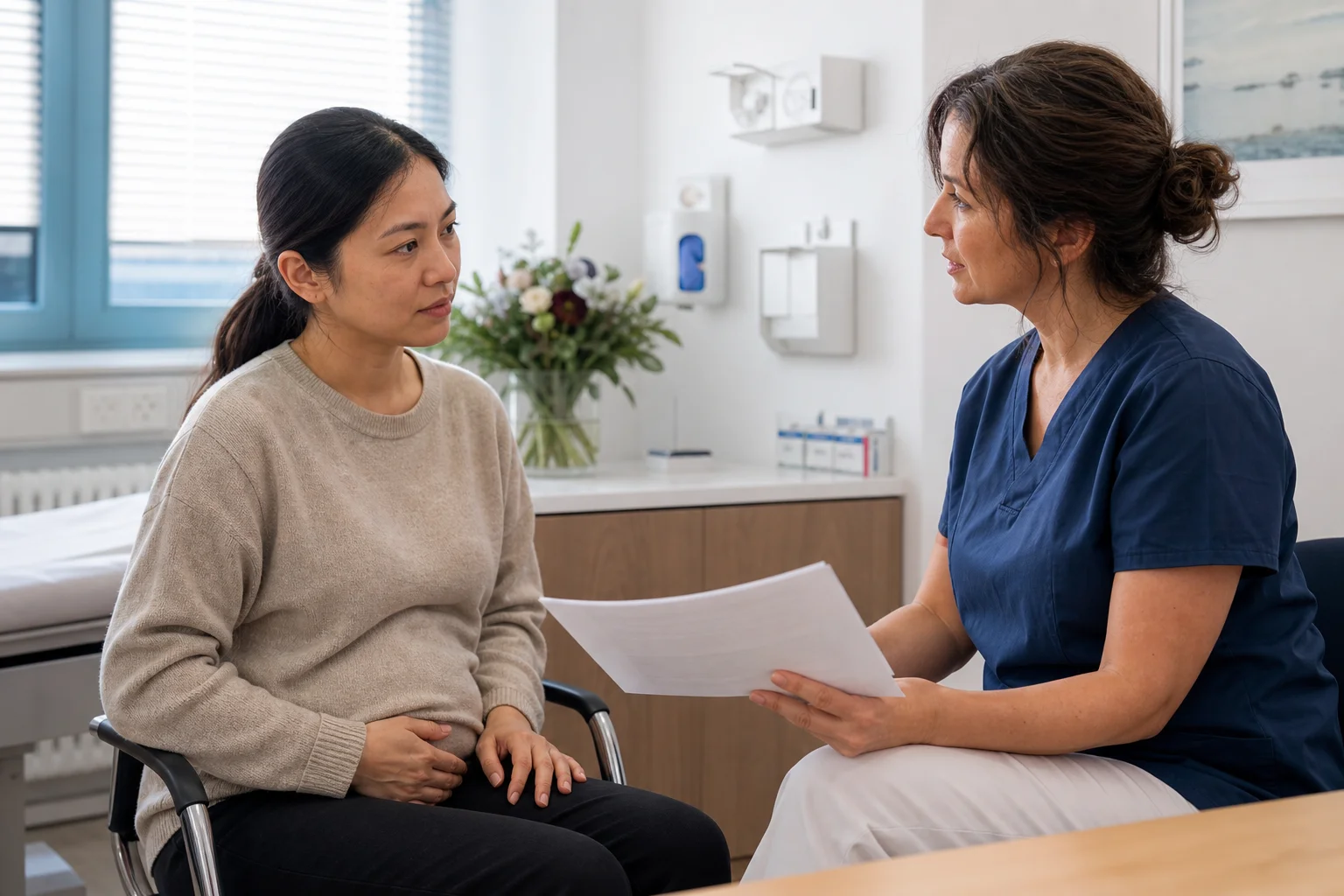
If the anal sphincter was involved, a quick look at the skin is not enough. Follow-up should explicitly cover pain, the urge to have a bowel movement, accidental loss of gas or stool, sexual health and pelvic floor function. Depending on your symptoms, a specialist gynecological or colorectal examination and pelvic floor physiotherapy may be helpful.
After surgery, you should have a clear plan for antibiotics, pain relief and keeping stools soft. A structured follow-up appointment often takes place several weeks after birth, or earlier if you have symptoms. Visible healing is not the only consideration; function and daily life matter too. Can you control gas and stool? Do you notice the urge to have a bowel movement in time? Do you have pain, pressure, or fear about using the bathroom?
Bowel control problems are medical consequences, not a personal weakness. Mention even small changes, such as having more difficulty controlling gas or having very little time to reach the bathroom once you feel the urge. According to RCOG, six to eight out of ten women have no related long-term symptoms after a properly repaired third- or fourth-degree tear. That is not a guarantee, but it shows that a severe injury does not automatically mean permanent incontinence.
A difficult birth can also affect you emotionally. Recurring images, intense anxiety, sleep problems unrelated to the baby, or a constant sense of being on alert also deserve support. Physical and mental health follow-up belong together.
Pelvic floor, scar and sex after birth
You can begin gently noticing your pelvic floor early after birth if it feels comfortable. More strength is not always the answer: a pelvic floor that remains tense out of fear can worsen pain, pressure and difficulties with sex. If contracting the muscles or doing exercises causes more pain, an individual assessment by a physiotherapist is worthwhile. Our article about the pelvic floor after birth explains the difference between weakness, overload and excessive tension.
You might begin by noticing a small, pain-free contraction as you exhale and then releasing it completely. If you have had OASI, significant pelvic organ prolapse, incontinence or persistent pain, an individual plan should take priority over general exercise videos.
Do not massage a fresh, open or infected scar. Once everything has healed and is stable, a midwife, gynecology professional or pelvic floor physiotherapist can show you whether and how gentle touch, mobilization or desensitization may help. The goal is not to force the scar to become soft, but to gradually restore mobility and a sense of safety.
There is no fixed calendar date for resuming sex. Bleeding should have subsided and the wound should be healed, but above all, touch and stretching need to feel safe to you. Breastfeeding can make the mucous membranes drier, and a suitable lubricant may help. Sharp pain, renewed bleeding or persistent burning are reasons to stop and have your recovery checked. Read more in Sex after birth.
You can rebuild intimacy in stages and choose a position in which you control the pace and depth. A closed wound can still be sensitive because nerves, scar tissue and the pelvic floor take longer to recover than the visible skin. Persistent pain during sex is a reason to seek support, not a new normal you have to accept.
Can you prevent a perineal tear?
There is no guarantee. Your body, the course of labour, the baby's position and size, and any necessary obstetric procedures all interact. A deep tear does not happen because you breathed incorrectly or failed to prepare enough.
Some measures may influence the risk or severity. RCOG lists perineal massage from around 35 weeks of pregnancy, warm compresses during the pushing stage, controlled birth of the baby's head, and professional support of the perineum as possible measures. What is appropriate depends on your circumstances and how labour unfolds. RCOG: Reducing your risk of perineal tears
Perineal massage should be gentle and comfortable, not a painful test of stretching. During labour, a warm compress may be offered by the person caring for you; the immediate situation determines what is possible. An episiotomy is not a general preventive measure for every tear and should have an obstetric reason.
Your next pregnancy after a severe perineal tear
After a third- or fourth-degree tear, planning your next birth can begin early rather than waiting until labour. Bring your operative or birth record to the discussion. Important factors include the previous subtype, your current symptoms, examination results, your experience and your preferences.
If you have no symptoms and function is normal, another vaginal birth may be an option. If you have problems with bowel urgency or control, pain, or abnormal tests of function, a planned cesarean birth can be discussed as an alternative. The decision is individual. A previous deep tear neither automatically dictates the route of birth nor should it be ignored.
Planning also includes the emotional side. If the earlier birth felt like a loss of control, a birth debrief, a clearly documented strategy and psychological support may help. A plan can reduce uncertainty even though no birth can be completely planned.
Warning signs: when to act
The most important rule is to watch the trend. If something is clearly getting worse rather than slowly improving, have it assessed.
- Contact a health care professional promptly
- Increasing pain at the repair, new redness or swelling, pus-like or unusually smelly discharge, fever, a weeping or visibly open wound, and persistent difficulty urinating warrant a call to your midwife, family doctor, obstetric or gynecology service, or the hospital where you gave birth.
- Get assessed the same day
- A rapidly growing painful swelling, new difficulty controlling gas or stool, sudden severe pain, or feeling markedly unwell should not wait until your next routine appointment.
- Get emergency help now
- Heavy bleeding, fainting or circulatory problems, very rapid deterioration, or other immediately life-threatening symptoms require your local emergency service.
The NHS also lists increasing pain, an unusual smell and red or swollen skin as important signs of possible infection after a tear or episiotomy. NHS: Episiotomy and perineal tears
Discharge and follow-up checklist
Details are easy to lose amid a new baby, exhaustion and paperwork. You can write down these questions or ask a support person to keep track of the answers:
- What exact injury was diagnosed, including its degree or subtype?
- Was it repaired, and was there anything unusual about the procedure?
- Which medications should I take, and for how long?
- Do I need medication to keep my stool soft or special instructions for emptying my bladder?
- Who will check my healing, and which symptoms mean I should return to the hospital the same day?
- Are pain, swelling, numbness, or problems controlling urine, gas and stool getting better or worse?
- After a deep tear, will I be referred for pelvic floor physiotherapy or to a specialist clinic?
You can ask for an examination and call the hospital again after discharge. Persistent pain is enough reason to take a closer look. Good follow-up does not depend on whether you managed to absorb every detail during the first exhausting hours.
Key takeaway
Birth injuries range from small abrasions to deep perineal tears. Most heal well when the injury and repair are treated properly, the tissue gets time to recover, and warning signs are taken seriously. Do not judge your recovery by a single painful moment; consider the documented diagnosis and the direction of change over several days.
You do not have to assess your own stitches or silently endure symptoms. If you are not moving in the right direction, the wound looks concerning, or your bladder and bowel do not work as usual, early medical assessment is the sensible next step.
More about postpartum recovery
These articles explore physical recovery, postpartum bleeding, the pelvic floor and intimacy after birth.