Alcohol, Nicotine, Cannabis, Anabolic Steroids and Sugar: What Strains Sperm Quality and Trying to Conceive
When trying to conceive, people often focus on supplements, abstinence days and perfect timing. In practice, recurring patterns such as smoking, heavy drinking, cannabis, anabolic steroids or a daily routine that keeps sleep, weight and metabolism out of balance are often the bigger issue. This article sets out where the evidence is clear, where it remains mixed and which steps actually make sense.


Quick orientation
If you only want the priorities, the order is usually clear: smoking and other nicotine products are among the best documented avoidable risk factors. Exogenous testosterone and anabolic steroids are a special case when trying to conceive because they can suppress your own sperm production substantially. With alcohol and cannabis, pattern, amount and accompanying factors matter more. Sugar does not act like a classic drug on sperm, but it can become relevant through weight, sleep and metabolism.
For the clinical assessment of infertility, the current WHO guideline explicitly points to lifestyle counselling, tobacco use and repeat semen analyses when needed. WHO Guideline Summary on the Prevention, Diagnosis, and Treatment of Infertility
Why single samples and single weekends are easy to overestimate?
Sperm do not appear overnight. Changes in semen parameters therefore often show up only after several weeks. At the same time, a semen analysis is always just a snapshot. Sleep, infections, abstinence duration, stress and lab conditions all play a role.
The WHO semen manual makes exactly this point: reference ranges help with interpretation, but they do not cleanly separate fertile from infertile. That is why abnormal values usually need context and often a repeat test. Overview of the 6th edition of the WHO Semen Manual
- A good or bad single result is not a final verdict.
- More important than panic after one weekend is the repeated pattern over weeks.
- If you want to change something, you need a realistic time frame and comparable conditions.
Smoking, vapes and nicotine: the evidence is clearest here
With tobacco use, the data are more consistent than with many other lifestyle topics. Guidelines and reviews describe links with poorer semen parameters, more oxidative stress and higher sperm DNA fragmentation. Smoking can also burden blood vessels, inflammation and erectile function.
The ASRM groups tobacco, nicotine and marijuana together in the conception context, but stresses that tobacco use is clearly linked to poor reproductive outcomes. ASRM Committee Opinion on Tobacco or Marijuana Use and Infertility
What is often underestimated
- Vapes are not neutral just because no classic cigarette smoke is produced.
- Nicotine pouches, hookah and occasional smoking count biologically too.
- People who smoke in the evening often stabilise stress and sleep problems at the same time.
Practical consequence
If you want to prioritise one thing before conception, nicotine reduction or cessation is often the strongest single lever. If you want to read more on the topic, also see Smoking and Trying to Conceive.
Alcohol: not every glass decides, but patterns matter
Alcohol is less black-and-white than smoking. The stronger concern is chronic high consumption, binge drinking and the effects on sleep, hormones, oxidative burden and sexual function. That is why the question is rarely whether that one beer was the problem and more often whether a recurring pattern is disturbing recovery, timing and reliability.
A recent urological review describes links between chronic alcohol use and hormonal dysregulation, higher DNA fragmentation and sometimes testicular damage. Review of lifestyle and environmental factors in male fertility
- Regular drinking often worsens sleep more than you notice subjectively.
- Binge drinking matters biologically more than a single small glass with dinner.
- In daily life, alcohol often works indirectly through fatigue, lower libido and poor timing.
If you are heading toward a semen analysis or a conception phase, a clear reduction over several weeks is usually more useful than endlessly negotiating individual exceptions.
Cannabis: the signals are relevant, but the data remain mixed
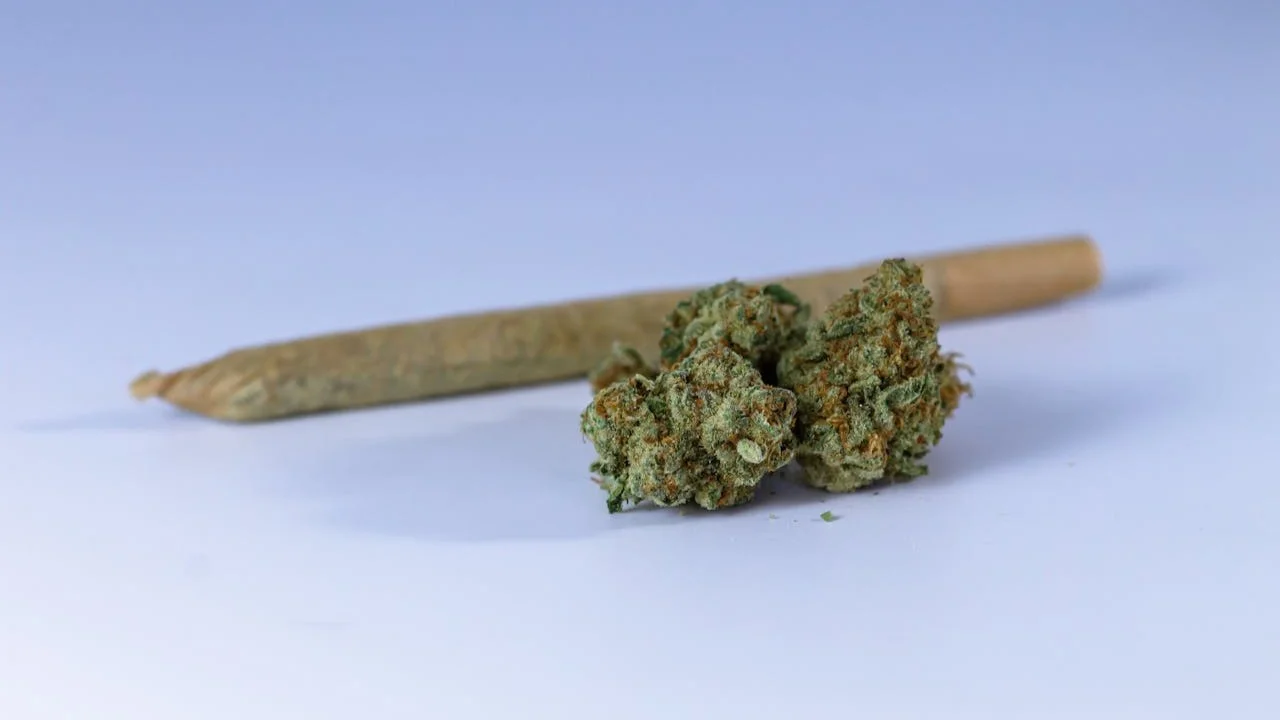
For cannabis the evidence is less uniform than for smoking. One problem is everyday reality: THC content, method of use, mixed use with tobacco and accompanying factors such as sleep problems or mental stress vary widely. Still, professional societies and reviews describe plausible links with hormonal changes, poorer semen parameters and reduced fertility.
ASRM summarises the situation carefully but not dismissively: cannabis is one of the exposures that should be discussed actively and reduced if possible when trying to conceive. ASRM Committee Opinion on Tobacco or Marijuana Use and Infertility
Why cannabis often works more indirectly than people expect
- Use is often tied to sleep, stress, habit and mixed use with nicotine.
- The daily rhythm becomes less stable, which can also affect libido and timing.
- People who combine cannabis and tobacco usually create two risk factors at once.
For everyday decisions, the practical question is not whether cannabis sounds fundamentally forbidden, but whether a pause before conception reduces the number of open variables. If you want a more detailed discussion, Cannabis, More Precisely Classified also fits.
Anabolic steroids and testosterone: the most important special case
Exogenous testosterone, anabolic steroids and some performance-enhancing substances are discussed far too late in many conception conversations. They can suppress the body's own hormone axis so strongly that sperm production drops markedly or temporarily stops completely. That mechanism is clinically more relevant than many debates about sugar or individual drinks.
If testosterone treatment, steroid cycles or so-called boosters are involved, this should be brought into urological or andrological assessment early. Here, keeping it secret is impractical because an abnormal semen analysis otherwise looks mysterious even though the main trigger is already known.
- External testosterone is not a fertility supplement.
- Fitness contexts and self-medication count fully from a medical point of view.
- Recovery of sperm production can take time and should be supervised.
Hard drugs, opioids and cocaine: not the most common search intent, but medically relevant
Many people search for drugs and sperm but mean not only alcohol or cannabis, but also cocaine, opioids or other substances. For these substances, the counselling is often simpler than the data discussion: regular use is linked to relevant health risks and can further disrupt hormonal, sexual and reproductive function.
The current lifestyle review also lists opioids as a potentially fertility-relevant exposure alongside steroids and cannabis. Review of modifiable burdens on male fertility
If these substances are involved, the best path is not theoretical fine tuning but an honest medical assessment plus help with stopping or reducing them. Fertility counselling and addiction support are not mutually exclusive; they often belong together.
Sugar: not a classic drug, but metabolically relevant
Sugar is not simply the male fertility version of nicotine. The more plausible chain runs through energy surplus, weight, insulin resistance, sleep and inflammation. So the claim that sugar directly damages sperm would be too broad. The claim that a permanently derailed metabolism worsens the starting point is, by contrast, well supported.
This matters most when sweets, soft drinks, late meals and sleep deprivation appear as a package. The problem is not dessert by itself, but the pattern that develops around it.
- Late snacks and soft drinks often worsen sleep and weight at the same time.
- A metabolically stressed daily routine also affects libido and erectile function indirectly.
- If weight, waist circumference and fatigue increase, the issue is real and not cosmetic.
Mixed use is often the real problem
In practice, it is rarely just one exposure. More often the pattern looks like this: alcohol at weekends, nicotine during the week, cannabis to wind down, too little sleep, irregular eating and high stress. Those combinations are often more clinically relevant than the debate about which single substance is theoretically the worst.
If you honestly sort out where your main driver sits, the plan usually gets simpler. Not having to make everything perfect at once is not a disadvantage, but often the only strategy that really holds.
When a semen analysis or evaluation makes sense?
A semen analysis makes sense if pregnancy is not happening, if known risk factors are present or if you want clarity after a difficult history. The WHO guideline recommends a structured evaluation of male fertility and emphasises that semen analyses should be repeated when needed. WHO Guideline Summary on Infertility
- The clearer the exposure, the more useful a realistic observation period after a change.
- With anabolic steroids, clearly abnormal values or very strong symptoms, evaluation should start earlier.
- If erectile problems, loss of libido or testicular symptoms also appear, the hormone and cause question is often more important than simple optimisation tips.
If you want the basics first, Semen and Sperm Explained in General also helps.
A realistic plan for the next eight to 12 weeks
For most couples, the deciding factor is not a perfect biohacker list but a consistent, limited test period. In that phase, the goal is to reduce the biggest disruptors and make daily life more stable.
- Reduce nicotine as much as possible or stop completely.
- Do not gloss over alcohol; set clear limits on the pattern.
- Pause cannabis when conception is concrete or values are abnormal.
- Do not keep anabolic steroids or testosterone running in secret; get medical clarification.
- Think of sleep, movement, regular meals and weight as the base.
The point is not moral purity, but fewer open variables. That makes later findings more usable and decisions easier.
Myths and facts
- Myth: One beer immediately destroys fertility. Fact: What matters more are recurring patterns, binge drinking and the effects on sleep, hormones and everyday life.
- Myth: Vaping is practically neutral for sperm. Fact: Nicotine remains a relevant risk factor, even if the product form changes.
- Myth: Cannabis is natural and therefore harmless for conception. Fact: Natural does not equal fertility-friendly, and the data clearly justify caution.
- Myth: Sugar is just as bad as smoking. Fact: That is too broad. Sugar acts more indirectly through metabolism, weight and sleep.
- Myth: Testosterone helps male performance, so it should also help conception. Fact: Exogenous testosterone can significantly suppress sperm production.
- Myth: A normal semen analysis proves that consumption is not an issue. Fact: A single result is only part of the story and should always be read in context.
Conclusion
If you want to assess conception and consumption realistically, you do not need panic or minimisation. The clearest priority is usually nicotine and exogenous testosterone or anabolic steroids. Alcohol and cannabis matter mainly through patterns, mixed use and daily-life effects. Sugar belongs more in the metabolism debate than in the drug debate. The most useful step is therefore rarely a magical single rule, but an honest review plus a few weeks with much less disruption.
Read more
These articles fit if you want to classify alcohol, nicotine and cannabis more precisely on their own.